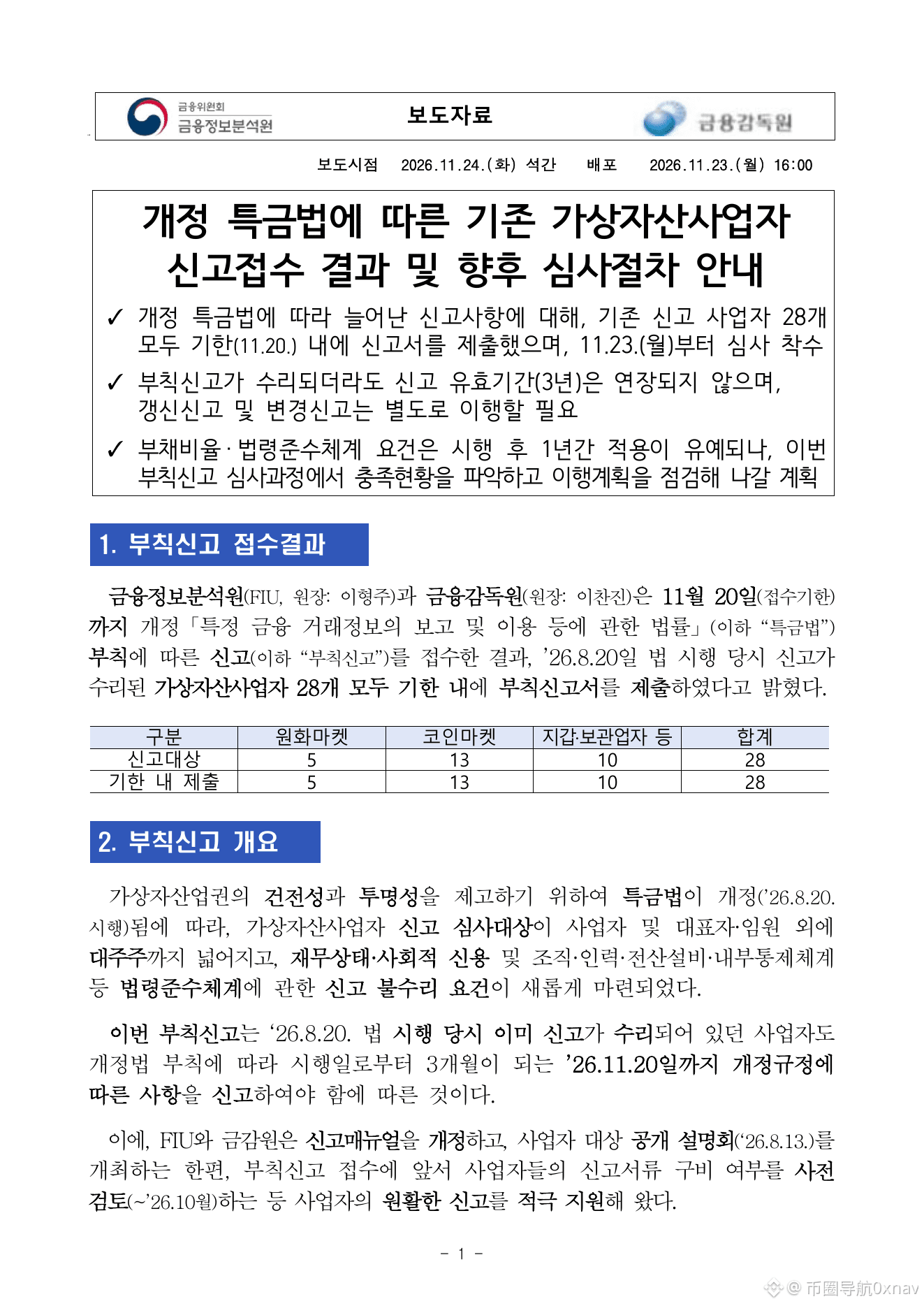
Major shareholders of South Korean crypto exchanges, wallets, and custodians are now being drawn into filing reviews, too. This is not the issuance of another new license, but a supplementary filing required of existing service providers under the revised Act on Reporting and Using Specified Financial Transaction Information.
The Financial Intelligence Unit (FIU) and the Financial Supervisory Service announced that, by the November 20 deadline, all 28 virtual asset service providers whose filings had been accepted when the new law took effect on August 20, 2026, had submitted their supplementary filings on time. These included 5 won-market operators, 13 crypto-to-crypto market operators, and 10 wallet and custody providers. Full-scale reviews began on November 23.
A few points that are more directly relevant to ordinary users 👇
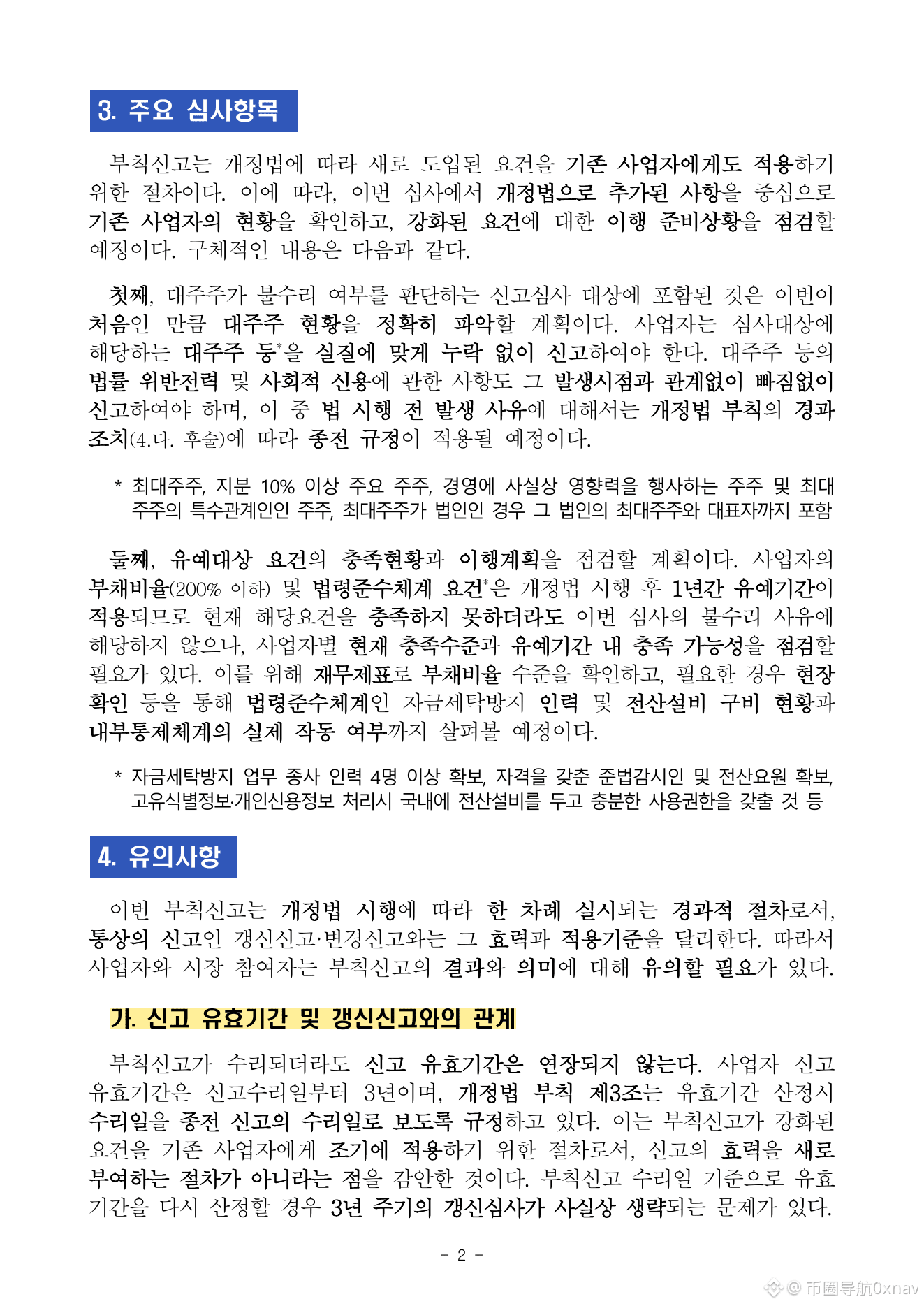
🔹 For the first time, major shareholders are included in reviews of whether a filing should be accepted. The scope goes beyond the largest shareholder to include major shareholders holding at least 10%, shareholders with substantial influence over management, and shareholders who are specially related parties of the largest shareholder. If the largest shareholder is a corporate entity, reviewers will also look through to that entity’s largest shareholder and its representative.
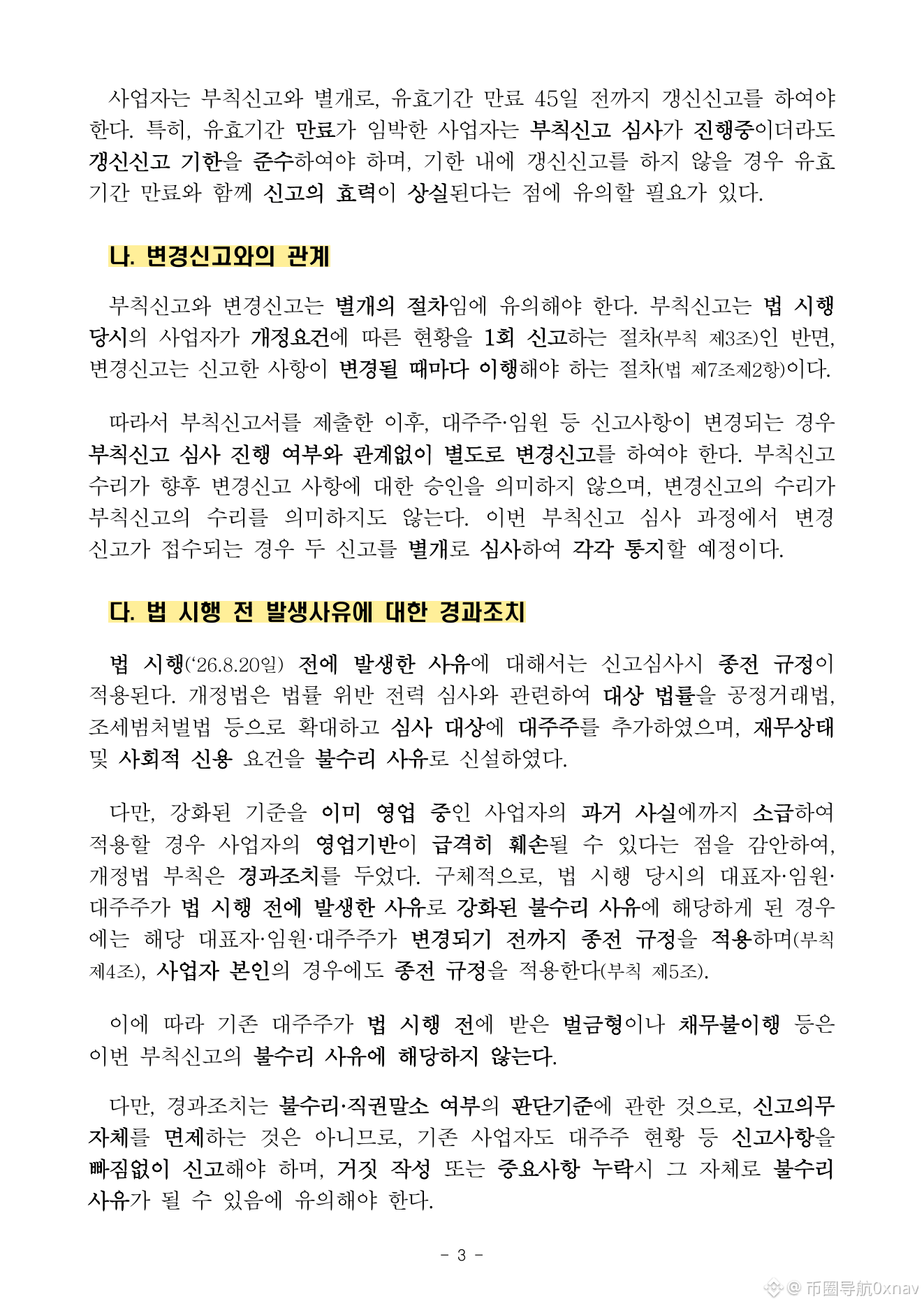
🔹 Institutions must fully disclose major shareholders’ records of legal violations and social credit status, regardless of when the relevant events occurred. However, events that took place before the new law came into force on August 20 will still be assessed under the previous rules. For example, fines or debt defaults involving existing major shareholders before that date will not be grounds for rejecting this supplementary filing. That is only an assessment standard, not an exemption from disclosure: omissions or false statements could themselves lead to rejection.
🔹 Acceptance of this supplementary filing will not extend the validity period of the original filing. The three-year validity period will still run from the date the original filing was accepted, and institutions must submit a separate renewal filing 45 days before it expires. If they fail to file before expiration, the filing will become invalid when its validity period ends. Changes to major shareholders or executives during that period also require a separate change filing; neither procedure replaces the other.
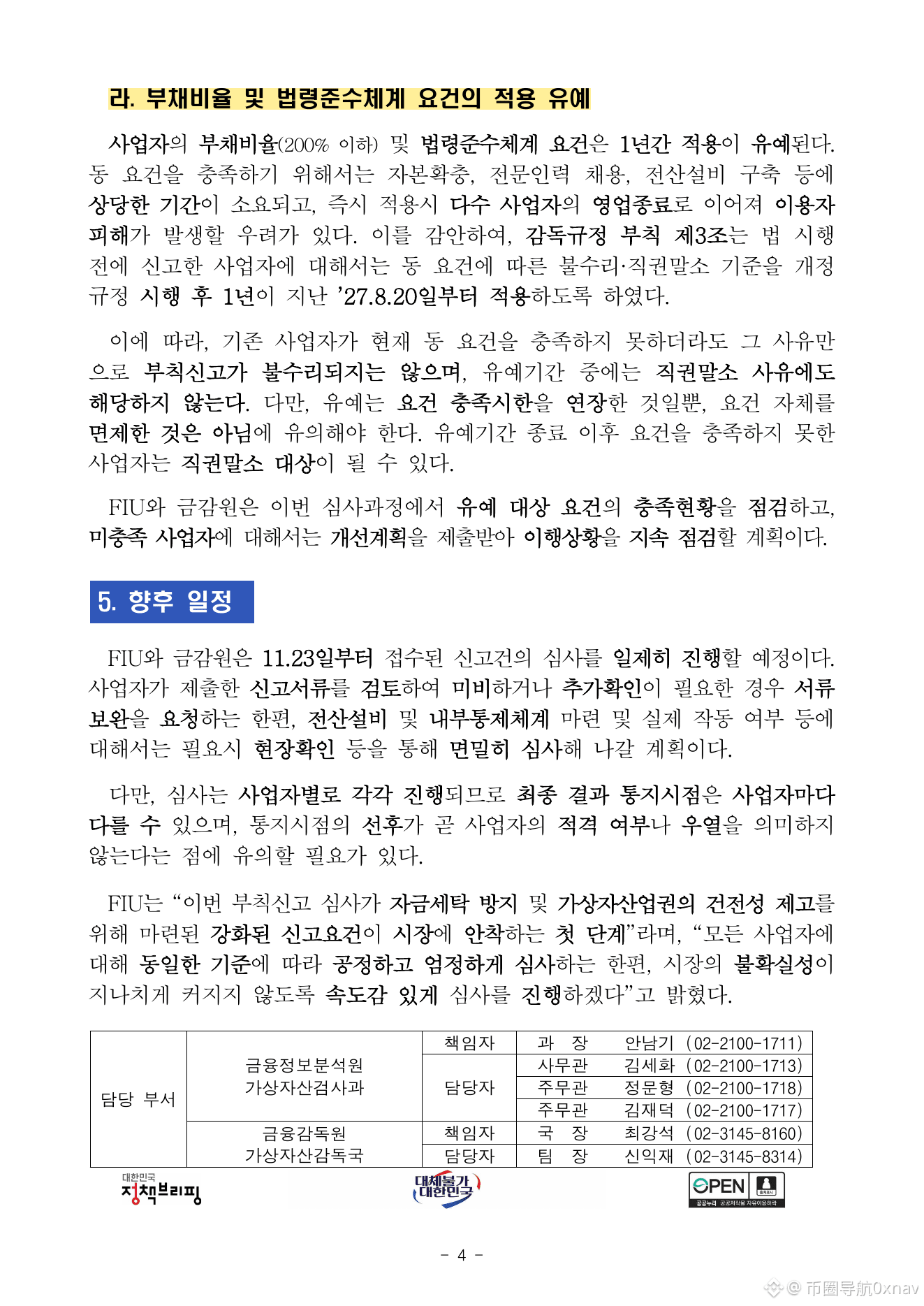
🔹 Existing institutions have a one-year grace period to meet requirements such as keeping the debt ratio at or below 200%, having at least four anti-money-laundering staff, appointing a qualified compliance officer, and maintaining a local information system. These requirements will become grounds for rejecting a filing or canceling registration on the authorities’ own initiative only from August 20, 2027. Falling short right now will not, on its own, cause an institution’s current filing to be rejected, but the grace period does not waive the requirements: institutions that still fail to meet them when it ends may have their registration canceled. During the review, authorities will check current conditions and collect improvement plans; if necessary, they will also conduct on-site checks to verify that systems and internal controls are actually operating.
Review results will be communicated to institutions individually, and some will hear back earlier than others. That does not mean one is more compliant than another. The FIU said it would conduct reviews fairly and rigorously under the same standards, while working to speed them up and avoid prolonging market uncertainty.
So this is more like a lesson for South Korean service providers whose filings have already been accepted: they need to show who owns shares and whether their finances and compliance systems can meet the new standards. It is not a new button that users will suddenly see when they open their apps today. Are you more concerned about how far reviews will go in examining platforms’ major shareholders, or whether some institutions will have their registrations canceled after the grace period ends?
#韩国启动加密服务商大股东审查 #BTC #ETH