

Celo's move to Ethereum Layer 2 status is more than an infrastructure upgrade. It represents a change in how the project sees its future.
For years, Celo operated as an independent Layer 1 blockchain, building its own network around low-cost transactions, mobile accessibility, stablecoins, and financial inclusion. That approach gave it a distinct identity, but it also meant maintaining its own security infrastructure and competing for developers, liquidity, and attention in an increasingly crowded blockchain market.
The decision to migrate to Ethereum changes that equation.
On March 26, 2025, Celo officially transitioned into an Ethereum Layer 2, adopting the OP Stack and joining the broader Superchain ecosystem.
What makes this interesting is that Celo did not completely change its original mission. Instead, it changed the foundation on which that mission operates.
And that distinction deserves more attention.
Why the Ethereum transition matters
Building an independent blockchain comes with responsibilities that are not always visible to users. A network needs its own consensus infrastructure, security mechanisms, developer ecosystem, and liquidity.
Ethereum already has a well-established position in these areas.
By becoming an Ethereum Layer 2, Celo can focus more of its resources on applications and financial services rather than trying to maintain a completely separate blockchain ecosystem.
The migration also preserved Celo's existing network history and allowed its established applications and users to continue operating within the new architecture.
This was not simply a branding exercise. It was a significant technical transition.
Celo now uses the OP Stack for execution and Ethereum-connected settlement infrastructure. It also uses EigenDA for data availability, which is an important distinction when evaluating its security model.
In other words, Celo benefits from Ethereum alignment, but its architecture still has additional data-availability assumptions that investors should understand.
The Superchain connection could become increasingly important
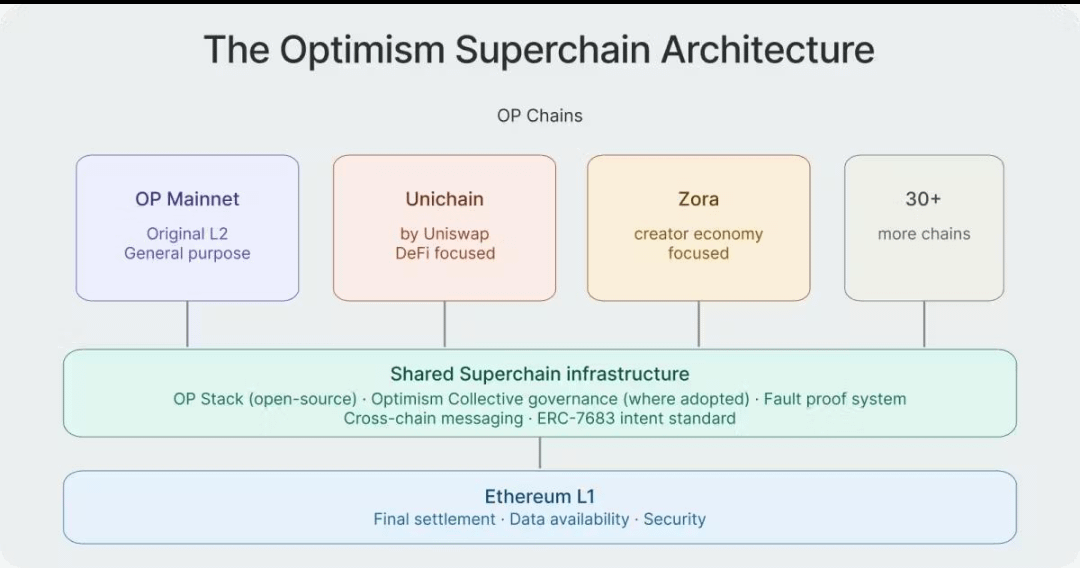
Celo's integration into the Optimism Superchain ecosystem gives it access to a broader infrastructure environment.
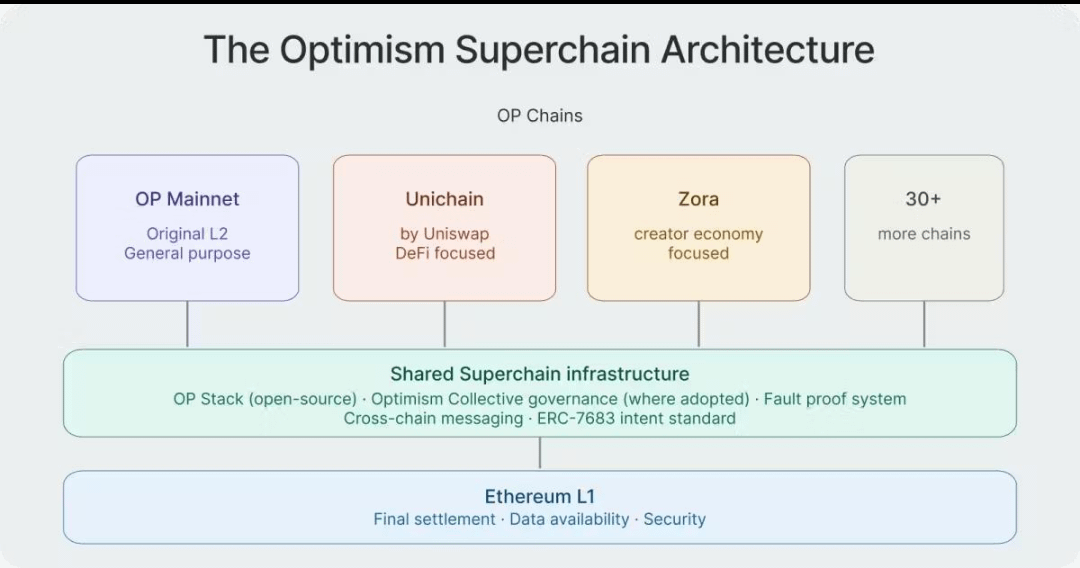
Networks such as Optimism and Base are also built using OP Stack technology. This creates opportunities for shared development standards, improved interoperability, and a more connected ecosystem.
However, joining the Superchain does not automatically mean Celo receives the liquidity or users of other networks.
It still needs to attract applications and create reasons for people to use its infrastructure.
What makes Celo different is its focus.
Rather than trying to compete directly with every major DeFi-focused blockchain, it has concentrated on stablecoins, mobile payments, and accessible financial services.
That specialization could become an advantage if the demand for practical onchain payments continues to grow.
Stablecoins are where Celo's real opportunity becomes visible
The most interesting part of Celo's story is not necessarily its transaction speed. It is the type of economic activity the network is trying to support.
Stablecoins have become an important part of cryptocurrency because they offer something that volatile assets cannot: relatively stable digital value.
For someone receiving international payments, transferring money to family, or managing savings in a currency-sensitive economy, a digital dollar can have practical value beyond trading.
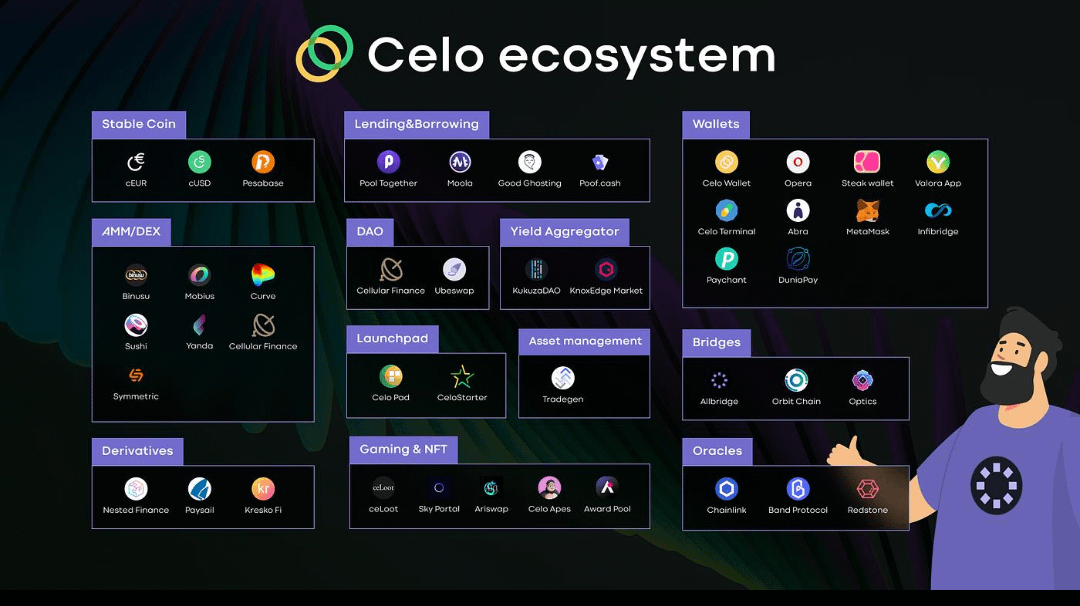
Celo has been developing infrastructure around USDT, USDC, and local-currency stablecoins.
Its ecosystem reported support for more than 25 stablecoins, including 14 local-currency stablecoins, in its March 2026 first-year report.
This matters because financial access is not always about giving people another cryptocurrency to speculate on. Sometimes it is about making payments cheaper, faster, and easier.
That is the market Celo is trying to serve.
MiniPay gives Celo something many blockchains struggle to build: distribution
Another important part of the ecosystem is MiniPay, the self-custodial wallet developed by Opera.
The idea is relatively straightforward: make stablecoin payments accessible through a mobile experience rather than expecting every user to understand blockchain infrastructure.
This is particularly relevant in markets where mobile phones are more accessible than traditional banking services.
Celo's March 2026 ecosystem report highlighted more than 14 million MiniPay wallets and over 420 million stablecoin transactions processed through the wallet.
These numbers deserve attention, although wallet registrations should not be confused with unique active users or long-term customer retention.
Still, MiniPay gives Celo an important distribution advantage.
A blockchain can have excellent technology and still struggle to attract ordinary users. Having a consumer-facing application creates a direct route between infrastructure and actual financial activity.
The next question is whether those users continue returning and whether their activity produces sustainable economic value.
The technical improvements are also worth watching
Celo's transition was not limited to adopting the OP Stack.
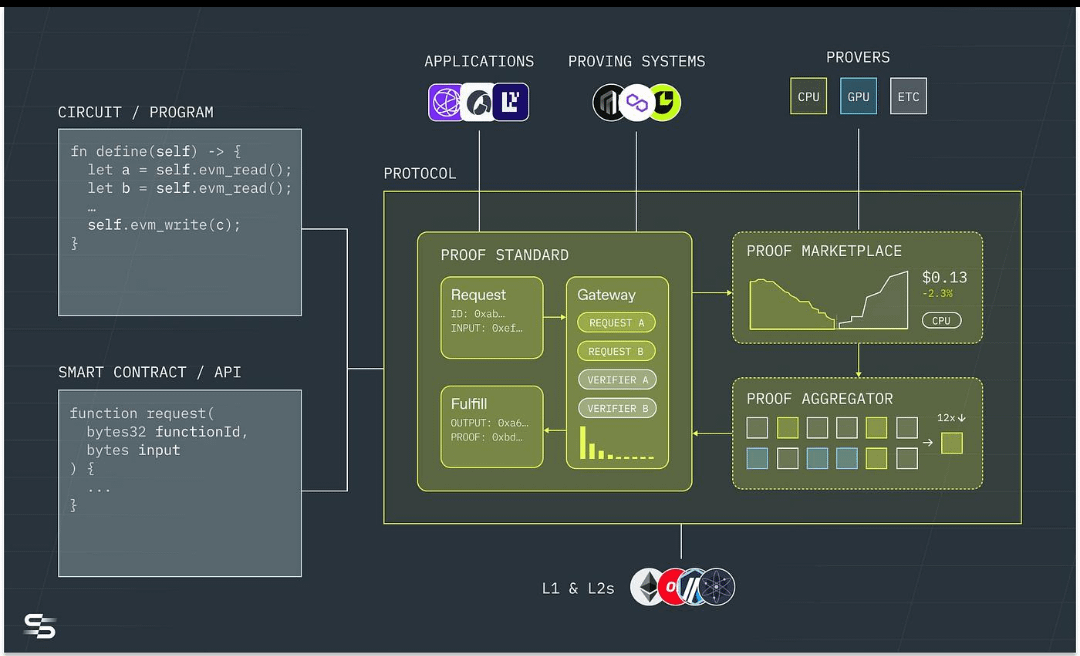
Its architecture also includes EigenDA for data availability, while its December 2025 Jello hardfork introduced OP Succinct Lite and ZK-powered fault proofs.
These developments are important because scaling a blockchain is only one part of the challenge. The network must also provide mechanisms to verify execution and challenge incorrect state claims.
Zero-knowledge technology can help make this verification process more efficient.
However, it would be inaccurate to assume that these improvements eliminate every security assumption. Data availability, sequencer arrangements, governance, and upgrade mechanisms remain important parts of the overall risk assessment.
For long-term adoption, security improvements need to continue alongside network growth.
What does all this mean for CELO?
This is where the analysis becomes more interesting from an investment perspective.
A growing blockchain ecosystem does not automatically mean its native token will appreciate.
CELO remains important to the network as its native gas asset, governance token, and part of its staking and participation framework.
Celo also supports fee abstraction, allowing users to pay transaction fees in supported assets rather than requiring them to hold CELO for every transaction.
That improves the user experience, especially for stablecoin payments, but it also means investors should not assume every increase in stablecoin usage creates an equal increase in direct CELO demand.
The relationship between network activity and token value capture needs to be examined carefully.
Celo's March 2026 first-year report also discussed proposed tokenomics changes involving buybacks and burns. These could become relevant if implemented, but proposals should not be treated as completed mechanisms without checking their governance status and execution.
For CELO, the important question is not simply whether more people use the network.
It is whether that activity eventually creates stronger and more sustainable economic demand for the native asset.
The competition is real
Celo is entering a market where Base, Arbitrum, Optimism, and other Layer 2 networks already have established users and developers.
It cannot rely on Ethereum alignment alone to become successful.
Its strongest differentiation is its payments-oriented strategy.
Base has significant consumer distribution through Coinbase. Arbitrum has a developed DeFi ecosystem. Optimism plays an important role in OP Stack infrastructure.
Celo is trying to establish a different position around stablecoin transfers, mobile financial services, and local-currency accessibility.
That is a meaningful strategy, but it still needs to prove that it can maintain users, attract developers, increase liquidity, and generate sustainable revenue.
What I would watch going forward
Rather than judging Celo entirely through its token price, I would pay attention to several fundamental indicators:
Whether MiniPay continues attracting and retaining users.
Whether stablecoin supply grows alongside transaction volume.
Whether DeFi liquidity expands beyond payment activity.
Whether network revenue improves.
Whether developers continue building applications.
Whether Superchain interoperability produces measurable benefits.
Whether security and decentralization continue improving.
Whether CELO's tokenomics translate network growth into actual value capture.
These indicators will provide a much clearer picture of the network's development than short-term market excitement.
Final thoughts
Celo's transition to Ethereum Layer 2 is an important strategic change, but the real opportunity lies in what the network is trying to accomplish with that new foundation.
It has combined Ethereum-connected infrastructure with the OP Stack, Superchain integration, stablecoin-focused applications, and a mobile distribution strategy through MiniPay.
The interesting part is that these developments address different sides of the same problem.
Ethereum provides the settlement foundation. The OP Stack provides the development architecture. EigenDA supports data availability. MiniPay connects users to the ecosystem. Stablecoins provide a practical financial use case.
None of this guarantees future success, and the competition remains strong.
But Celo does not necessarily need to become the largest Layer 2 to establish a valuable position.
It needs to become genuinely useful for the people and businesses that rely on inexpensive, accessible digital payments.
That is the fundamental thesis I would follow.
Celo is now an Ethereum Layer 2. The technology has changed, the ecosystem has expanded, but its original ambition remains the same: making financial services more accessible through blockchain infrastructure.
The next chapter will be determined not by the announcement itself, but by how much real economic activity the network can sustain.
