With noon approaching, the market has turned even colder than it was in the morning session. This morning, we were still hoping Bitcoin could catch its breath at 61,000, but it’s been drifting lower for the past two hours. Now $BTC has ground down to 60,300, just a small push away from the 60,000 mark. If you went long on the dip at 61,000 this morning as I suggested, your palms are probably sweating right now. But the rules haven’t been broken, so don’t panic and flip short. If it drops below 59,500, cut your losses and admit you were wrong.
The one putting its weakness on full display today is $ETH . Yesterday morning, I was already leaning bearish and watching its 1,780 support level. After keeping an eye on it for a full day and night, price hadn’t even touched the level—then just now it broke below 1,700, plunged to 1,683, and bounced back to 1,696. It’s now down 65% from its two-year high.
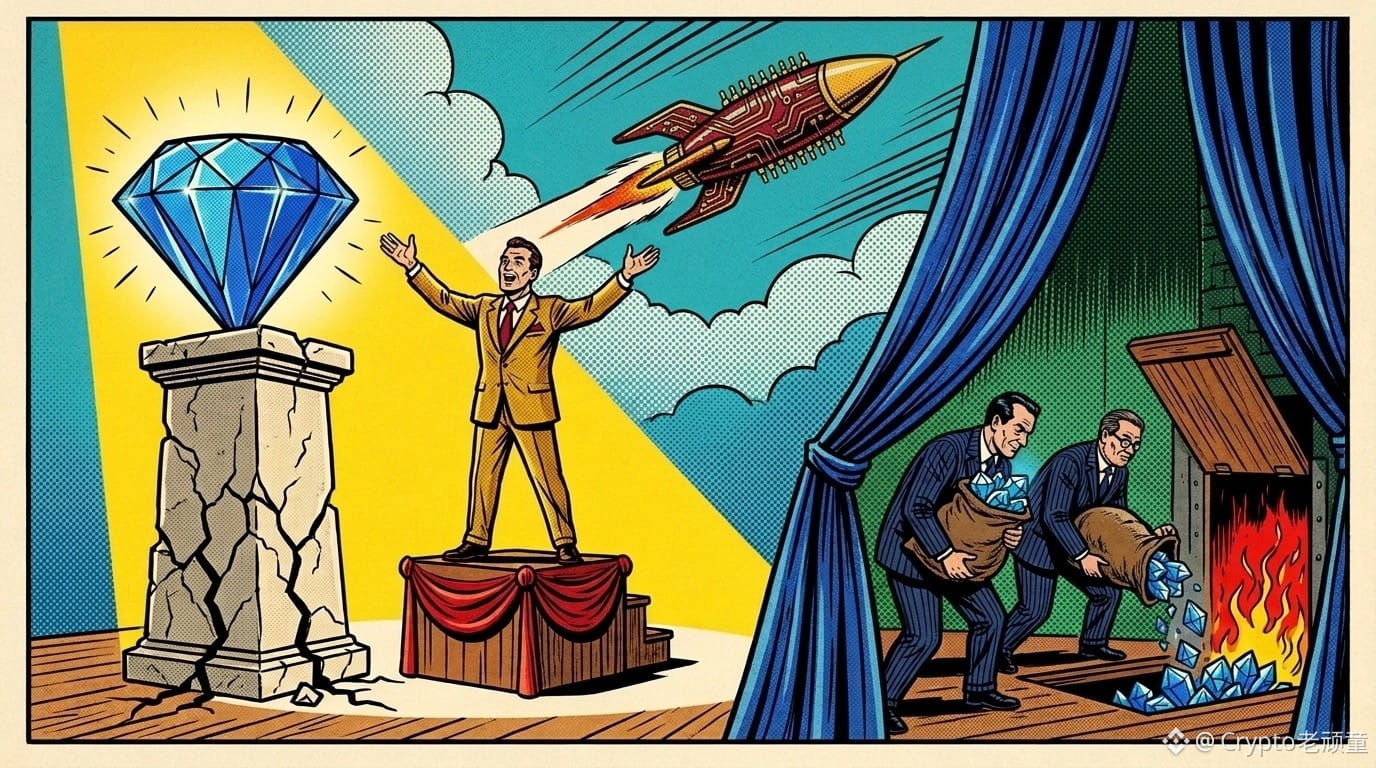
The most frustrating thing about this cycle is how different the front stage and backstage look. Onstage, Wall Street regular Tom Lee is still touting Ethereum as a store of value that can underpin tokenized trading. Behind the scenes, though, there are reports that CoinShares has liquidated its entire Ethereum treasury, publicly listed BTCS is selling $44 million worth to pay down debt, and spot ETFs have seen net outflows of more than 120,000 ETH in seven days. Everyone talks about conviction, but they’re all cashing out. And just as foreign media bring up the threat of quantum computing again, the Foundation doubles the size of its security team this morning—another bucket of cold water on market sentiment.
There’s no fresh money coming in to catch the falling knives, either. After last night’s chip-stock frenzy on Wall Street, the top token by trading volume in crypto is still $NVDAB , linked to Nvidia. It racked up more than $240 million in a single day and surged over 20%. Capital is all chasing the chip giant, leaving old-school crypto traders to pass the same money around among themselves.
Right now, $ETH has fallen below 1,700, yet the retail futures long-to-short ratio has actually climbed above 3 to 1, with people everywhere reaching out to buy the dip. Options traders have piled their biggest bearish bets right at 1,700, so both sides are making heavy wagers there. But on the spot order book, there’s a sell wall of more than $2.6 million between 1,701 and 1,711. Overhead, more than $9.5 million in sell orders is weighing on the price, while buy orders below total only a little over $7.2 million.
I’m keeping my hands off at this level. I won’t be a retail trader trying to catch a falling knife, and I won’t chase a short at the bottom only to get slapped by a rebound. The broader trend remains bearish. I’ll place a small short between 1,715 and 1,725 and wait for a rebound to hit resistance, with a stop at 1,748 and a downside target of 1,667. If it really reclaims 1,780 on strong volume, I’ll take the loss and exit. Only trade if you can afford to lose; until the odds are good enough, go have lunch.
……
I came across an interesting discussion this morning: quite a few young people are starting to urge their parents to sell vacant apartments in county towns and live off the interest. Older generations used to think that holding bricks and mortar was the only way to feel secure. But once they do the math on depreciation and property fees, they realize that selling up and having cash on hand can be less stressful than stubbornly holding on.