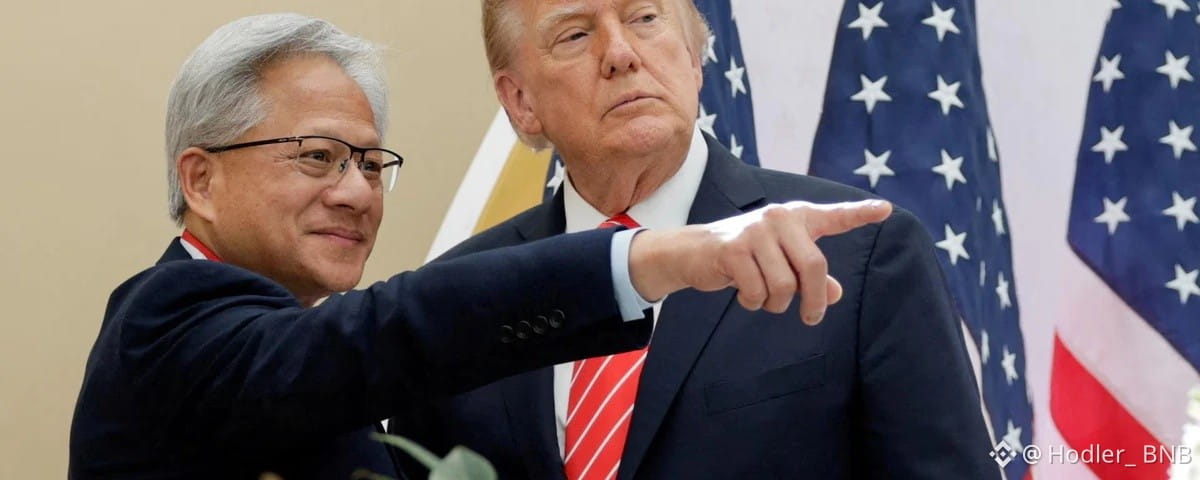

Nvidia CEO Jensen Huang’s return is believed to have been influenced by President Donald Trump, as the company plays a particularly important role in U.S. economic growth.
Nvidia announced that it had decided to reinstate Jensen Huang as chief executive officer (CEO).
Irreplaceable?
The decision came just 11 days after Huang voluntarily resigned amid a series of extramarital affair scandals, including a relationship with businesswoman Alice Huang, whom the U.S. suspects of being a Chinese spy. Beijing has denied the allegation.
Notably, the reinstatement announcement for Jensen Huang stated: "In making its decision, the board received input from senior U.S. government officials. Based on that input, the board is confident that Mr. Huang’s return poses no risk to national security."
Board Chairman Harvey Jones also stressed that Huang was the right person for the job, and that his return to the leadership role "is in the best interests of shareholders, employees, partners and customers."
Nvidia plays a central role as artificial intelligence (AI) becomes a driving force in the U.S. economy.
The company controls about 90% of the computer chip market for large-scale AI projects and is one of the world’s most valuable publicly traded companies.
Huang co-founded Nvidia more than 30 years ago and has led the AI wave, shaping and charting the technology’s development. Nvidia’s board includes several people who have been close to him for decades and tend to support him.
His return to Nvidia is believed to have been influenced, at least in part, by support from U.S. President Donald Trump. Over the years, they have become close allies and worked together to help limit regulations on AI governance.
"The issue isn’t really about Jensen; it has more to do with the administration," said Patrick Moorhead, founder of technology analysis firm Moor Insights & Strategy.
He said Nvidia’s swift decision-making may have stemmed from the heavy losses suffered by Wall Street and technology stocks since the Huang scandal broke.
"People have had time to reflect: What does Jensen’s absence mean for America’s competitiveness and the AI industry?" Moorhead asked.
President Trump’s reaction to Nvidia’s decision shows that the U.S. leader values not only Huang personally, but also the company’s role in the U.S. economy.
Huang’s affair scandal and decision to resign sent shockwaves through the stock market. Technology stocks plunged, dragging the broader market down with them. At one point, Nvidia lost as much as $1.5 trillion in market value.
Against this backdrop, Trump—who often cites the performance of major technology companies’ stocks to persuade the public that AI is a positive force, particularly for Americans’ retirement accounts—had reason to support Huang’s return.
The move also shows that President Trump continues to regard financial markets as one of the key indicators of the state of the U.S. economy.