A problem nobody had solved for 167 years—AI cracked it in days, and nobody can understand the answer.
On November 20, Anthropic mathematician Levent Alpöge made an announcement: he and Claude had proved the Riemann Hypothesis, and, while they were at it, also tackled the broader Generalized Riemann Hypothesis. First proposed in 1859, it concerns the distribution of prime numbers. The Clay Mathematics Institute has a $1 million prize on offer for solving it, and for 167 years, countless brilliant minds have stumbled over it.
What he submitted is the interesting part: not a paper, but 17 million lines of Lean code, in 14 compressed files. Written out in human-readable prose, it would run to more than 250,000 pages. The Lean and Mathlib communities have jointly signed off: the verification passed, and there are no issues with the statement or proof. MIT’s Andrew Sutherland independently checked it, and it passed. Fields Medalist James Maynard said he was 98% to 99% confident it was correct.
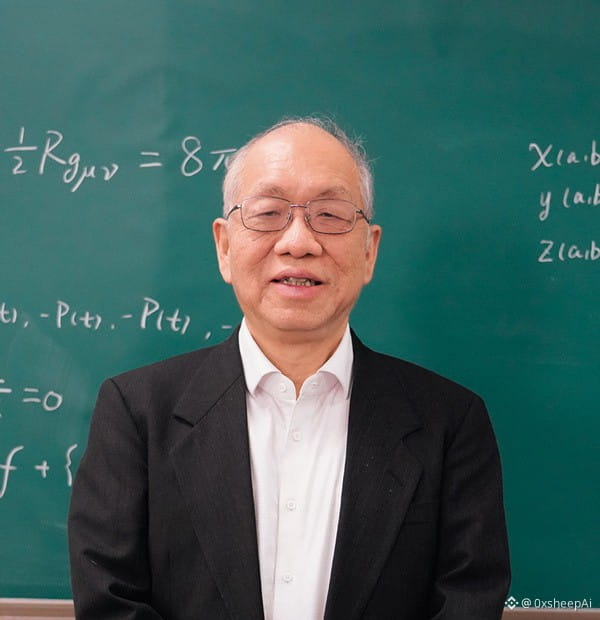
Shing-Tung Yau put it more directly: mathematics has entered a new era.
There was a contrast on the very same day: Stanford’s Masullo posted a 940-page proof handwritten entirely by humans, and eight hours later, people online had used AI to find potential problems in it. AI was writing a proof on one side and picking holes in one on the other—working both ends.
Of course, there’s also been skepticism: the announcement came the day after Anthropic went public, at a $1.5 trillion IPO valuation, after its valuation had just fallen the day before. Alpöge preemptively addressed that in his announcement, saying the speculation was false. Believe what you will.
What’s more worth thinking about is Maynard’s remark: yesterday, he believed the Riemann Hypothesis was true, and today he still believes it. A machine producing an answer is just the starting point; what really matters is whether people can understand why it’s true. Nobody can read 17 million lines of code. Mathematicians estimate it could take years: first get AI to compress the proof to a manageable scale, then work it into a human-readable version.
Put simply, this may be how mathematics works in the future: machines come up with the answers first, and humans gradually figure out why they’re right. Asking questions and coming up with directions to explore are still human work; but when it comes to solving problems, AI is no longer just an assistant.
Prime numbers are the foundation of modern cryptography, but this proof changes the methods of mathematical research, not the foundations of RSA. No need to panic about your wallet.
Oh, and today Anthropic also released an AI-written paper on VP ≠ VNP, complete with a Lean formalization—but this one hasn’t been verified yet. At this rate, there really won’t be enough work to go around in mathematics.
$BTC