I came across this point again while going through my notes, so I’m sharing it.
In a sharded blockchain, each node only needs to process transactions from a portion of the shards, and the network’s overall processing capacity increases with the number of shards.
One way to address this is to periodically and randomly rotate the validators assigned to each shard, making it difficult for attackers to concentrate their resources on a particular shard in advance.
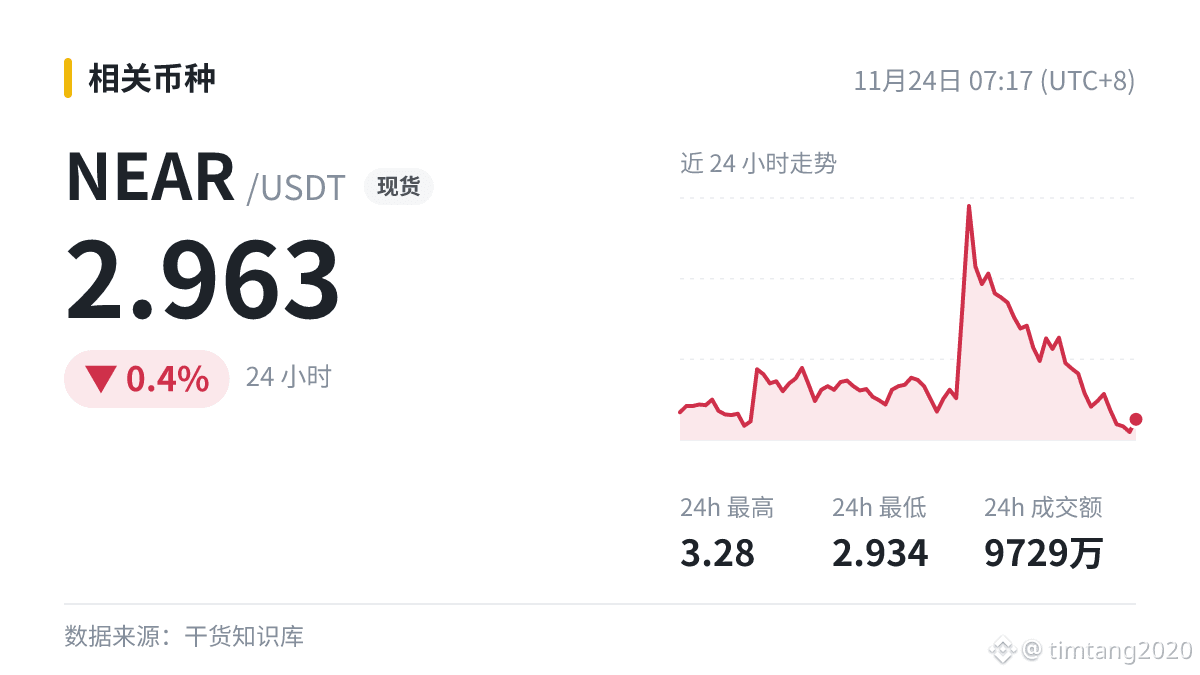
$NEAR is NEAR’s native coin. This public blockchain uses the Nightshade sharding design. Currently 2.963.
If you have any friends who are new to this, feel free to share it with them.