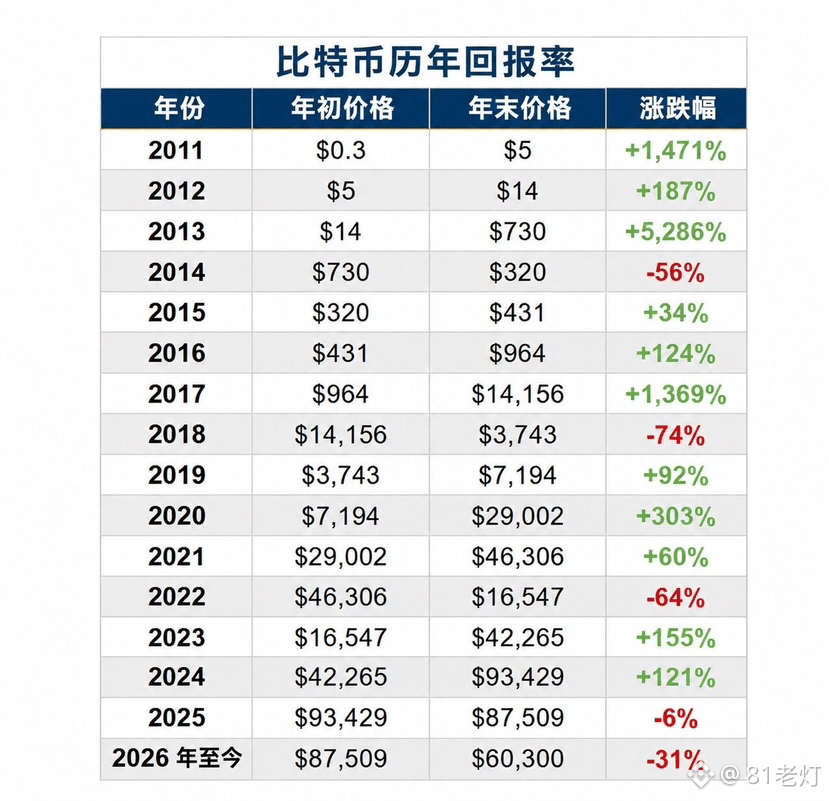
Bitcoin’s four-year cycle has been so obvious, yet folks just refuse to believe it. No matter what they say, I’ll keep stubbornly sticking to the four-year bull-and-bear cycle theory, like someone searching for a sword where they dropped it from a boat. I’ll only stop doing that when the theory has been completely disproven.
Bitcoin’s big bull market comes a year after the halving. The halving was in 2012, followed by a major bull market in 2013; the halving was in 2016, followed by a major bull market in 2017; the halving was in 2020, followed by a major bull market in 2021; and the halving was in 2024, so a major bull market will come in 2025. After the block reward is cut in half, market demand is still there—and may even increase. As institutions and big players enter the market one after another, demand outstrips supply, and prices naturally rise.
Some folks are saying that after Bitcoin’s 2028 halving, the amount of newly issued Bitcoin will already be so small that it will be hard to make much of a difference to market supply and demand. They say there won’t be a clear four-year cycle anymore. All I want to say is that price isn’t determined entirely by supply and demand; market sentiment and positive news also have an impact.
The 2028 halving itself will be hugely positive for Bitcoin. That news alone could drive prices up—don’t underestimate the power of sentiment. In early October last year, Chinese-language memes on the BSC chain surged, and Bitcoin was rallying too, briefly reaching $126,000. Many people said there was no four-year cycle anymore, institutions had entered the market, and a deep downturn was impossible. $ETH