In-Depth Look at Oil Prices
[Key Developments]
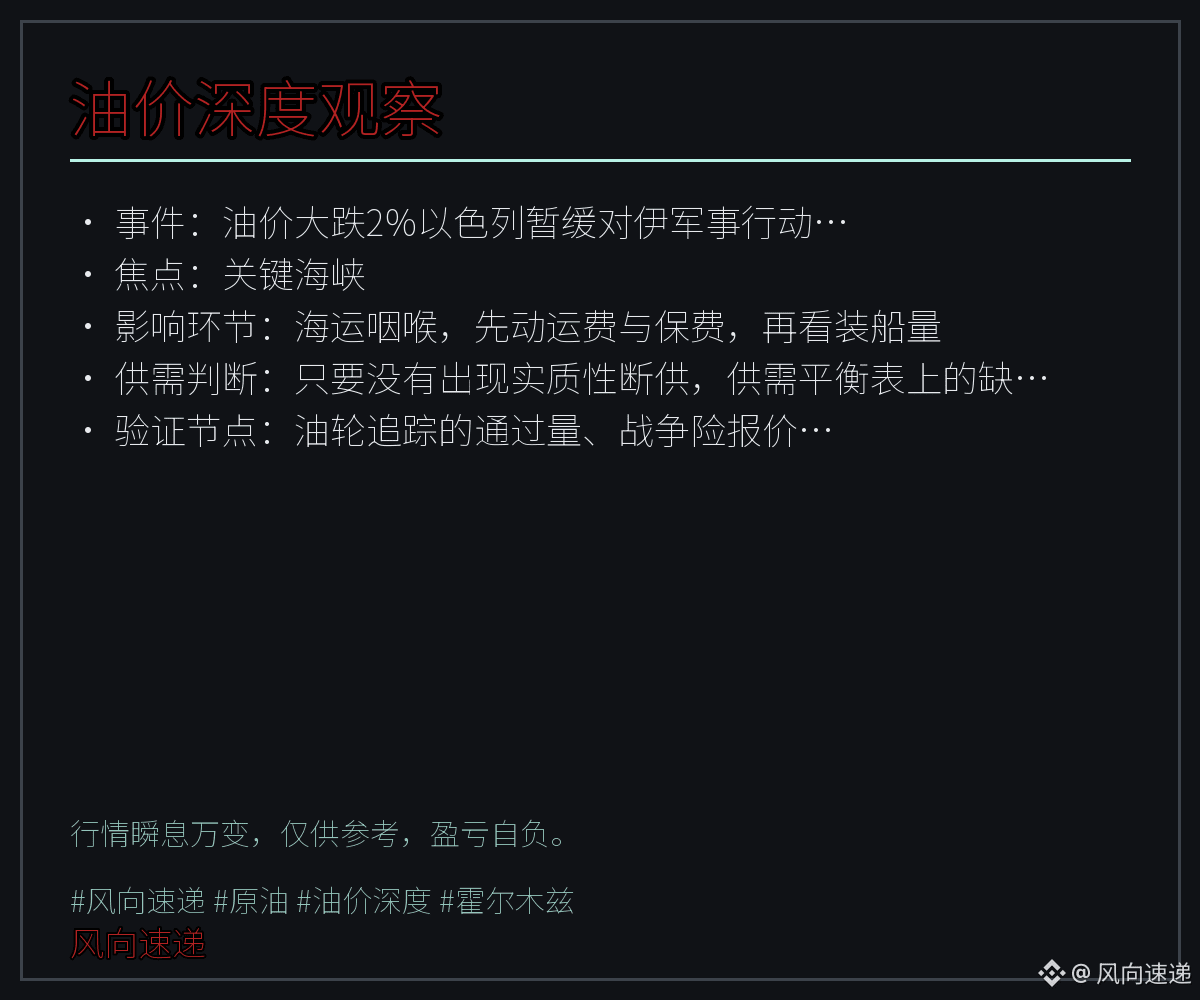
Oil prices plunge 2% as Israel pauses military action against Iran; Iran holds a key card in control of passage through the strait, while JPMorgan forecasts oil prices for next year (4 hours ago)
[What’s Driving Oil Prices]
Conditions for passage through Iran have changed. The focus is on a key strait. The Strait of Hormuz carries about one-fifth of the world’s seaborne crude oil. If Red Sea and Suez Canal routes are diverted around the Cape of Good Hope, voyages from the Middle East to Europe take more than ten extra days.
[How the Impact Is Transmitted]
If passage through a key strait is restricted, shipowners reroute, voyages take longer, and war-risk insurance premiums rise, pushing up delivered costs.
When this feeds through to crude pricing, markets typically price in a risk premium first, then assess whether actual loadings and transit volumes have really fallen.
[Supply, Demand and Pricing]
As long as there is no actual disruption to supply, any shortfall in the supply-demand balance remains limited, and the price impact is felt more in the forward curve and regional price spreads.
WTI is currently trading around $81.06, with a 24-hour change of -2.82%. Volatility has increased, indicating that this type of risk is being priced in quickly. Next, it will be important to see whether actual supply-and-demand data confirm the concern. Risk premiums often rise quickly and fade just as quickly; their persistence depends on whether vessels are subsequently damaged or transit data continue to decline.
[What to Watch Next]
Keep an eye on tanker transit volumes, war-risk insurance quotes, and changes in the Brent-Dubai crude spread.
[What Would Invalidate This Outlook]
If transit quickly returns to normal and insurance premiums fall, the previously priced-in premium will typically gradually unwind.
Markets can change in an instant. For reference only; you are responsible for your own gains and losses.
#风向速递 #原油 #油价深度 #Hormuz