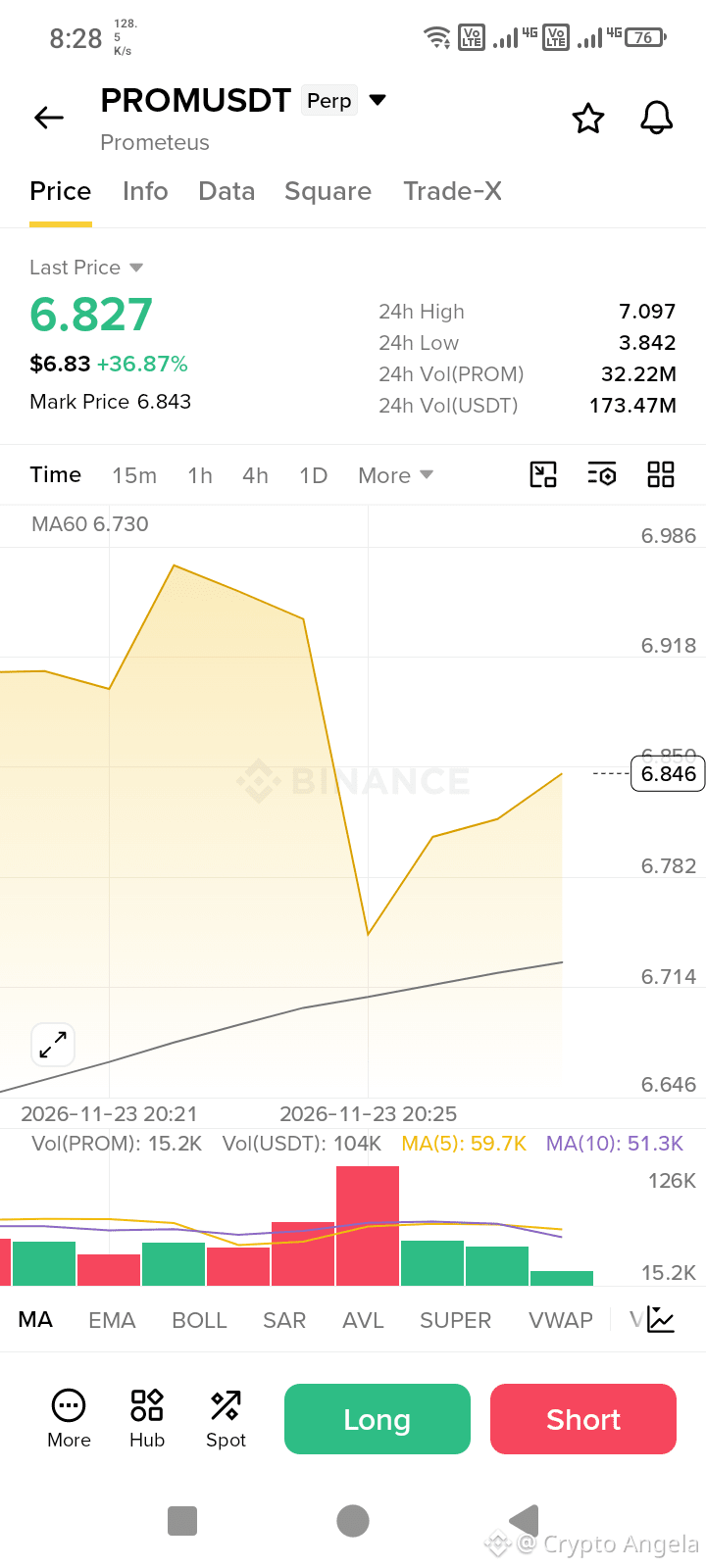

PROM: There's More to Its Supply Story Than Just the Numbers
When looking at PROM, one detail caught my attention: its reported circulating supply is already quite close to its maximum supply.
As of November 23, 2026, CoinGecko reports around 18.25 million PROM in circulation, compared with a maximum supply of 19.25 million. That means roughly 1 million tokens remain outside circulation.
But there's something worth looking into. The token's original Ethereum contract shows a supply of 20 million, which doesn't match the figures reported by CoinGecko. Until this difference is properly explained, it's difficult to get a complete picture of PROM's actual supply structure.
Another important question is who controls the remaining tokens. How much belongs to the team, early investors, the foundation or the community? A clearly verified breakdown of these allocations and their vesting schedules is not readily available. There's also no confirmed upcoming unlock schedule that would justify assuming a major wave of new selling pressure.
On the demand side, PROM has some interesting developments. Its official website reports more than 2.5 million unique wallets and 26 million transactions across its chains. That's worth watching, but activity numbers alone don't tell us how much real demand they create for the token.
And this is where things get interesting.
A network can attract more users and process more transactions without necessarily creating stronger value for its token holders. PROM's utility in transactions, network access and governance matters, but the connection between ecosystem growth and direct token value still deserves closer examination.
Looking ahead, there are three things to watch: whether new supply creates selling pressure, whether genuine ecosystem demand can absorb available tokens, and whether the project improves the way network activity translates into value for holders.
My biggest concern isn't simply how many PROM tokens remain. It's how clearly their distribution and economic role can be explained.
$PROM