One thing I believe is essential when evaluating AI agents is knowing exactly what conditions they were operating under before the test even begins.
Imagine comparing two AI agents, but one uses a more advanced model, has access to different tools, follows different risk limits, or operates with a completely different evaluation period. Can we really say the results are fair?
This is where AINFT's evaluation manifest becomes interesting.
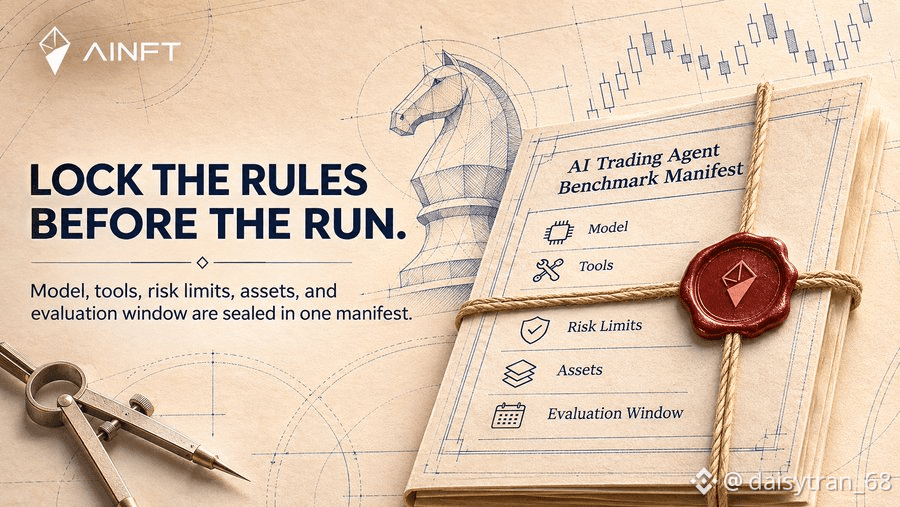
Before an evaluation run starts, the key rules are sealed in a single manifest, covering five important components:
1️⃣
Model – Define which AI model the agent uses, so its capabilities are clearly established.
2️⃣
Tools – Specify the tools available to the agent and the resources it can access during execution.
3️⃣
Risk Limits – Set the boundaries for how much risk the agent is allowed to take.
4️⃣
Assets – Establish which assets the agent can operate with, ensuring the comparison uses a defined scope.
5️⃣
Evaluation Window – Fix the period used to measure performance, avoiding comparisons across different timeframes.
Personally, I think this is a fundamental step toward making AI agent evaluations more transparent.
A performance result means very little if we don't know how it was produced. Without clearly defined rules, it's easy to confuse differences in testing conditions with genuine differences in an agent's capabilities.
By sealing these parameters in one manifest before the run, AINFT creates a consistent reference for understanding what was tested and how the results should be interpreted.
For me, this is especially important as AI agents become more involved in automated financial decisions. Users need more than impressive performance numbers; they need to understand the conditions behind those numbers.
Fair evaluation starts before the first decision is made. Lock the rules first, then measure the results.
@Justin Sun孙宇晨 #TRONEcoStar