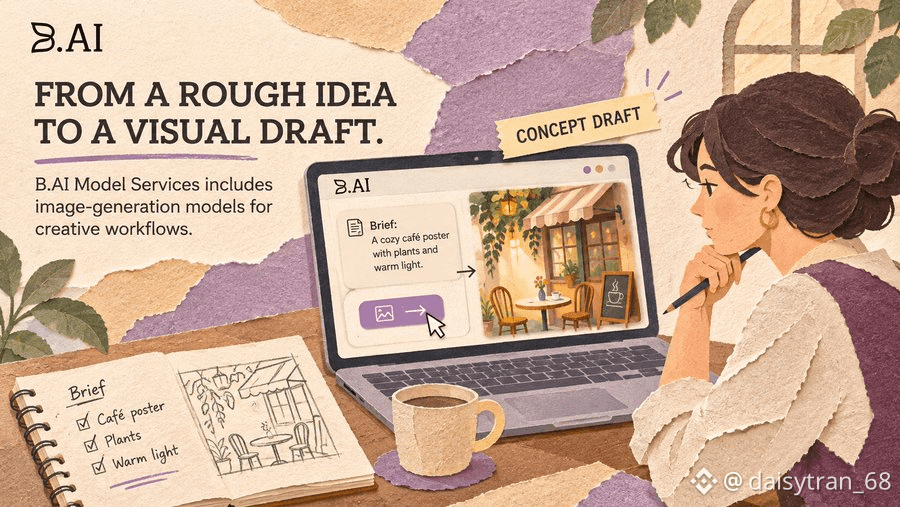
FROM A ROUGH IDEA TO A VISUAL DRAFT.
Every creative project starts somewhere. Sometimes it's a detailed brief, but sometimes it's just a rough idea, a few reference images, or a concept that's difficult to put into words.
The challenge is turning that initial thought into something visual.
This is where
B.AI
Model Services can become a useful tool for creative workflows, with image-generation models that help transform text prompts into visual concepts.
Here's how I would approach the process:
1️⃣
Start with an idea
Define the concept you want to communicate. It could be a product design, a character, a campaign visual, or an entirely new creative direction.
2️⃣
Turn the brief into a prompt
Describe the subject, visual style, composition, colors, atmosphere, and important details. The clearer the instructions, the more direction the model has to work with.
3️⃣
Generate the first visual draft
Use an image-generation model available through
B.AI
Model Services to turn the prompt into an initial visual reference.
4️⃣
Review and refine
The first result doesn't have to be perfect. Select the elements that work, identify what needs improvement, and adjust the prompt or continue editing the concept.
Personally, I think AI image generation is most valuable when it's treated as a creative assistant rather than a replacement for human judgment.
It can help reduce the distance between imagining something and actually seeing an early version of it. But choosing the right direction, refining details, and deciding what communicates the original idea best still require human creativity.
It's also worth remembering that results depend on the selected model and the quality of the input prompt.
A rough idea is the starting point. AI helps turn it into something you can see, evaluate, and build upon.
@Justin Sun孙宇晨 #TRONEcoStar