🇰🇷 PANIC IN SOUTH KOREA: STOCK MARKET PLUNGES AS GOVERNMENT PREPARES INTERVENTION
The crisis of confidence in artificial intelligence has just triggered another earthquake in Asian markets.
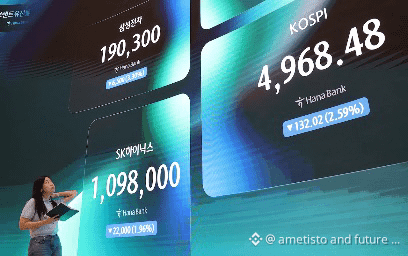
On Monday (23), South Korea’s KOSPI index plunged more than 5% during trading, triggering a mechanism that temporarily suspended automated sell orders for five minutes.
The index closed the day at 4,708.54 points, down 3.31%—its lowest close since January 13.
The move extends Friday’s 5.21% drop and reveals a significant shift in global investor behavior.
💻 The epicenter of the crisis: artificial intelligence
South Korea is one of the economies most exposed to the global semiconductor industry. Giants such as Samsung Electronics and SK Hynix depend directly on demand for chips, advanced memory, and artificial intelligence infrastructure.
But the market has begun to question whether the billions of dollars invested in AI will generate financial returns that match expectations.
During the session, Samsung Electronics fell approximately 3.1%, while SK Hynix declined 2.5%.
🏦 Government prepares emergency measures
Amid the turmoil, South Korean authorities announced plans to use stock market stabilization mechanisms if conditions worsen.
The concern extends beyond the stock market: a prolonged semiconductor slowdown could undermine exports, investment, and economic growth.
🌎 And what impact could this have on Bitcoin?
The episode highlights a risk for digital assets: when global investors reduce their exposure to technology and risk assets, Bitcoin ($BTC), Ethereum ($ETH), and other cryptocurrencies may also come under selling pressure.
This does not mean that a decline in the South Korean stock market will automatically trigger losses in the crypto market. However, a combination of risk aversion, deleveraging, and capital withdrawals could increase volatility across different markets.