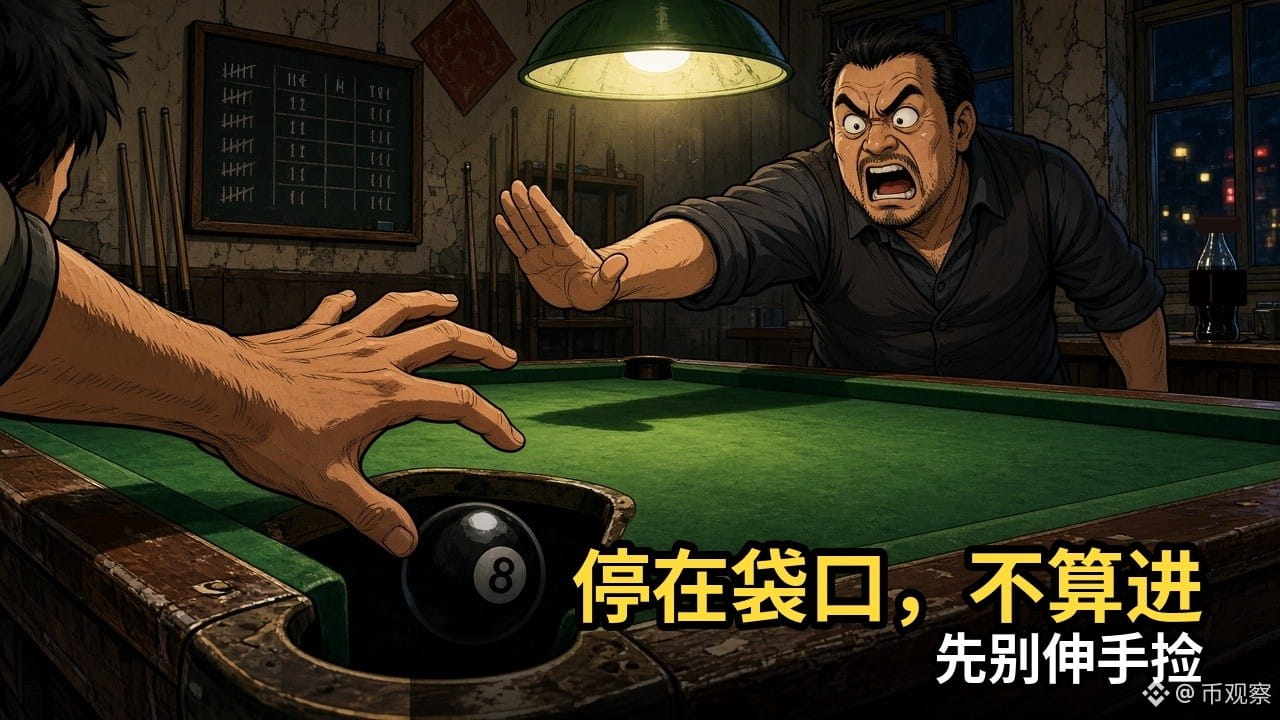
The black eight stopped at the pocket’s mouth. The customer had already reached out to pick it up when the ball rolled back on its own.
The night-shift owner of Clear Pocket Billiards on the north side was called Wu Bagmouth. He was thirty-nine, and nobody ever used his real name. He had a few habits he couldn’t break: whenever he burnished someone’s cue tip, he always turned it clockwise seven times. One turn short, and he wouldn’t let them break—said the feel wasn’t right yet. His right trouser pocket always held a practice cue ball, worn smooth and shiny. It was never allowed on the table; it was just there to remind him: the ball hasn’t dropped yet, so don’t reach too soon. He drank only room-temperature soda water. He wouldn’t touch it cold, saying the chill threw off his aim. He kept score on the blackboard with white chalk only; the red chalk was locked in a drawer because seeing red made him nervous. Before every shift, he felt around the pockets of all three tables. If he found a frayed edge, he replaced the rubber at once. A loose pocket, he said, made balls stop on the lip just to mess with you.
At seven-thirty on Monday night, all three tables were lit. Chalk dust still floated beneath the lampshades. The lightbox by the entrance flickered twice, then steadied. At the table by the window was regular Old Qiao, who’d been playing eight-ball against Wu for three years. Old Qiao was having a suspiciously good night: he’d cleared the first seven colors cleanly. On the final shot, the black eight rolled slowly past the pocket and stopped on the rubber edge, half a ball’s width short.
Old Qiao was already on his feet, one hand reaching to pick it up. His voice got there first. “It’s in! What more do you need to see?”
Wu Bagmouth caught his wrist. With his other hand, he turned the cue tip two more times, stopping only at the seventh. “It stopped on the lip. It doesn’t count.”
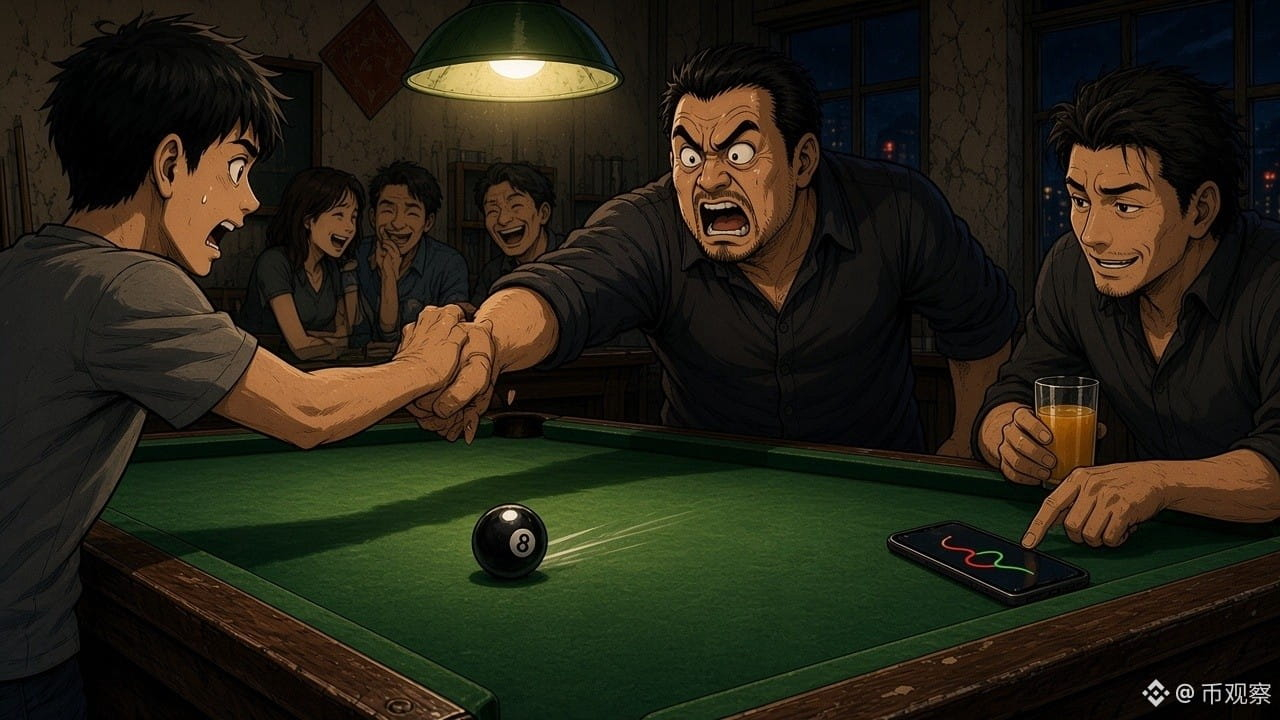
Before the words had left his mouth, the black eight rolled backward on its own, unhurried, as if it were playing a joke on someone. It came to a stop just right of the center of the table, a full cue’s length from the pocket. Someone at one of the other tables hooted. Old Qiao’s hand hung in midair, and his ears turned red.
A-Miao, drinking orange juice by the wall, laughed and tipped her chin toward him. “That shot just now—I thought you were going to shove the ball in yourself.”
Wu Bagmouth didn’t reply. That evening, he’d nearly reached out himself. $BTC had almost touched the day’s high, but fell just short. He checked again in the evening, and it still couldn’t quite get there before slipping back on its own. On the screen, the line climbed until it nearly touched the daytime high, then slowly slid down again—just like that black eight. His finger had already been poised over the add-to-position button, with the 20x leverage switch lit up, just like Old Qiao’s outstretched hand. The ball hadn’t dropped, so he couldn’t pick up the position early. He turned his phone face down behind the score blackboard, leaving only the light on the table.
Old Qiao still wasn’t convinced. He tapped the pocket with the cue tip. “It was practically in. It missed by this much—how can you say it doesn’t count?”
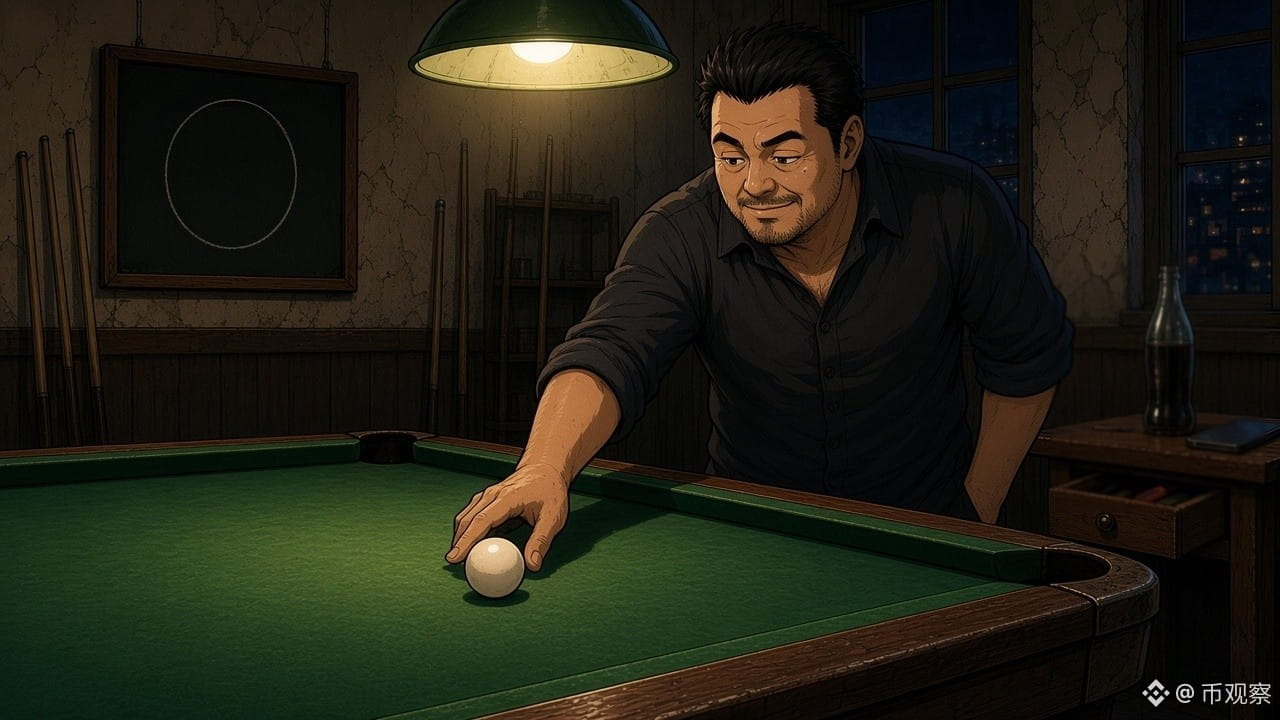
Wu Bagmouth took the practice cue ball from his pocket and set it beside the pocket’s mouth, then gave it a gentle push. It stopped on the edge too, then rolled back on its own. “Being right up against it and being in are two different things. When your hand reaches out, it’s still yours. Once you pick it up and count it as in, if it rolls back out, you’ve lost more than just a ball.”
A-Miao leaned over and spotted the screen behind the blackboard, not quite dark yet. She remarked casually, “Your ball stopped on the lip too. Rolled right back on its own. And you’ve got the nerve to lecture someone else.”
Wu Bagmouth didn’t argue. He closed out the 20x position and left only a small spot holding. Then he put the practice cue ball back on the rail above the pocket as a reminder for the night. The red chalk stayed locked in the drawer. He said to Old Qiao:
“Set it up again. That shot doesn’t count. If you want to win, wait till it drops before you reach for it. For tonight, just watch—don’t treat a ball on the lip as if it’s already in the pocket. Same with a position: when it comes within a hair of where you want it, that’s when you’re most likely to celebrate too early. If it pulls back after you’ve celebrated, it’s not your pride that takes the hit. Manage your own position.”
Old Qiao paused for two seconds, then reset the balls. Wu Bagmouth picked up his room-temperature soda water and glanced at the streetlights glowing outside the window. He didn’t touch his phone again. The practice cue ball on the rail turned half a rotation, then stopped. It didn’t fall.
(The characters in this story are fictional.)