
🐾 What does the Meme market look like today?
Launch in the morning, cash out in the afternoon.
Dump on everyone, then come back with a new name and do it all over again.
The cost of launching a token keeps getting lower,
and so does the willingness to build.
This isn't an isolated case—it's the norm across the whole sector.
In this environment, one thing becomes crystal clear:
Communities that are truly building are rare.
It's not that "nobody else is doing it"—
it's that so few are doing it that they're almost the exception.
And rare things never need to explain why they're valuable.
Look at the difference over these past two years:
One kind goes like this:
A new name today, a better name tomorrow,
and by the day after, nobody even mentions the original one.
All that's left are the people who got dumped on.
The other kind goes like this:
The Little Dog community: 1,016 days.
Livestreams uninterrupted, posts never stopped.
📹 Livestreams have never stopped, reaching up to 700,000 people;
📝 At one point, 51 of the top 100 popular posts came from regular members;
💬 Someone answers every question from every newcomer;
🔗 On-chain addresses are public and verifiable, and contract permissions have been renounced.
That's what sets the Little Dog community apart:
one is launching, the other is building.
The word "rare" deserves a more concrete explanation.
In a market where everyone rushes in and out,
"slow" is itself a signal.
Because the gains from moving fast are visible,
while the cost of moving slowly is hidden.
You give up so many "potential opportunities"
to stick with something that may not pay off for a long time.
Not many people are willing to make that choice.
So we have to keep going—not because nobody else is doing it,
but because the fact that others aren't doing it is exactly what shows its value.
If everyone were willing to stick it out for two years,
then "sticking it out for two years" wouldn't be worth much.
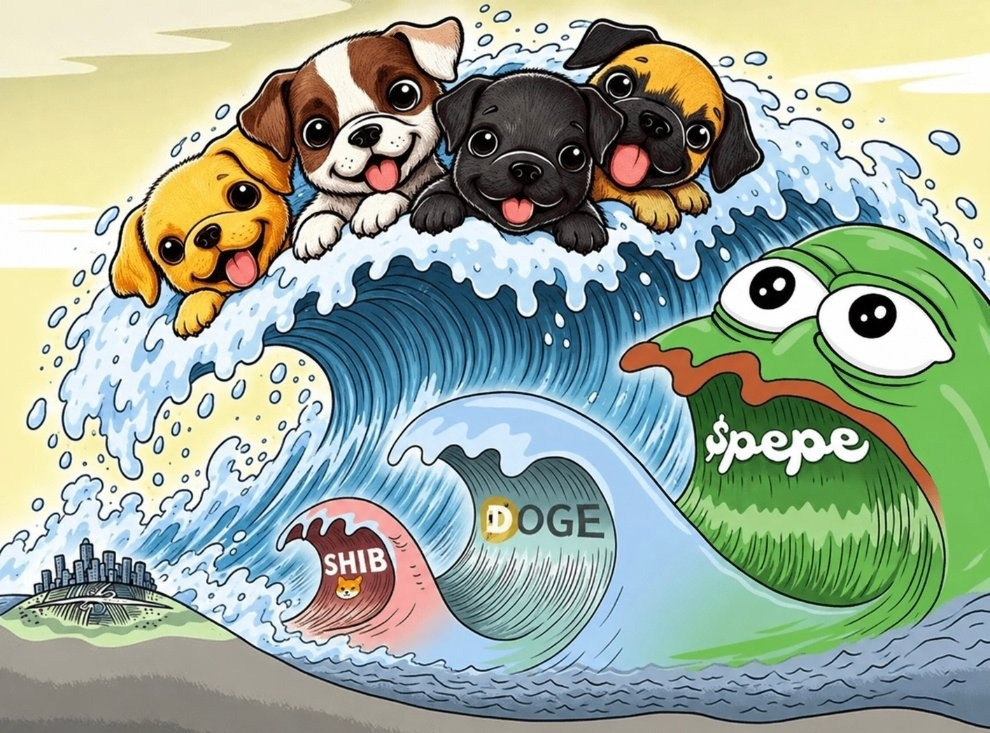
DOGE made it through the years when nobody cared,
SHIB made it through that half-year when people called it a zero-bound token,
PEPE made it through the days when nobody knew it.
While they were sticking it out, the market was full of PVP too.
What makes them valuable isn't that their prices went up later;
it's that, in that kind of environment, some people still stayed.
In a market where most people are focused on quick gains,
a group of people willing to build for two years is truly rare.
And rare things at least deserve to be seen.
So we have to keep going.
Not because we've seen hope,
but because this is something someone ought to do.