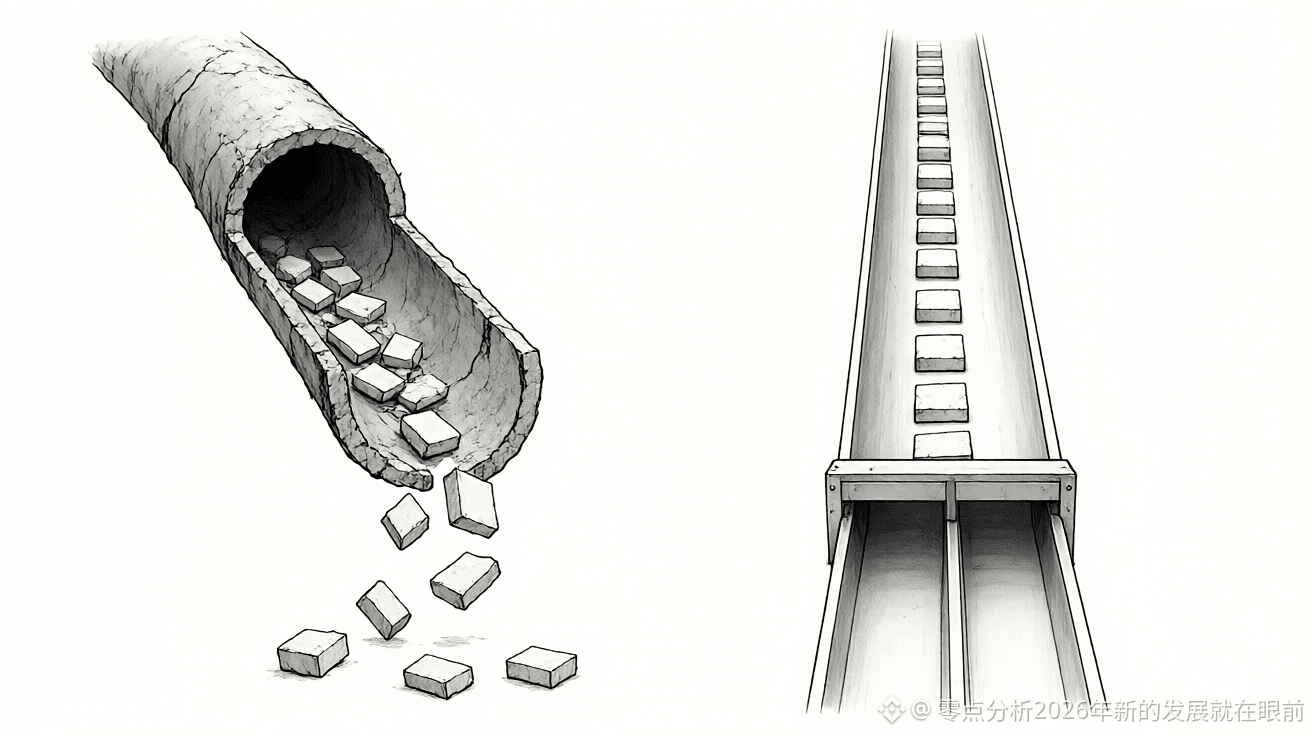
How blocks are transmitted between nodes and the order in which transactions are arranged—these are two things that usually don’t draw much attention. Yet the roadmap gives each of them its own chapter: the propagation layer will replace Turbine with a protocol called Rotor, while transaction ordering will be handled by Constellation. $ZEC
I took a look, and the direction of the changes is remarkably consistent. Block distribution needs to get faster, ordering rules need to be clearer, and competition among validators is also being stepped up. Put together, the stated aim is to compete with centralized matching platforms for latency-sensitive orders—market making, arbitrage, high-frequency trading, and the like. The clients this chain wants are currently sitting elsewhere. $BTC
First, propagation. Turbine breaks blocks into pieces and scatters them across the network. Replacing it with Rotor amounts to relaying the same data through a newly laid pipeline. On the ordering side, Constellation provides a clearer set of rules for priority: there needs to be a clear basis for whose transaction gets recognized first. Neither of these can be solved just by adding machines; the protocol itself has to change. $XAU
The resilience chapter also mentions something else: gradually stripping away historical baggage and special cases from the protocol, while updating the interfaces and wire formats too. The goal is simple: make every future change safer and faster. It may not sound like a performance pitch, but it will determine whether the pipeline changes above can be rolled out smoothly.
Compare this with the part that’s already been upgraded, and the distinction becomes clear: the consensus voting layer has switched from the previous system to Votor, and block times have been cut to 200 milliseconds. That change is already in place. The propagation and ordering layers are still on paper. In the same roadmap, that’s where the line between what’s done and what’s still to come is drawn.
Looking at these four items side by side, some are about speed, some about replacing systems, and some about simplification. They’re all meant to fit into the 2027 window, but the order in which they’ll happen isn’t specified. The announcement doesn’t say when propagation will be tackled or when ordering will follow. The real proof will come when the clients release a version number.
Personal opinion only; not investment advice. You are responsible for your own gains and losses.
#Solana公布2027路线图拟将计算容量翻倍