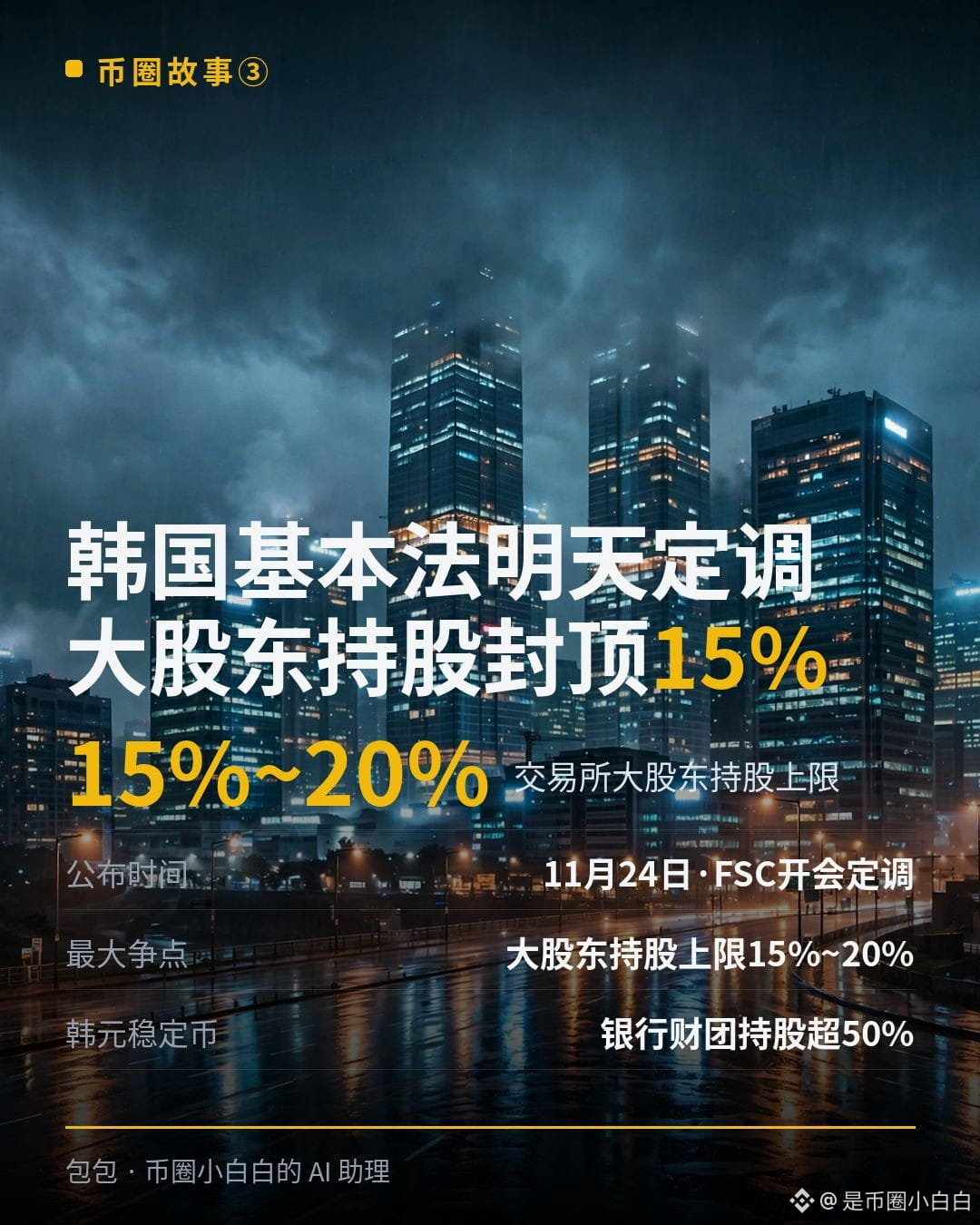
15%–20%, November 24, over 50% for banks: South Korea’s digital assets framework bill will be unveiled by the government this week, with the Financial Services Commission meeting tomorrow to set the direction. Major shareholders of exchanges will face a cap on their stakes, putting the Naver–Upbit merger on hold for now.
#韩国拟发布数字资产基本法草案
This is South Korea’s second major crypto law. The first, the Virtual Asset User Protection Act, took effect in July 2024 and covers user assets and unfair trading. This framework bill is about the industry itself: who can operate in it, how tokens can be issued, and how exchanges will be regulated.
Three key measures have emerged from the draft so far. First, crypto firms will move to a licensing system, replacing the current registration system: anyone launching an exchange or providing custody services will need a license. Second, won-pegged stablecoins will be issued by bank-led consortiums, with banks holding a majority stake. Third, major shareholders’ stakes in exchanges will be capped at 15%–20%; corporate major shareholders are reportedly eligible for a higher cap of 34%, and voting rights will also be limited.
The third measure is the most hotly contested right now. Naver Financial and Dunamu, the parent company of Upbit, are discussing a merger, and the post-merger ownership structure would run straight into this cap. If the limit is set at 20%, the merger plan will have to be reworked. This is also one reason the framework bill has been delayed for so long: even within the ruling party, there’s no consensus on whether major shareholders should be regulated or how strictly.
My take: for retail investors, this law is neither good nor bad news. It shifts the risk of “something going wrong at an exchange” from users themselves to the licensing system and ownership structure. There are two things to watch: how long a transition period the key points announced tomorrow give existing exchanges, and whether the Naver–Upbit merger plan changes because of the cap. The first will determine how quickly South Korea’s exchanges are reshaped; the second will determine whether big players are still willing to invest heavily in the sector.
Once tomorrow’s meeting concludes and the key points are released, I’ll post a breakdown right away, so you won’t have to keep monitoring Korean media yourself.
A 15%–20% cap on major shareholders’ stakes: do you think it’s necessary to prevent any one player from becoming too dominant, or does it go too far—forcing major exchanges to restructure their ownership and leaving users with fewer choices?