Japanese markets are closed, South Korean stocks are plunging, U.S. stocks are under pressure, and Bitcoin is feeling the strain too.
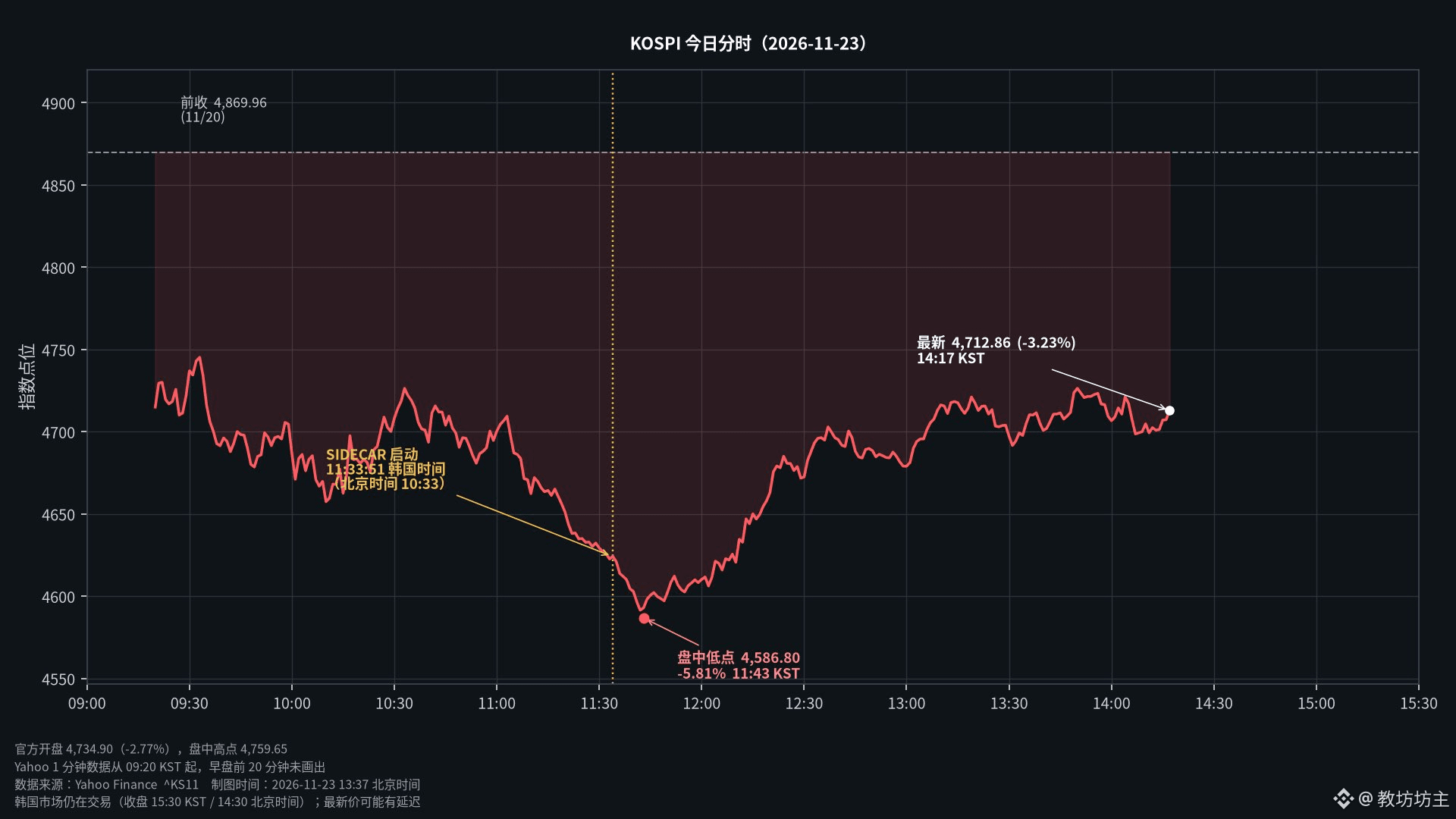
South Korea’s stock market took another heavy hit today, with the KOSPI Composite falling more than 5%. Samsung Electronics and SK Hynix were both down over 5%.
The exchange once again triggered its SIDECAR sell-side mechanism: when KOSPI 200 index futures fall 5% and stay there for a minute, algorithmic sell orders are suspended for five minutes to give the market a chance to catch its breath. This is the second day in a row it has been triggered.
The sell-off was sparked by a sharp drop in U.S. tech stocks, which dragged down the AI sector. The market is reassessing the numbers: Can AI actually generate returns? Is chip demand still strong enough? Are tech stocks overvalued? South Korea’s semiconductor industry is bearing the brunt.
That’s how bear markets work: once things start heading down, one piece of bad news follows another, and the chain reaction across global markets gradually becomes clear. Risks that once seemed unrelated turn out to be all connected.
In times like these, being able to hold cash on the sidelines is a skill in itself.