#chinakoreataiwanpreparestockrescuesaheadofmonday
China, South Korea, and Taiwan announced emergency stock market rescue packages on Sunday to prevent the sharp drop in AI and chip stocks from turning into a global crisis.
Here’s a look behind the turmoil in Asian markets and the measures taken by the countries:
📉 Why Did the Crisis Happen?
AI and Chip Sell-Off: A sharp decline in U.S. stocks such as Nvidia and AMD triggered a major sell-off in global technology stocks.
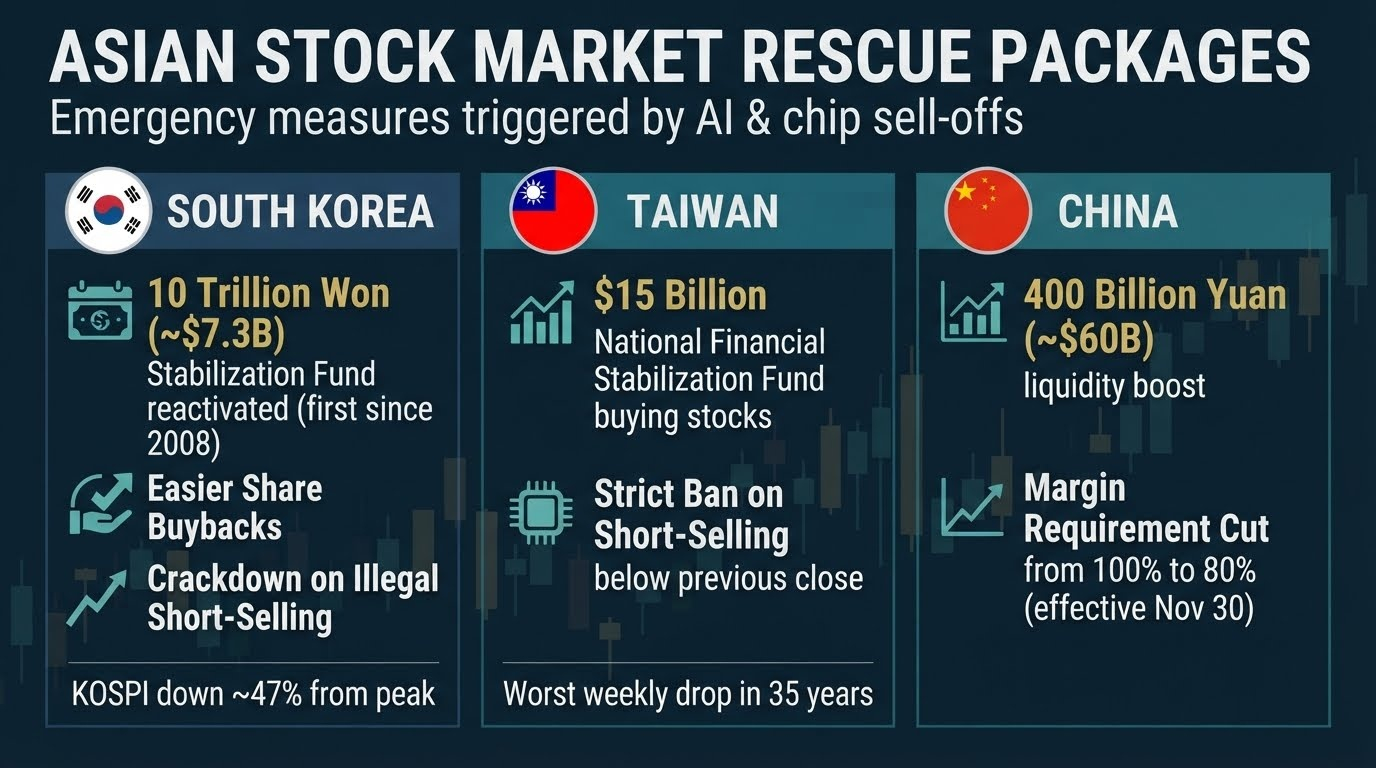
Hard-Hit Indexes: South Korea’s KOSPI index, heavily weighted toward chipmakers, fell about 47% from its peak, while Taiwan’s stock market recorded its worst weekly performance in 35 years.
🛡️ Countries’ Rescue Measures
🇰🇷 South Korea: The Ministry of Finance held an emergency meeting and announced it was preparing to activate a roughly $7.3 billion (10 trillion won) stabilization fund that had not been used since the 2008 crisis. It also made it easier for companies to buy back their own shares and stepped up scrutiny of illegal short selling.🇹🇼 Taiwan: The Financial Supervisory Commission completely banned short selling below the previous day’s closing price. It also announced direct share purchases from the market through the National Financial Stabilization Fund, worth about $15 billion.🇨🇳 China: Stock market regulators lowered the minimum margin requirement from 100% to 80% to make it easier for investors to buy shares on credit (with leverage). The measure, which takes effect on November 30, is expected to inject about 400 billion yuan ($60 billion) of additional liquidity into the market.
📊 What Happened in Markets on Monday?
Despite these measures, investor concerns had not fully subsided at Monday’s opening; South Korean and Chinese stock markets continued to fall, while Taiwan’s market was volatile.
$ZHIPU $ARIA $JCT