
The next opportunity for gold to rise may be gradually emerging from changes in the U.S. AI market.
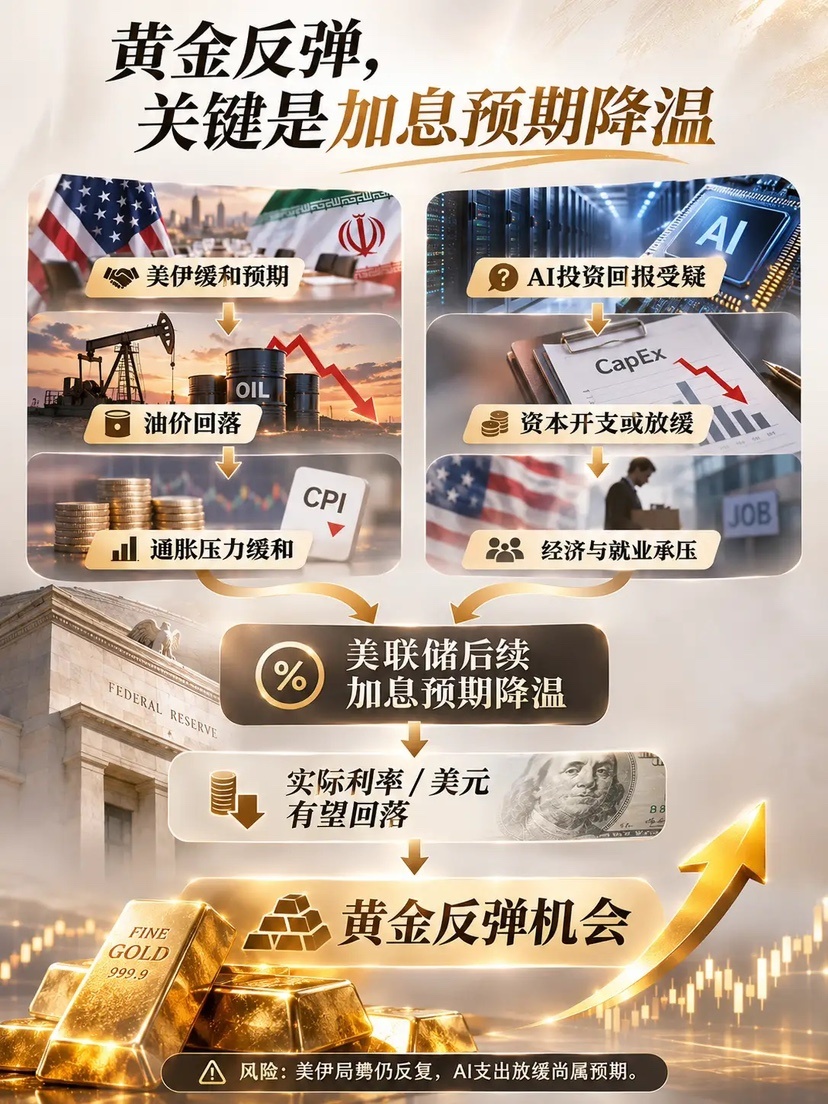
On November 23, international gold prices rebounded by as much as about 1.3% intraday, returning to around $3,580 per ounce. One important factor behind the rebound was growing market concern about whether the U.S. economy could withstand continued rate hikes, as previously elevated interest rate expectations began to ease.
Another development worth watching is that U.S. AI investment is facing growing skepticism.
Over the past two years, U.S. tech giants have continued to ramp up AI capital spending, from GPUs and servers to data centers and power equipment, accelerating expansion across the entire industry. These investments have supported the rise in U.S. tech stocks and fueled economic growth.
But after investing so much money, what ultimately matters is how much you can earn back.
If the commercialization of AI applications falls short of expectations, companies may slow data center construction and cut back on equipment purchases. Tech company valuations could also be affected, and a stock market correction could further weaken consumer confidence.
And that could be a new catalyst for gold.
That’s because if the U.S. economy slows, the Federal Reserve will need to reconsider the costs of continuing to raise interest rates.
Previously, inflationary pressures in the U.S. were significant, and markets were constantly worried that the Fed would continue raising rates. As a result, the dollar and Treasury yields stayed high, putting considerable pressure on gold.
But now the situation is starting to change.
As the outlook for AI investment has come into question and tech stocks have seen a sharp correction, markets have begun to worry about U.S. economic growth and employment. U.S. Treasury Secretary Bessent has also warned that excessively tight monetary policy could put additional pressure on the economy.
Last Friday, the yield on two-year U.S. Treasuries fell by about 12 basis points, and traders began scaling back their bets on a rate hike in December. On November 23, gold rebounded.
This transmission mechanism is important.
Gold itself does not generate interest income. When real Treasury yields keep rising, investors are more inclined to hold interest-bearing assets. But if expectations for future rate hikes ease and real yields begin to fall, the opportunity cost of holding gold will decline.
If the dollar also weakens as a result, gold could receive further support.
The Fed does not need to cut rates right away. If markets simply lower their expectations for future interest rates again, gold may have a chance to move ahead of the shift.
The second development worth watching is that gold may gradually shake off the forced selling it faced earlier.
Earlier, when U.S. tech stocks corrected, gold fell along with them. Some institutions had to sell highly liquid gold for cash to cover asset losses, meet margin requirements, and handle investor redemptions.
That is also why gold sometimes cannot immediately serve as a safe haven during periods of sharp market volatility.
But if the most intense phase of deleveraging in U.S. stocks has passed, forced selling of gold could gradually ease. Demand for gold allocations that was previously held back may also have a chance to reassert itself.
Gold also has another important advantage: long-term buying demand remains in place.
According to the World Gold Council, global central banks made net gold purchases of 321 tonnes in the third quarter of 2026, up 42% year over year, bringing the total for the first three quarters to 675 tonnes.
Central banks continue to increase their gold reserves, mainly to diversify their assets and strengthen the security of their long-term reserves. The U.S. fiscal deficit and debt pressures remain, and reducing reliance on any single currency asset will continue to influence central banks’ allocation decisions.
There has also been a noteworthy shift among households.
According to the China Gold Association, domestic consumption of gold bars and coins reached 444.6 tonnes in the first three quarters of this year, up 26.3% year over year, while gold jewelry consumption fell significantly.
An increasing share of gold demand is shifting toward investment. For some households, gold has become an important choice for asset allocation.
Institutional investors have also significantly increased their allocations in the past.
Global gold ETFs saw net inflows of $2.7 billion in October, marking their fourth consecutive month of inflows. Total holdings reached 4,275 tonnes, a record high at month-end.
However, gold ETFs saw some outflows in November. As of November 20, domestic commodity gold ETFs had net outflows of about 4.7 billion yuan over the past month, indicating that short-term investor sentiment remains fragile. Whether ETF flows turn positive again will be an important indicator of the strength of gold’s rebound.
Oil prices and the U.S. fiscal situation are also worth watching, in addition to these factors.
If easing tensions in the Middle East push energy prices lower, inflationary pressures in the U.S. could ease as well, creating conditions for the Fed to slow the pace of rate hikes. Meanwhile, long-term fiscal deficits and the debt burden continue to support gold’s value as a reserve asset.
So, in my view, there are several important developments to watch for gold going forward.
First, whether U.S. AI investment continues to cool and whether the tech stock correction further affects the economy and employment. Second, whether real Treasury yields and the dollar can continue to fall. Finally, whether central bank gold purchases continue and gold ETF flows turn positive again.
The Federal Reserve has not yet clearly pivoted toward easing, and inflation remains an important risk for gold. If the U.S. economy stays resilient and interest rates rise again, gold prices could remain volatile.
Over the longer term, however, sustained gold purchases by central banks around the world and growing investment demand among Chinese residents have already provided meaningful support for gold demand.
My view is that the next leg of gold’s rally could be driven by two forces at once. One is a weakening of rate-hike expectations as enthusiasm for U.S. AI cools; the other is sustained demand from central banks and investors to increase their gold allocations.
If real Treasury yields genuinely enter a downward trend, gold could see a more sustained rebound.