When you see a trending headline saying “South Korea to tighten oversight of crypto transfers overseas,” don’t take it to mean that, starting today, South Korean exchanges are banning all withdrawals, or that you can’t transfer crypto to your own wallet either.
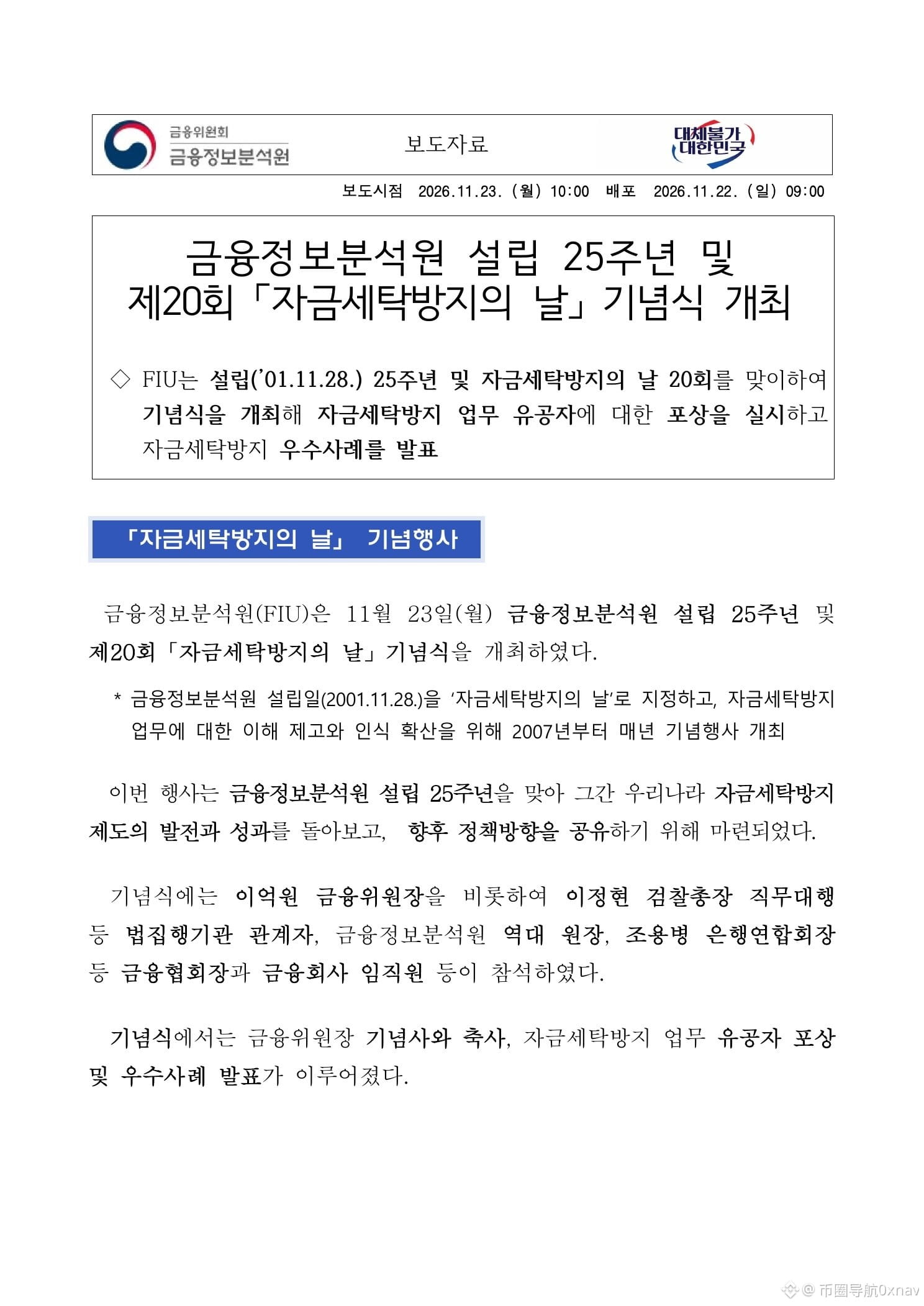
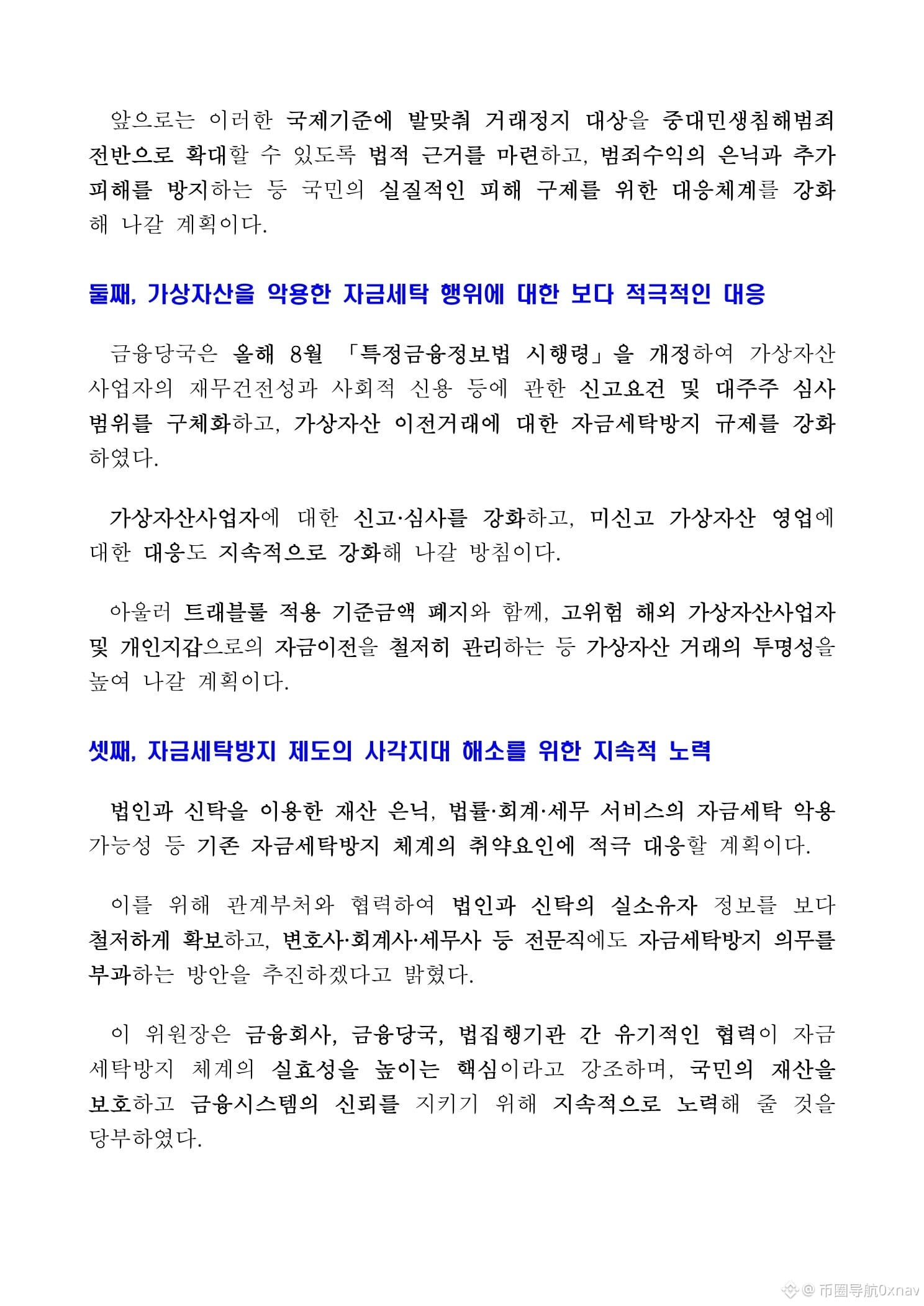
On November 23, a ceremony was held in Seoul to mark the 25th anniversary of the Korea Financial Intelligence Unit (FIU) and the 20th “Anti-Money Laundering Day.” In his commemorative remarks, Financial Services Commission Chairman Lee Eog-weon said that, based on the Enforcement Decree of the Act on Reporting and Using Specified Financial Transaction Information, revised in August this year, the government would significantly strengthen the reporting and review of virtual asset service providers and comprehensively manage transfers of funds to high-risk overseas exchanges and personal wallets. The official press release also said that the government would increase the transparency of virtual asset transactions while eliminating the minimum transaction amount for the Travel Rule. The release was published at 10 a.m. that day.
Here are a few points that directly affect ordinary users 👇
🔹 No new ban on transfers out of the country took effect immediately today. The official wording was “comprehensively manage” and “plans to increase transparency.” The measures are based on the enforcement decree revised in August, not a new law passed at the commemorative ceremony. The official release does not say that buying, selling, or holding assets on licensed South Korean exchanges is prohibited starting today.
🔹 The August amendment already set out the details. In its English-language release at the time, the Financial Services Commission explained that the Travel Rule would be expanded from transactions of “1 million won or more” to transactions of any amount between registered service providers, and that the recipient must also receive information from the sender. Transfers to overseas service providers or digital wallets are allowed for low-risk overseas service providers, but not for high-risk transactions; transfers are also allowed when the sender and recipient are the same person. Transfers of 10 million won or more to these types of addresses must be reported to the Korea Financial Intelligence Unit, regardless of risk level.
🔹 Under the implementation schedule set out in the presidential decree announced on August 18, these rules on transfer transactions take effect six months later, on February 19, 2027. The provisions that took effect first, on August 20, covered other matters, such as service provider reporting and reviews. So it would be inaccurate to say that the “Travel Rule threshold has already been eliminated” and is now fully in effect.
🔹 For personal wallets, the direction set out in the FIU’s supervisory rules published in August is to restrict high-risk transactions and, in principle, allow other transfers only to wallets held in the user’s own name. Today’s official release did not provide a new list of withdrawals “banned starting today.” The authorities explicitly said they would continue to strengthen their response to unregistered virtual asset businesses; users seeking to use overseas platforms that are not registered in South Korea are already more likely to face restrictions or scrutiny.
🔹 At the same ceremony, the chairman also mentioned extending the suspension of transactions in accounts suspected of being used for new types of phishing to cover serious crimes that harm people’s livelihoods, and preparing a separate legal basis for doing so. That concerns the scope of bank account freezes. It is not the same rule as “crypto transfers overseas,” so don’t confuse it with a withdrawal button being switched off today.
For users in South Korea, the first thing to check for now is the current withdrawal, identity verification, and Travel Rule requirements of the licensed exchange you usually use. Around February 19 next year, check whether the Travel Rule has been extended to small transactions and whether transfers to high-risk overseas platforms and personal wallets are still allowed.
Which concerns you more: whether you’ll still be able to withdraw to your own wallet, or whether your usual exchange might change its withdrawal rules early?
#韩国将加强加密境外转账监管 #BTC #ETH