Ethereum's next upgrade could break 15,000 smart contracts — and it might now slip to May 2027.
Glamsterdam, the hard fork meant to supercharge Ethereum by raising the block gas limit from about 60 million to up to 200 million, has hit a wall. ChainSecurity warned in October that the gas repricing proposals at its heart — EIP-8037 and EIP-8038 — could disrupt existing contracts, and developers pulled the Hoodi testnet fork planned for October 26.
The numbers are stark: Ethereum Foundation developer Marius van der Wijden warned the changes could break 10,000 to 15,000 contracts, some unpatchable, and audits flagged about 200 classes of affected contracts. Code that never changes can still stop working if an operation's price changes. At Thursday's All Core Developers call, the Foundation and auditors said they have contacted at least 50 affected companies, with fixes due by mid-December for the three high-impact ones, January 10 for the rest.
No decision yet: keep the specs and mainnet could activate in mid-January 2027; wait until January to decide and it slips to late February or early March; revise the specs and the earliest date is April or May.
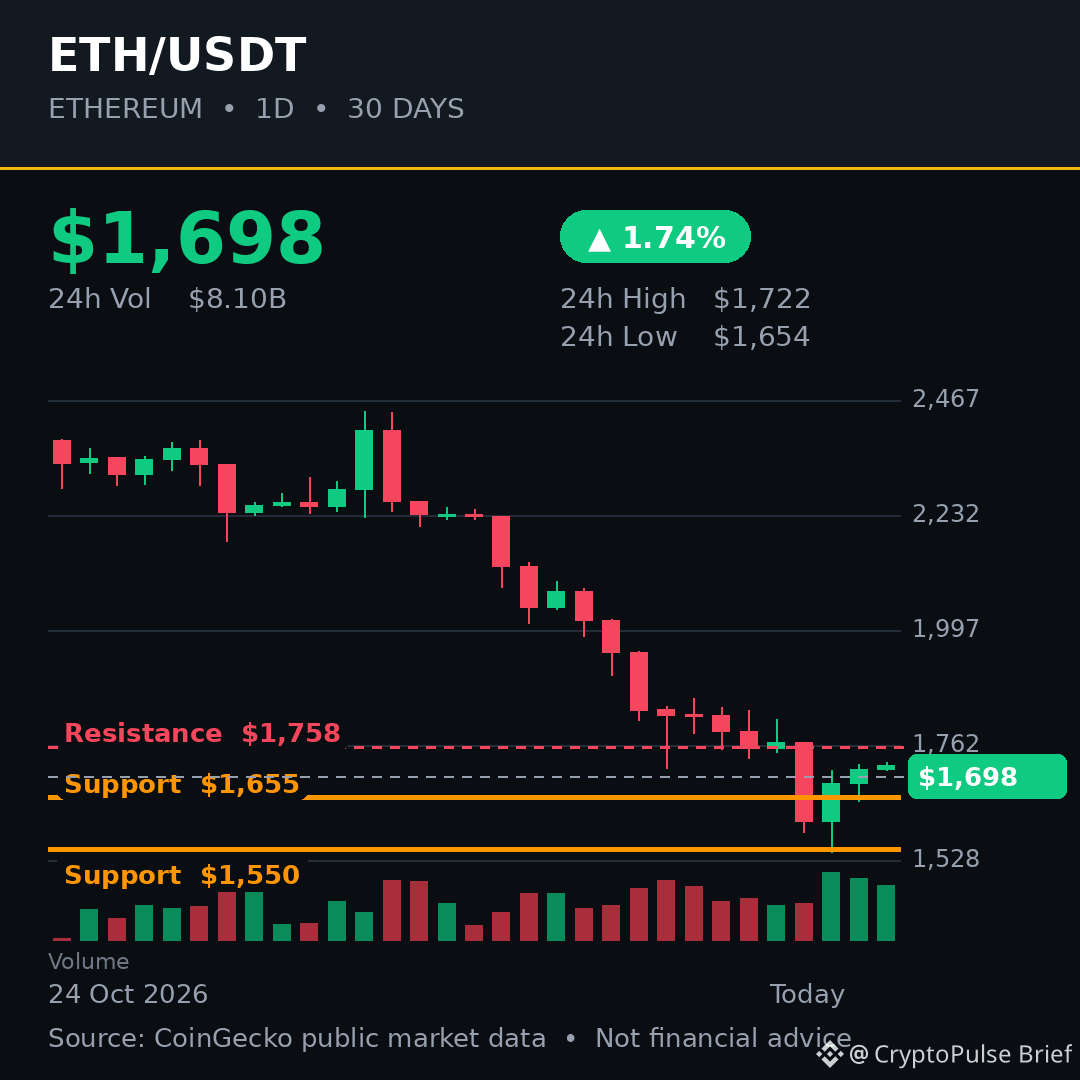
The backdrop is unforgiving: $ETH trades near $1,698, up about 1.7% in 24 hours, but it fell below $1,550 on November 21, is down 42% this year, and spot Ethereum ETFs have now seen four straight sessions of outflows, $131.2 million in the latest. $BTC holds above $60,000 at about $60,900.
My take: scale fast or don't break things. A delayed Glamsterdam is the honest choice, but every month of delay is a month rivals ship faster. Ethereum's moat is its apps; breaking them to go faster would be self-defeating.
Levels to watch: support $1,655, then $1,550, the Nov 21 low; resistance $1,758, then $1,800.
Delayed-but-safe, or fast and risky — which Glamsterdam would you choose?
Source: CoinTelegraph, 20 Nov 2026
Follow for daily crypto updates.
#Ethereum #Crypto #ETH
Not financial advice.