
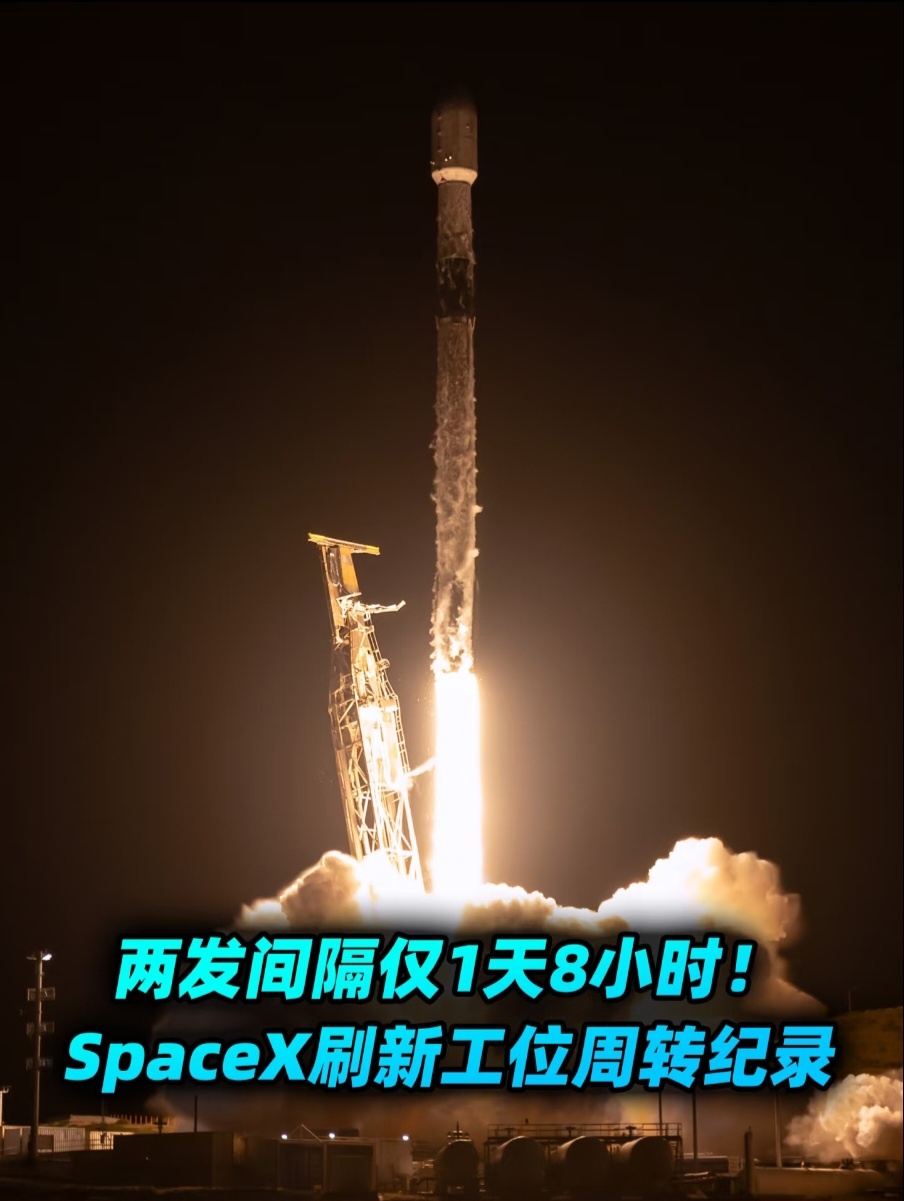
At 20:23 Beijing time on November 22, SpaceX’s Falcon 9 rocket (B1097.14) lifted off from SLC-4E at Vandenberg Space Force Base, successfully placing several Starshield satellites for the U.S. National Reconnaissance Office’s NROL-136 mission into their planned LEO orbit. The rocket’s first stage successfully returned and landed in the LZ-4 zone.
Just 1 day, 8 hours, 3 minutes, and 21 seconds had passed since SpaceX’s previous launch from Vandenberg’s SLC-4E, making this the fastest launch-pad turnaround to date—around 23 hours shorter than the previous record.
NROL-136 is a classified mission for the U.S. National Reconnaissance Office, and payload details are strictly confidential (believed to be Starshield). Starshield is the military version of Starlink that SpaceX is developing for the U.S. military. Its core payload concept is “modularity + multi-mission adaptability.” It is no longer just a communications satellite, but a space platform that can carry optical/infrared reconnaissance sensors, missile-warning detectors, and electronic intelligence equipment.
This launch was:
● The 157th U.S. launch this year (the 8th this month),
● The 704th Falcon 9 launch (the 122nd this year),
● The Falcon 9 has now completed 350 consecutive successful launches.
SpaceX launches are becoming routine, and launch costs keep falling. Sooner or later, it’ll become a money-printing machine for the space industry!