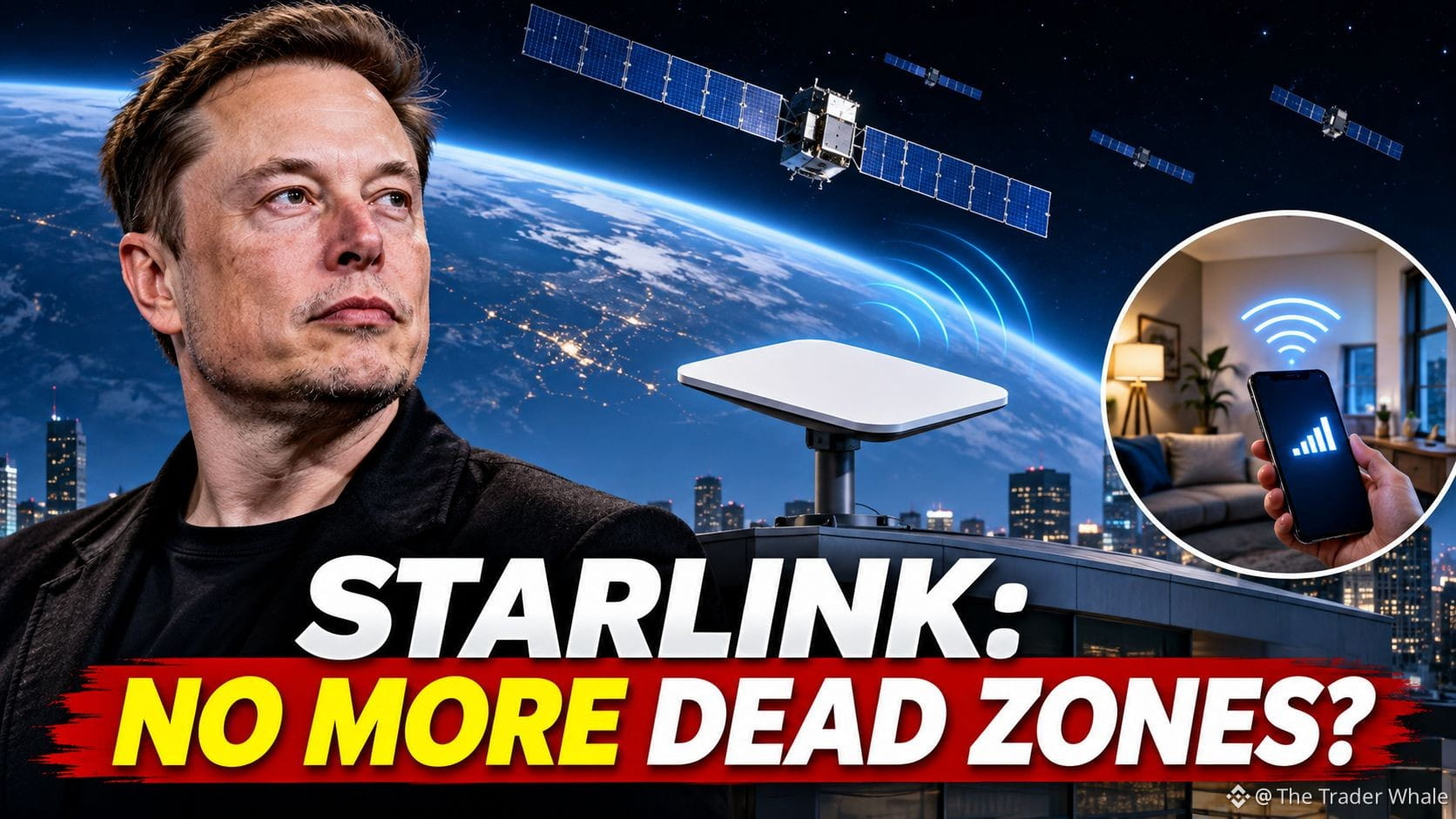
Elon Musk Reveals New Starlink Plan to Eliminate Mobile Signal Dead Zones
November 23, 2026 | Technology & SpaceX News
Elon Musk's $SPCX is developing a new generation of miniature rooftop cellular stations designed to improve mobile connectivity in areas where traditional cellular networks and satellite signals struggle to reach.
Speaking at the New York Times DealBook Summit on November 18, Musk revealed that SpaceX has completed the design of a compact micro-cell tower that could be installed on rooftops, similar to an existing Starlink satellite dish.
How the technology will work
1. Miniature Rooftop Cell Towers
The proposed devices would act as small ground-based cellular stations, helping extend Starlink Mobile coverage in densely populated areas.
2. Solving Indoor Connectivity Problems
Satellite signals can struggle to penetrate thick walls and metal roofs. The new rooftop stations are intended to address this limitation by providing cellular connectivity closer to users.
3. Next-Generation Starlink Satellites
SpaceX also plans to begin launching its Direct-to-Cell Version 2 satellite constellation in 2027. Musk estimates that the new generation could deliver approximately 40 times the bandwidth of the current Version 1 system.
4. Expected Production in 2027
Musk said the miniature cellular stations could enter production next year, although no specific commercial release date or pricing has been announced.
Why this development matters
The combination of satellite connectivity and ground-based cellular infrastructure could help SpaceX expand Starlink Mobile into a broader wireless network.
The development could also increase competition in the telecommunications industry, although Musk clarified that he does not expect traditional operators such as AT&T and Verizon to disappear.
The project represents another major step in SpaceX's ambition to expand beyond satellite internet and become a larger player in global mobile connectivity.
#BlackRockLaunchesHKDollarDigitalLiquidityFund