
#BTCReboundsAbove60KAmidWhaleDipBuying
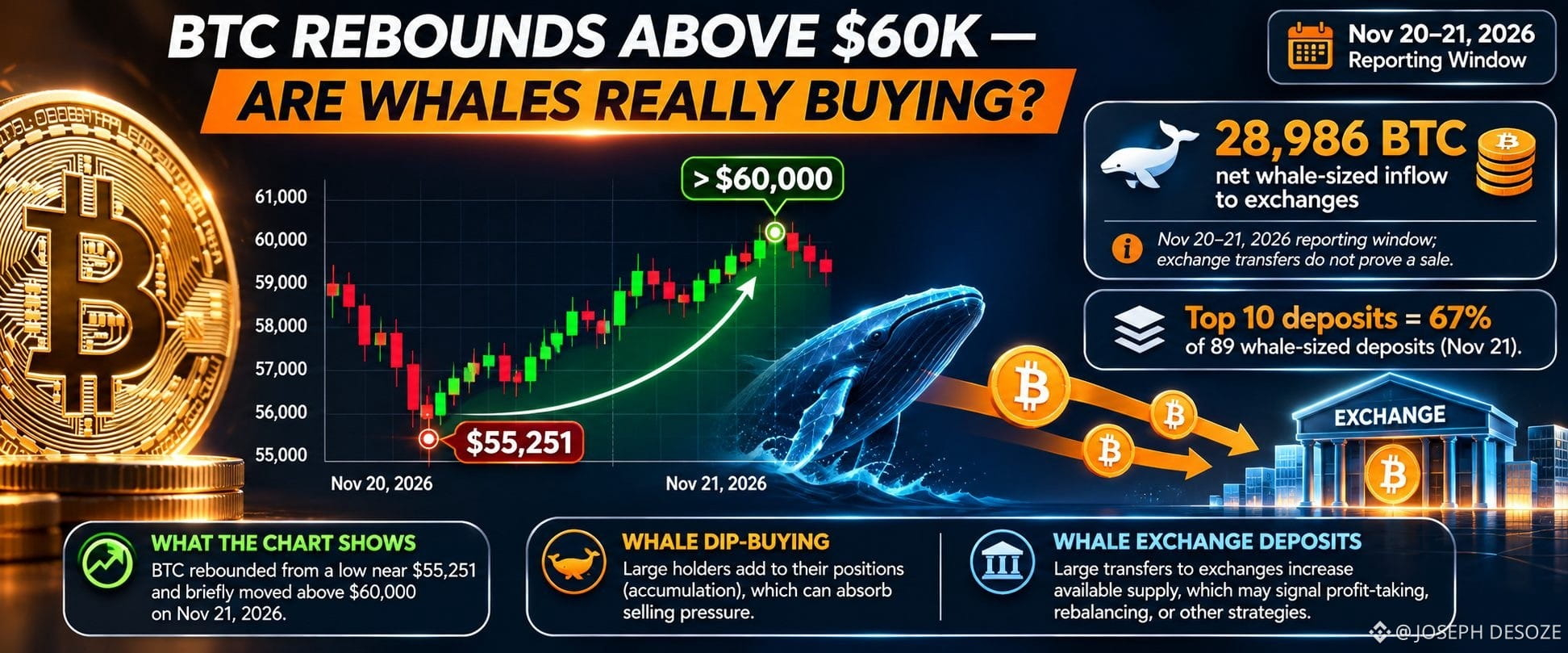
BTC Rebounds Above $60K, But Are Whales Really Buying the Dip? 🐋
Bitcoin's rebound above $60,000 came with an on-chain detail that deserves a closer look: large holders were also moving substantial amounts of BTC onto exchanges.
On November 21, Bitcoin recovered more than 8% after briefly touching $55,251.60, its lowest level in two years.
But the whale-flow data tells a more complicated story.
According to Swiss Whale Intelligence, the November 20–21 reporting window recorded approximately 28,986 BTC in net whale-sized exchange inflows, around 114% above the seven-day average.
Another interesting detail: the ten largest deposits accounted for 67% of the 89 whale-sized exchange deposits recorded on November 21.
This concentration matters.
A price rebound can create the impression that large investors are aggressively accumulating. However, exchange deposits and accumulation are two different things.
When whales move BTC onto exchanges, they may be preparing to sell, repositioning funds, or managing liquidity. It does not prove that selling actually happened.
Equally, an exchange withdrawal does not automatically prove a fresh purchase.
My takeaway is that the $60K recovery needs more than a headline price level to establish its strength.
The next signal worth watching is whether whale exchange inflows decline while BTC maintains its recovery. That combination would provide a more convincing picture of changing supply pressure.
#Bitcoin #BTC #CryptoMarket #WhaleActivity