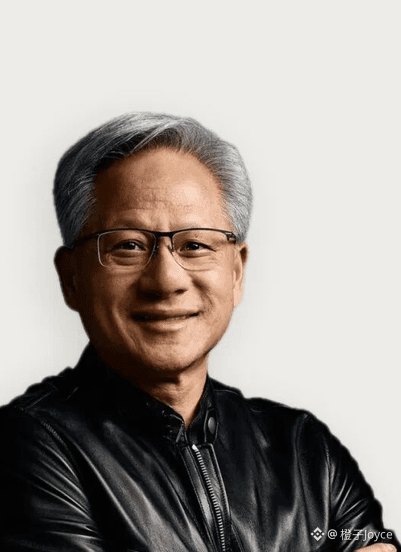

Intel, SpaceX, or striking out on his own? Speculation swirls around Jensen Huang’s “next chapter”
① Just 10 days after Jensen Huang stepped down as Nvidia CEO, all kinds of scenarios for his “second act” are already circulating in the market;
② Some speculate that Huang may join another tech company, such as Intel or SpaceX, while others think he may strike out on his own and start a new company;
③ On prediction markets, the most popular bet is that Huang is most likely to start a company of his own.
The question of what Nvidia’s former CEO Jensen Huang will do next has become one of the hottest topics on Wall Street and in Silicon Valley. The future of this AI industry titan matters not only to him personally, but also to the direction of the global AI computing landscape.
American literary giant F. Scott Fitzgerald once said, “There are no second acts in American lives.”
Yet Silicon Valley has no shortage of examples of tech titans “making a comeback after a setback.” In May 1985, Steve Jobs resigned from Apple, the company he had helped found, amid a power struggle. About four months later, he founded computer company NeXT. Eleven years later, Apple acquired NeXT, and Jobs returned, eventually taking the reins at Apple.
Elon Musk was ousted as PayPal’s CEO in 2000. About 18 months later, he founded SpaceX, which has since become a global leader in commercial spaceflight.
Now, just 10 days after Huang stepped down as Nvidia CEO, all kinds of scenarios for his “second act” are already circulating in the market. Some speculate that Huang may join another tech company, such as Intel or SpaceX, while others think he may strike out on his own and start a new company.
A bold theory has recently been circulating: Huang could join Intel to help the veteran chipmaker rebuild its AI strategy, perhaps even becoming CEO, while current Intel CEO Lip-Bu Tan might be willing to move into an advisory role. However, there is no evidence that any such discussions are currently taking place.
The speculation was first mentioned by Jordan Klein, an analyst in Mizuho Securities’ trading division, in a client note citing a portfolio manager. Klein met with a group of hedge fund managers last Thursday to discuss Nvidia’s CEO succession and Huang’s next move.
The portfolio manager suggested that Huang could join Intel and draw on his experience leading the development of Nvidia’s AI chips to build an entirely new GPU for Intel. According to Klein, investors at the meeting thought Tan had never intended to serve as Intel CEO for the long term. If Huang were willing to take over, Tan might step aside and offer support.
Huang joining SpaceX is another theory currently circulating on Wall Street. Musk recently said that it would be an honor to hire Huang, and that no one could truly replace him.
On prediction markets, the most popular bet is that Huang is most likely to start a company of his own. On Polymarket, that possibility is priced at 27%; the next most likely outcome is that he takes no new position before 2028, at 24%; the probability of his returning to Nvidia is 20%; joining SpaceX is at 8%; and joining Intel is just 3%.
Semafor journalist Rohan Goswami recently predicted that Huang might found a new semiconductor company, potentially raising $50 billion to launch it from friends and industry allies.
Speculation about Huang’s next move comes as U.S. tech stocks have endured their worst week in years. Since hitting a record high on October 6, Nvidia has shed more than $2.7 trillion in market value, including nearly $900 billion in just the past week.
U.S. President Donald Trump hopes Huang will return to Nvidia. According to a report by Reference News on the 21st, Trump said at a press conference at the White House on the 20th, local time, that he looked forward to Huang’s return. “I really hope he comes back. He is one of the world’s top talents,” he said. Emphasizing that Nvidia is vital to the United States, Trump added, “It’s because of him that the company has established a position 10 years ahead of its competitors.”