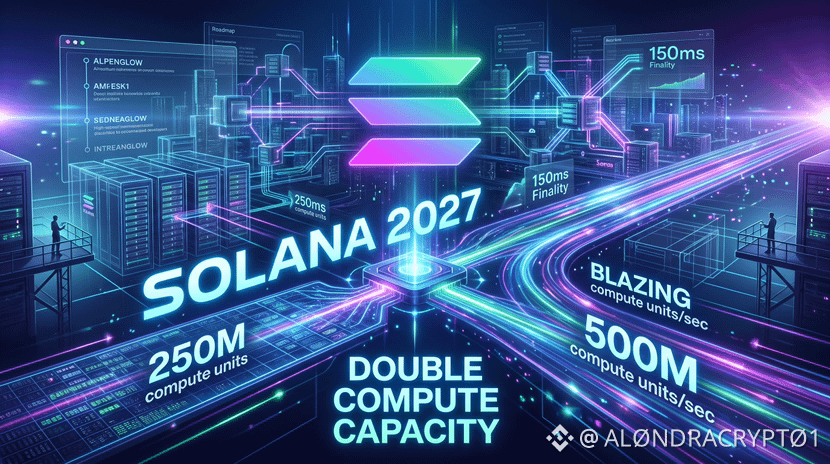

$SOL Solana has just presented its technical roadmap for 2027 at the Breakpoint event in London, with a very clear goal: double its network’s computing capacity (from 250 million to 500 million compute units per second) and reduce by 80% the computing resources needed to process transactions with token accounts.
This plan, presented by Brennan Watt (CEO of Anza, the core development firm behind the network), comes just after the October launch of the Alpenglow upgrade, which already reduced the final confirmation time for transactions from 12.8 seconds to just 150 milliseconds.
In addition to making the network much more efficient and freeing up space without requiring validators to use more expensive hardware, the roadmap proposes raising the limit on accounts per transaction from 64 to 96 and introducing vector processing to allow artificial intelligence models to run directly on-chain.
For those of us who closely follow the growth of ecosystems beyond daily price movements, these kinds of advances show that Solana continues to place a strong bet on speed, low costs, and scalability for real-world financial applications and tokenized assets.
When you see a project like Solana continuing to improve its infrastructure at this pace while the market is going through a correction,
Do you take advantage of these periods of low prices to accumulate projects with strong long-term fundamentals, or do you prefer to wait for the market trend to change?
#SolanaSets2027RoadmapToDoubleComputeCapacity