Asian markets are starting to take matters into their own hands.
The biggest thing to watch this weekend isn’t how much U.S. stocks have fallen, but that China, South Korea, and Taiwan have already begun taking action.
All three moved at nearly the same time:
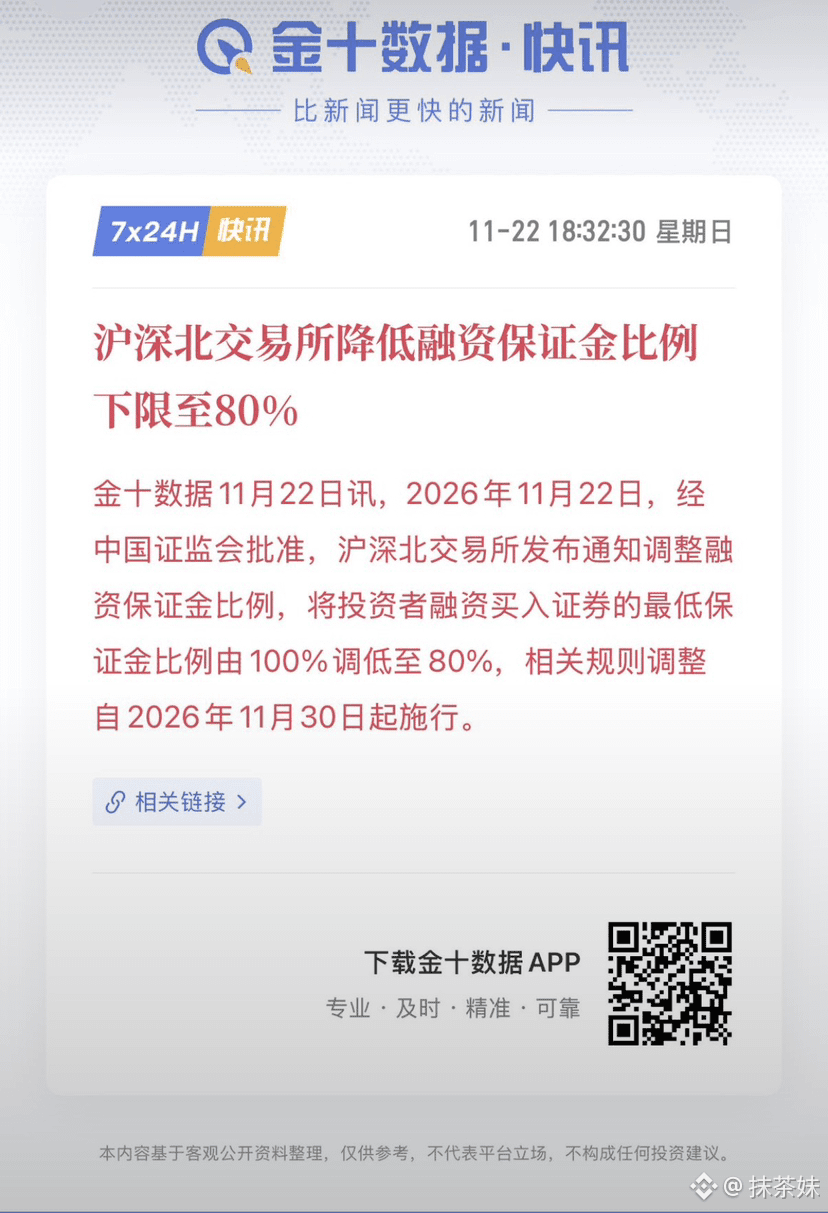
1️⃣ China lowered the margin requirement for financing from 100% to 80%, boosting the market’s capacity for margin financing.
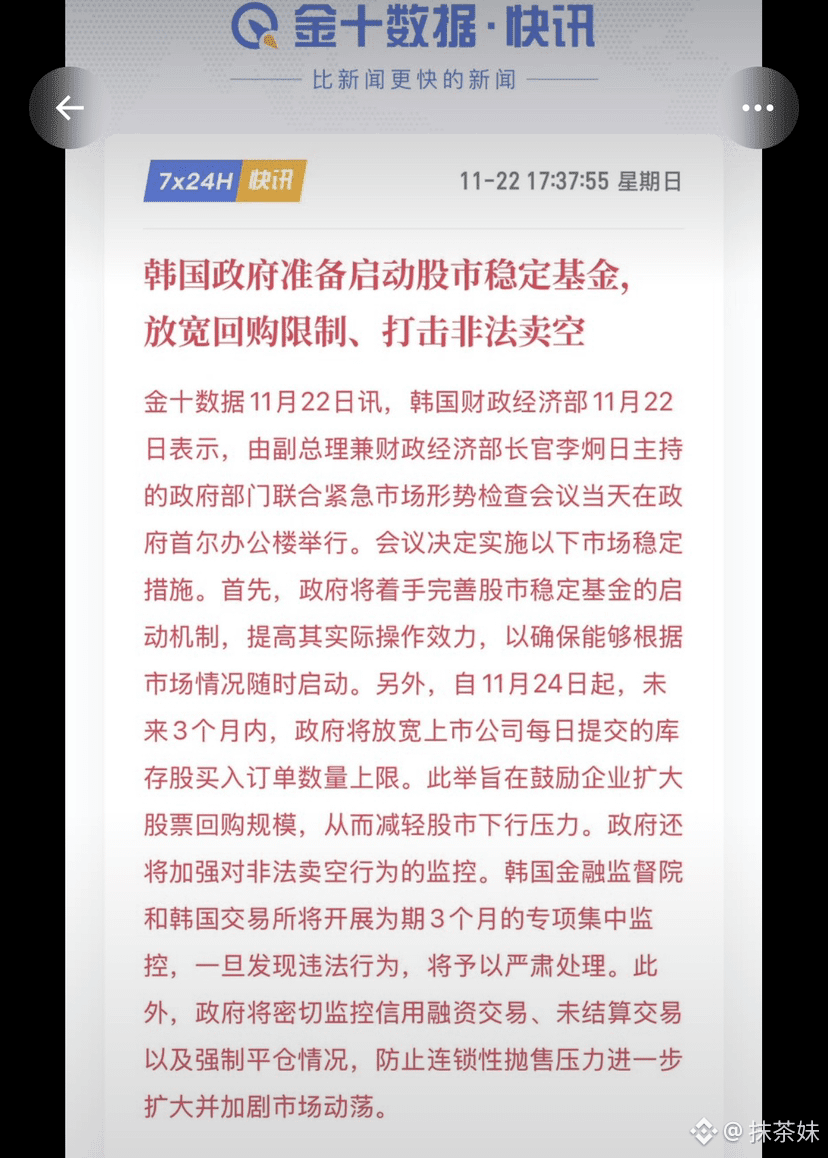
2️⃣ South Korea is preparing a 10 trillion won stabilization fund, which could buy stocks directly if necessary.
3️⃣ Taiwan’s National Financial Stabilization Fund confirmed it would step in, while also restricting short selling at low prices and raising margin requirements for securities borrowing and lending.
What does this mean?
Asian markets are starting to worry that selling pressure in overseas tech stocks could spill over further into local markets.
But there’s one key distinction:
Policy support does not mean the market has bottomed out.
What will really determine Monday’s market action is whether global investors have stopped pulling out, whether U.S. stock futures can stabilize, and whether selling pressure on tech stocks has eased.
If news of market support emerges but markets still open lower and keep falling, that could mean selling pressure is far greater than policymakers anticipated.
Watch for three key signals tomorrow:
* How well Asian markets hold up after opening.
* Whether U.S. stock futures continue to fall.
* Changes in gold, the U.S. dollar, and Treasury yields.
Monday’s market will offer the first clues as to whether the rescue measures can succeed. #GlobalStocksPostLongestLosingStreakInThreeYearsAsInvestorRiskAversionRises