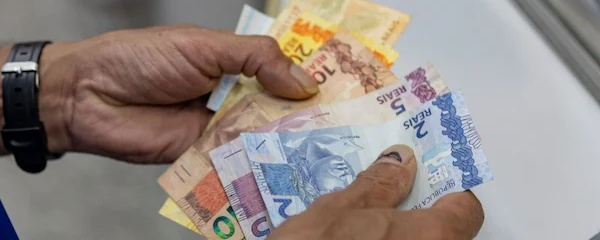

Brazil’s central bank had to intervene on Thursday to support the real amid growing expectations of further interest rate hikes in the United States.
Brazil faces a “confidence shock,” and the real is Latin America’s second-most depreciated currency. Brazilian real.
Bloomberg Línea — Brazil faces a “confidence shock” driven by fiscal uncertainty, which has put pressure on the real and caused it to fall 7.84% against the U.S. dollar so far this year.
“What Brazil has been experiencing since the second round on October 25 is a confidence shock,” Jonathan Fortun, senior economist at the Institute of International Finance (IIF), told Bloomberg Línea.
The real lost 16.18% against the dollar between October 23 and November 19 amid the process that resulted in the reelection of left-wing President Luiz Inácio Lula da Silva.
The Brazilian real is the second most depreciated currency in Latin America so far in 2026, behind only the Chilean peso.
In Brazil, the real fell nearly 1% on Thursday, and the Central Bank had to intervene to support the currency.
The Central Bank sold US$1 billion in the spot market, its first intervention of that kind since December 2024, after President Lula da Silva said he was in no hurry to appoint his finance minister.
Uncertainty over the fiscal accounts continues to weigh on investor sentiment.
The Senate approved the government's spending cuts, but with “a nominal deficit above 9% of GDP, that was not enough to stop the real from falling.”
According to the IIF economist, part of November's decline was also due to expectations of higher interest rates in the United States following “a high inflation reading, the kind of shock that the real, given its liquidity and carry, tends to amplify.”
For the economist, “what is striking is that the rest of the region was barely affected in terms of sovereign risk.”
He explains that between October 23 and November 16, Brazil's sovereign spread rose 37 basis points, while the average for Chile, Colombia, Mexico, Peru, Uruguay, and Panama rose just 1 basis point. “This pattern goes back a long way, and since 2009 the average spread for these countries has moved between 0.8 and 0.9 points for every point in the global emerging-market debt index, and only between 0.1 and 0.2 when Brazil's spread rises for domestic reasons.”
In this regard, he notes that investors treat Brazil's fiscal risk as “an internal problem” and price neighboring countries' debt according to global conditions and their own fiscal and monetary frameworks. “That isolation would be tested if Brazil takes too long to anchor its fiscal policy or if U.S. rates rise enough to move the global index, which is the factor that truly drags neighboring countries' spreads along with it.”
Lula faces a new reality
Brazil. Luiz Inácio Lula da Silva, president of Brazil, speaks during a press conference at the Workers' Party (PT) camp after the second round of voting in São Paulo, Brazil, on Sunday, October 25, 2026.
The economic model of Lula's first governments worked thanks to the commodity boom, but it now faces a different reality, Vladimir Fernandes Maciel, coordinator of the Mackenzie Center for Economic Freedom (CMLE) in the country, told Bloomberg Línea.
The professor of economics at Mackenzie Presbyterian University (UPM) says export growth made it possible to increase tax revenue, finance public spending, and maintain a primary surplus.
At the same time, the accumulation of international reserves and the appreciation of the real reduced inflationary pressures and made lower interest rates possible, which encouraged private investment.
In that context, redistributive policies were able to coexist with economic growth.
“The situation is different today. Public spending exceeds tax revenue, and public debt is growing faster than the economy,” said Fernandes Maciel. “GDP growth rates are moderate, and GDP per capita remains stagnant. Inflationary pressures resulting from higher aggregate demand driven by public spending are keeping interest rates high and reducing private investment.”
This is compounded by household debt and the failure to meet financial obligations.
Under these conditions, the analyst concluded, “there is no balance among the different factors, and social policies end up being mere imitations.”
Cristina Helena Pinto de Mello, professor of economics at the Pontifical Catholic University of São Paulo (PUC), told this publication that Brazil demonstrated, especially between 2003 and 2010, that it is indeed possible to expand social inclusion policies, reduce inequality, and at the same time preserve market mechanisms and attract investment.
“But this experience should not be interpreted as an automatic formula for development,” Pinto de Mello told Bloomberg Línea.
To achieve this, she believes several important conditions must be met.
First, Pinto de Mello believes it is necessary to coordinate social policy with a productive development strategy.
She argues that inclusion through consumption is important, but it must be accompanied by increased productivity, industrial diversification, technological innovation, and workforce training.
Second, she says that an institutional environment capable of sustaining long-term commitments must be built. Productive investments, especially in infrastructure and industry, require planning horizons that extend beyond electoral cycles.
Third, she states that it is essential to coordinate fiscal, monetary, industrial, and social policies. “When these policies operate in contradictory ways, the result may be greater uncertainty, high interest rates, and reduced investment,” she noted.
Regarding the possibility of replicating this experience in Latin America, I believe its general principles can be shared, but there is no single model that can be reproduced. Each country has its own productive structure, fiscal capacity, institutional framework, and international integration.
“The Brazilian experience offers an important lesson: reducing inequality can be part of an economic development strategy, and not merely political compensation,” according to Pinto de Mello. “The market plays a fundamental role in the economy, but it cannot be considered a neutral entity whose expectations necessarily reflect economic reality. Expectations are also shaped by narratives and interests. Therefore, it is essential to prevent short-term views—unsupported by data—from generating false narratives that undermine confidence and compromise investment decisions.”
\u003ct-131/\u003e\u003ct-132/\u003e\u003ct-133/\u003e\u003ct-134/\u003e\u003ct-135/\u003e\u003cc-136/\u003e