
One character off, and $70 million in WBTC ended up in someone else’s pocket
Let’s look at a few cases.
One whale copied a mistyped address and sent out WBTC worth nearly $70 million. At the end of 2025, someone else first made a test transfer and, after confirming it went through, felt safe sending a much larger amount. But nearly 50 million USDT still ended up in a scammer’s wallet. Then, in January 2026, the same trick struck again, costing another whale 4,556 ETH, worth about $12.4 million at the time.
All of these incidents used the same technique, known as address poisoning. And the problem is far bigger than just a few headline-grabbing cases. Carnegie Mellon University analyzed two years of on-chain data and identified around 270 million address-poisoning attacks.
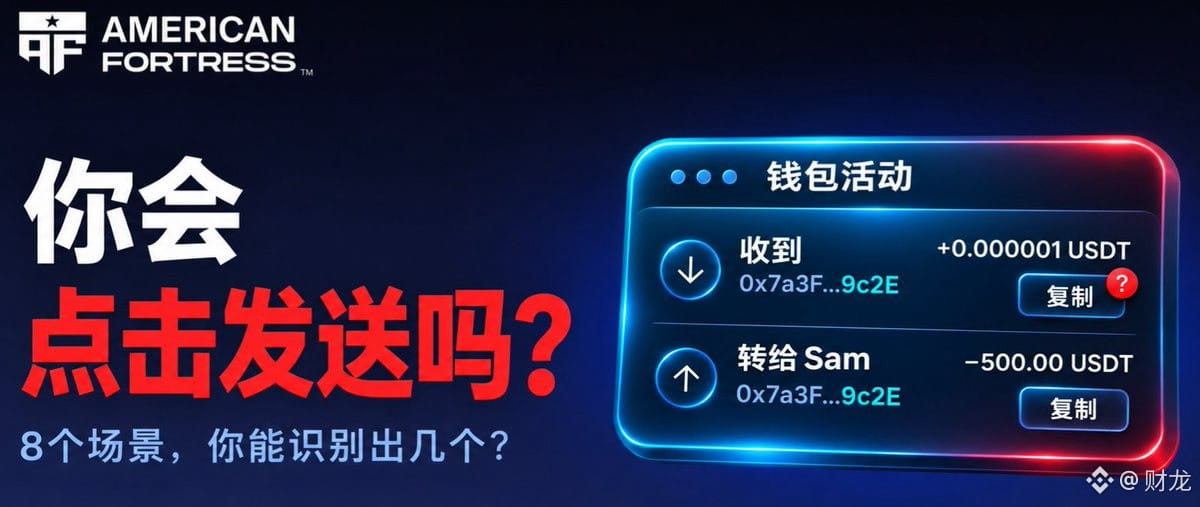
The technique itself isn’t complicated. Wallet addresses are long strings of characters, and most people check only the first and last few. Attackers generate fake addresses with matching beginnings and endings but different characters in the middle. They then send the target a tiny amount—or simply make a zero-value transfer—so the fake address appears in the target’s transaction history. When the target makes another transfer, they may copy an address from their history without thinking, sending the money straight to the attacker.
Test transfers don’t protect you either, and that’s why. The small test goes to the correct address, but once it’s complete, a fake address can slip into the transaction history right away. If the next, larger transfer is copied from that history, the earlier test was pointless.
Viewed across the industry, this is pretty absurd. DeFi has matured to the point where strategies like looping leverage and complex derivatives are well established, yet for the simplest task of sending some U, users still have to scrutinize dozens of characters one by one. Get just one wrong, and the money is gone.
Addresses have another problem, too: privacy. On-chain records are public. Once a wallet address is exposed, anyone can follow it and clearly see the size of your holdings, your transaction history, and where your funds move. People who regularly handle large sums on-chain are effectively laying their books open for everyone to see.
One project is trying to address both of these problems: American Fortress (@Americanfort_io).
Its product is called FortressName, and the idea is straightforward: use a name instead of an address. Users can reserve a name for their wallet in advance, something like @小萌. Once the full wallet launches, anyone sending you funds can enter that name to find the right way to pay you—no need to copy that long address. Removing the copy-and-paste step also eliminates a major opportunity for address poisoning.
For privacy, it has designed a private payment mechanism called Send-to-Name. According to the project’s design, each sender-recipient relationship uses a separate address. For example, a transfer from A to you would use one address, while a transfer from B would use another. This makes it much harder for outsiders to use a single fixed address to piece together your balance and transaction history.
So this system tackles two things at once: transfers become more convenient and less prone to mistakes, while incoming payments become more private, making it harder for others to dig up information about your assets.
Most people are already used to sending money by name. With WeChat Pay or Alipay, you usually find a contact and enter their name or phone number; nobody memorizes a long account number. The crypto industry has spent years focusing on capital efficiency and figuring out how to squeeze a few more percentage points out of DeFi yields, while the most basic on-chain payment experience has barely improved. It’s time to fix that.
Of course, there’s still a gap between a project’s design and how it works in practice. For now, FortressName lets users reserve a name, but the full wallet hasn’t launched yet. We’ll have to wait until the product is up and running to see how well Send-to-Name’s privacy mechanism works in practice and how many people use it. American Fortress’s eventual impact is worth following.
Another trend will make this need even more urgent. More and more AI agents will soon manage wallets and initiate transfers on their own, which will only increase the frequency of on-chain transactions. By then, if people still have to check each character in a 42-character address before sending money, the experience will be hopelessly outdated.