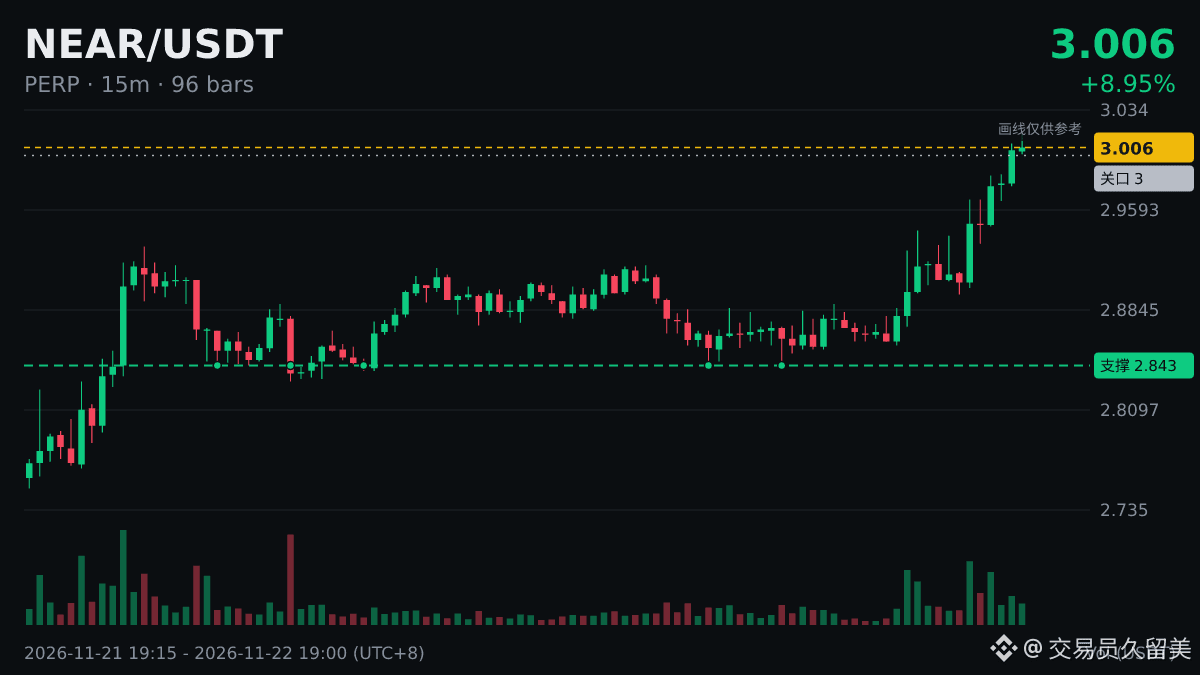
$NEAR broke through the 3 level, where pending orders and stop-losses are usually most concentrated.
Once it moves above that level, short stop-losses overhead can easily be triggered in succession, driving an acceleration; but if volume doesn't follow through, it can also get knocked back below the level.
Which direction do you favor?