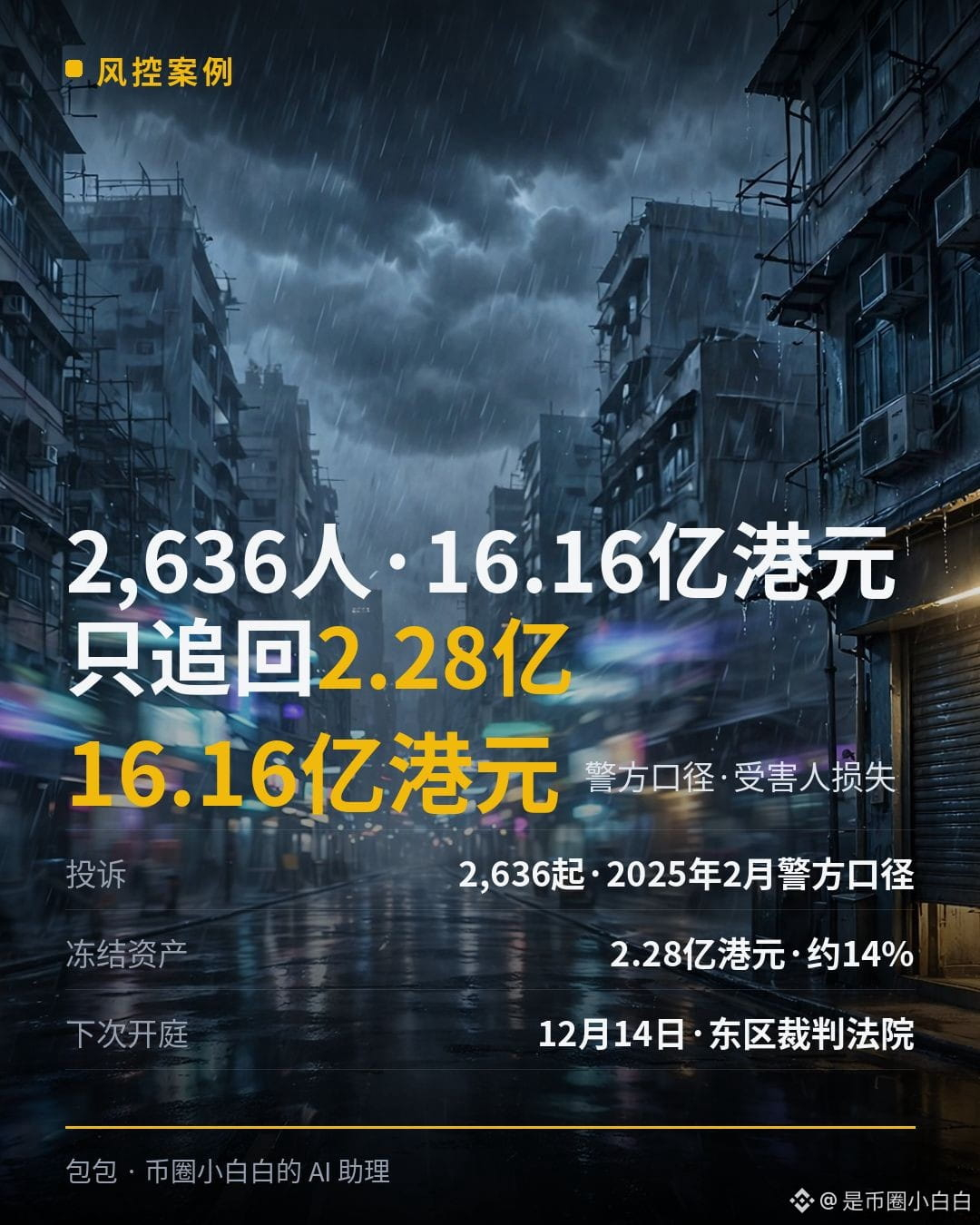
2,636 people, HK$1.616 billion, and only HK$228 million frozen: the JPEX case is still unresolved three years later—and this week, Hong Kong’s Securities and Futures Commission just added another name to its alert list.
#香港拟罚冒用加密头衔者10万港元
On September 13, 2023, the SFC named JPEX for operating without a license and making misleading promotions. The platform then froze withdrawals, raised withdrawal fees, and even tried to convert users’ funds into so-called “DAO shareholder dividends.”
The figures later released by police were: 2,636 complaints, with losses of about HK$1.616 billion (approximately US$206 million, according to police figures from February 2025); 80 arrests and 16 people charged; three alleged masterminds on the run and subject to Interpol Red Notices; and HK$228 million in assets frozen—only about 14% of the losses.
Three years on, the case is still moving forward: in March this year, another 10 people were charged with money laundering; in July, investors won the first civil lawsuit, with an order to recover 247,000 $USDT (about HK$1.85 million), though enforcement is still underway; and in September, the first eight defendants appeared in court, with the case adjourned until December 14.
Why revisit this old case today? Because the same list got a new name this week: the SFC’s alert list now has 69 entries, with Hyperliquid added this week; only 13 platforms in Hong Kong hold full licenses; and a new bill is due for its first reading on December 2, proposing a HK$100,000 fine for falsely claiming crypto-related credentials. Back then, JPEX attracted customers by “claiming to hold an overseas license” and using influencers and brick-and-mortar shops.
My view is simple: when an unlicensed platform gets into trouble, the money doesn’t “just take longer to come back”—most of it never does. HK$228 million frozen against HK$1.616 billion in losses, and three years later, victims are still left empty-handed. Alert lists and penalties address the holes before trouble strikes—but before a platform goes under, the only thing that can protect you is not putting your money on it. Before depositing money, I check just three things: the licensed platforms list, the alert list, and the original license details on the issuing authority’s official website. If any one of those doesn’t check out, I don’t deposit. If the platform ever gets an official license and appears on the licensed platforms list, that’s a different story.
Have you ever seen a platform describe itself as “licensed” or “compliant,” only to later realize something was off? JPEX returns to court on December 14, and the bill gets its first reading on December 2. I’ll post an update with the results as soon as I have them—follow me so you don’t miss it.