I just saw a report: Bitcoin bounced from a two-year low back above 60,000. Buried in the same report was another number: $1.8 billion.
This sell-off wiped out $1.8 billion in leveraged positions, mostly longs. In other words, the orders that drove prices down were forced liquidations—not sellers lining up to sell.
So a lot of people are reading today’s rebound as money coming back in to buy the dip. The opposite explanation makes more sense: the people who wanted to sell were forced out first, the selling pressure then disappeared, and that’s why prices rebounded so easily. $BTC is now at 59,832, up 3.26% in 24 hours, with a 57.79% share and $71.8 billion in total market volume. That volume isn’t enough to support a new trend; it’s only enough to partially refill the positions that were wiped out.
I know a thing or two about cutting losses. This time, you didn’t have to do it yourself—the liquidation did it for you.
The second counterintuitive point is on-chain. $ETH 1,685 dollars, up 2.96%, looks pretty steady. But yesterday, BTCS, an Ethereum treasury company, filed documents with the SEC: its $54 million Aave loan could be liquidated. It has already repaid about $10 million over the past ten days, and its collateral is still being chased down by the price.
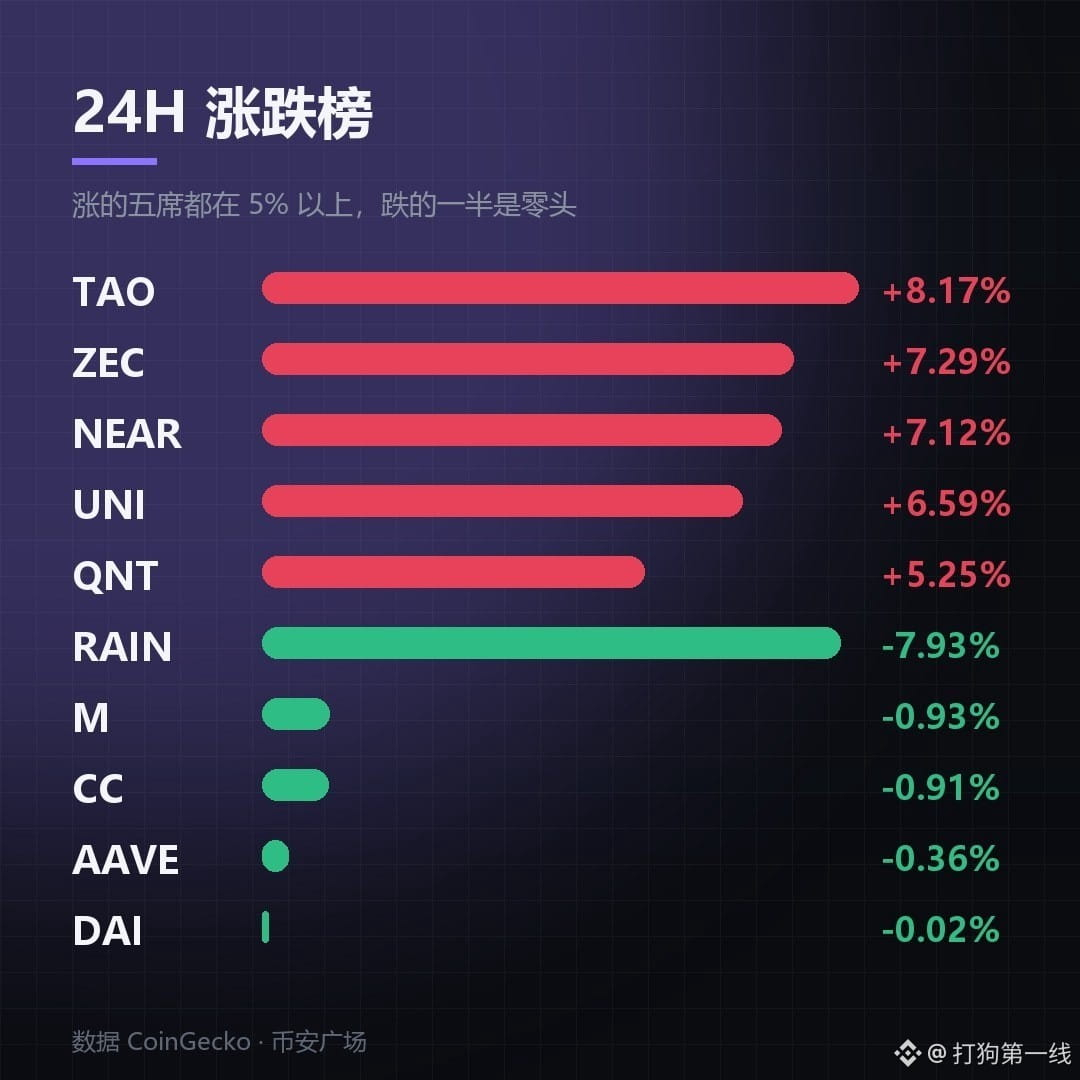
People think treasury companies are buyers in this downturn. In reality, it’s paying down debt before it hits the liquidation threshold. $AAVE is down 0.36% today and is still among the biggest losers. The on-chain leverage ledger and the exchange liquidation ledger are one and the same.
The gainers are straightforward: TAO 8.17%, ZEC 7.29%, NEAR 7.12%, UNI 6.59%, QNT 5.25%. Three old narratives—AI, privacy, and DeFi—are being picked up at once, and money is moving quickly through smaller pools. On the losing side, there’s only RAIN at -7.93%; the rest are all down less than 1%. Nobody is really selling, and nobody is really building positions.
Before the U.S. stock market opens on Monday, both of these things will have to be repriced: whether fresh money comes in after the leverage is cleared out, and whether treasury companies’ collateral can withstand another leg down.
A rebound after leverage is cleared comes fast—and fades fast.
Your positions are your responsibility. Don’t use leverage as a substitute for courage.
Are you waiting for the U.S. market to open on Monday before making a move, or are you thinking of cutting back tonight?
#杠杆清算 #财库股 #MondayUSMarketOpen