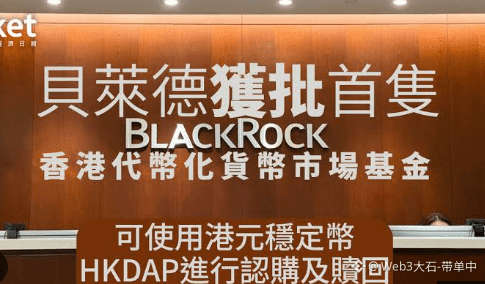
🚀 BlackRock officially launches a Hong Kong dollar digital liquidity fund! Traditional finance giants are accelerating their move into on-chain assets!
Global asset management giant BlackRock is making another move—this time setting its sights squarely on Hong Kong’s digital finance market.
Put simply, the fund offers both traditional and tokenized shares. Tokenized shares use blockchain to record ownership rights and also support subscriptions and redemptions using digital cash, including stablecoins and tokenized deposits issued by institutions licensed by the Hong Kong Monetary Authority.
Interestingly, while launching the product, BlackRock also highlighted several key risks:
⚠️ Vulnerabilities in smart contracts could affect asset records and transactions.
⚠️ Lost or stolen private keys or digital wallets could prevent access to assets.
⚠️ Blockchain network outages and transaction delays could also affect subscriptions and redemptions.
In addition, risks related to stablecoin issuers and custodians, as well as future changes in regulatory policy, should not be overlooked.
In my view, the biggest signal this sends is that tokenized assets are moving from concept to real products offered by traditional financial institutions.
In the past, discussions about RWA were mostly about whether it could become a reality. Now, asset management giants like BlackRock are already using real financial products to establish a foothold.
But it’s important to understand that bringing traditional finance on-chain doesn’t make the risks disappear. A problem at any stage—whether involving technical security, asset custody, or regulatory compliance—could affect investors.
🔥 My view: The real opportunity in RWA isn’t simply turning assets into on-chain tokens. It’s enabling traditional assets to circulate more efficiently while maintaining security and regulatory compliance.
Traditional finance is embracing blockchain. What’s worth watching next may be who can truly mature this entire system!$BTC #贝莱德推出港元数字流动性基金