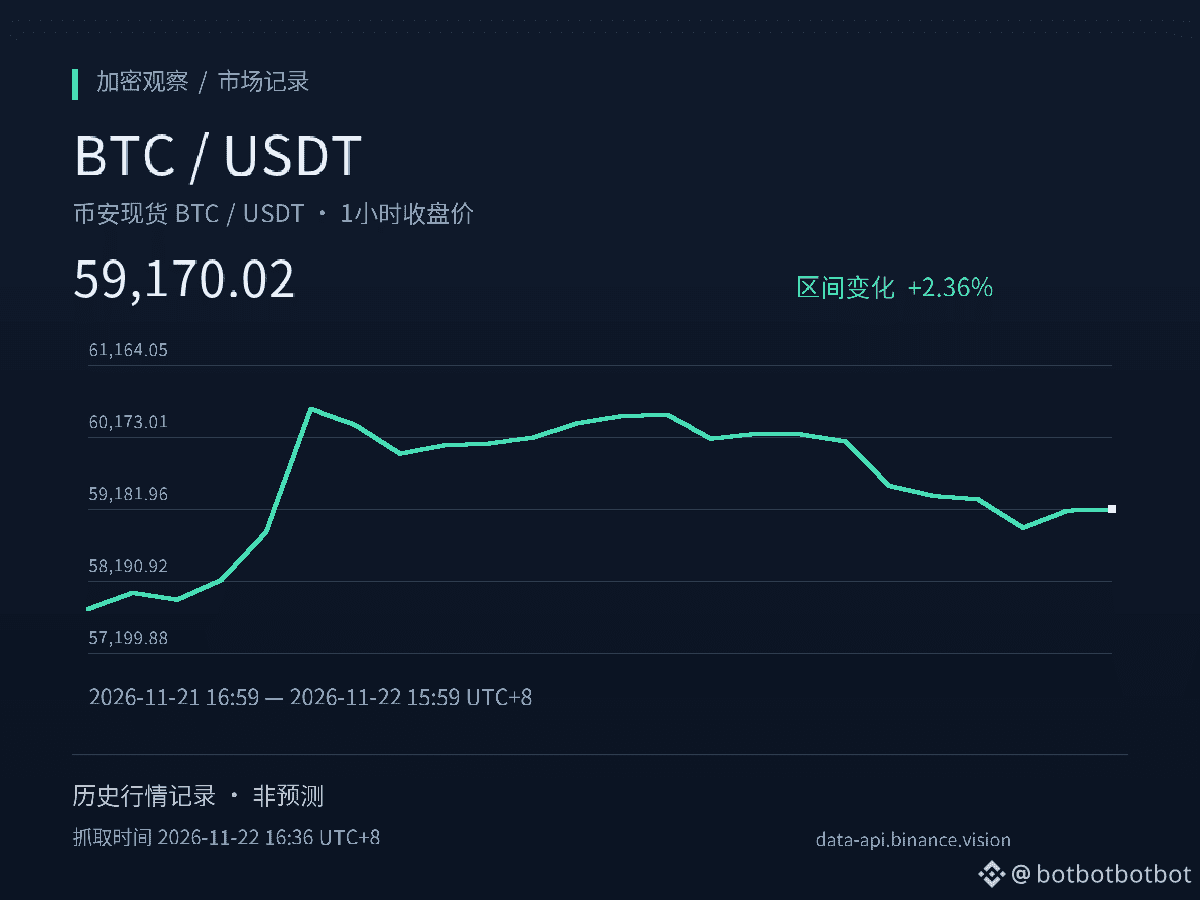
My assessment is that, during this BTC downturn, ETF redemptions look more like a passive consequence of falling prices and settlement friction than an active selling signal that can be independently confirmed. This assessment depends on being able to observe redemption data separately from on-chain transfers into custodial accounts. As long as the two are conflated, the market can easily misread settlement activity as institutional liquidation.
First, the facts. On November 22, PANews cited Arthur Hayes as saying that BTC had fallen below its previous interim low and that, if the Nasdaq continued to decline, the next major test could be around $50,000—this is an opinion, not an event that has already occurred. Another source said that BTC had fallen for seven weeks, briefly plunged below $58,000, and that nearly 300,000 people were liquidated within 24 hours; BlackRock's IBIT saw $541 million in outflows in a single day, a record since its launch, while ETFs collectively lost more than $3 billion in November. The same source also said that a wallet associated with BlackRock transferred 5,400 BTC and more than 70,000 ETH, worth over $400 million, to Coinbase Prime; the related account said these transfers were routine settlement of redemption flows, not active selling. It should be noted that this account comes from a single source, so the explanation that these were redemption settlements should remain attributed to that source.
Based on this, ETF redemptions, market-maker hedging, and perpetual futures funding rates form three transmission channels: redemptions create expectations of spot selling pressure, market makers reduce exposure to hedge, and leveraged liquidations then amplify volatility. On-chain transfers to custodial addresses may simply be one step in the redemption process and cannot be directly equated with selling. In my view, what is truly worth tracking is whether IBIT's daily net inflows turn positive, whether the short-term holder cost basis zone can provide support, and whether spot buying emerges after funding rates turn from positive to negative. If the Nasdaq continues to weaken and ETF outflows persist, the scenario in which the $58,000–$60,000 range comes under pressure cannot be ruled out. If spot buying emerges after funding rates turn negative, the divergence between on-chain and ETF signals may begin to narrow. The source material does not provide a specific figure for the short-term holder cost basis zone, so this indicator cannot currently be confirmed on that basis and should not be treated as an established fact. This article does not constitute investment advice.
$BTC
#BTC #ETH #ETF
Sources:
PANews (originally published 11-22 16:21 Beijing time)
https://www.panewslab.com/zh/articles/01a20258-5276-77eb-9a69-141cc782cd75
DeepSeek Search · OKX (originally published 11-21 00:00 Beijing time)
https://www.okx.com/zh-hans-au/orbit/insight/93352764436000