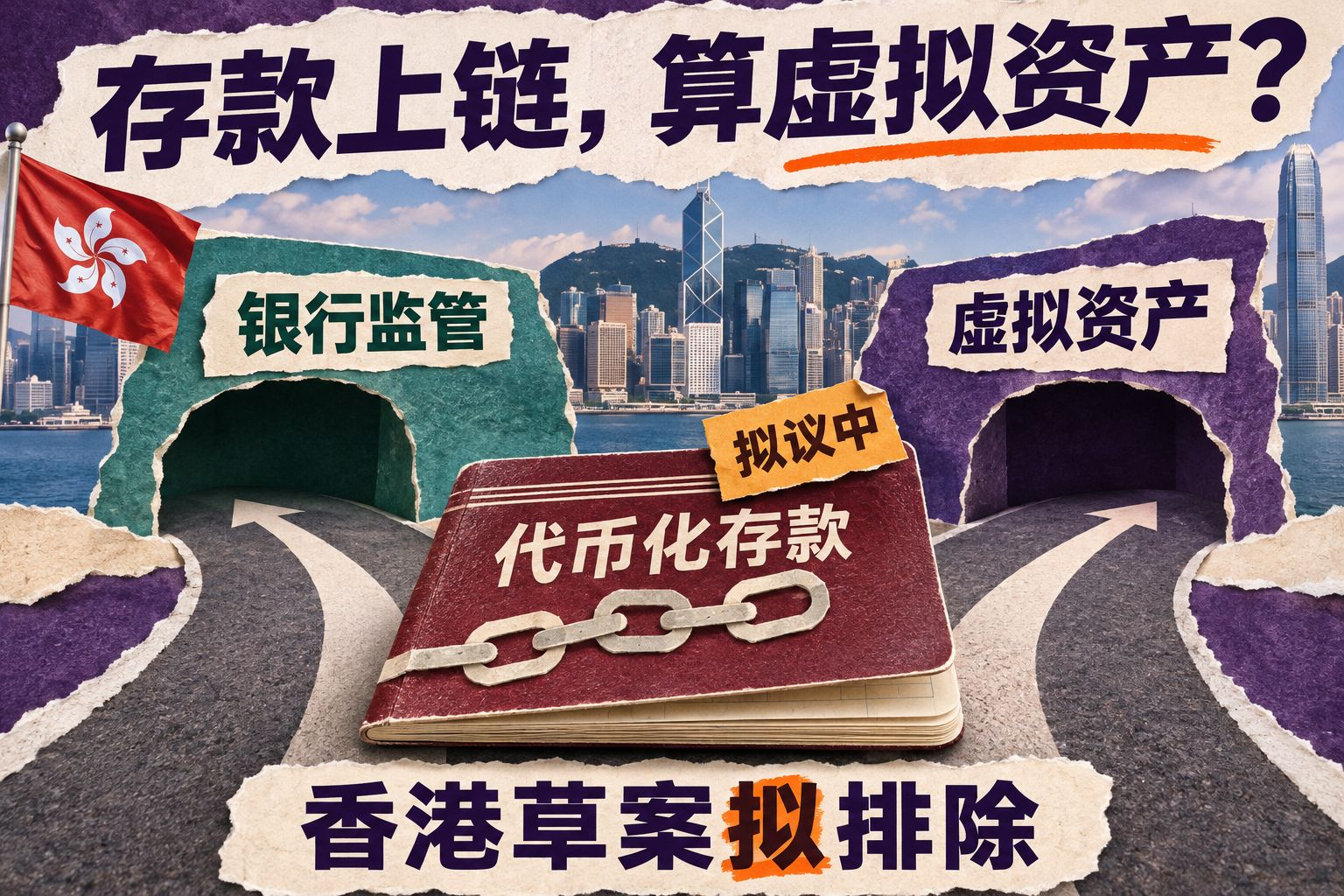
#香港代币化存款拟不列虚拟资产
When bank deposits put on a “blockchain coat,” do they have to be renamed virtual assets? Hong Kong is getting ready to check their status.
On November 20, the Hong Kong government gazetted the Virtual Asset Service Providers (Amendment) Bill. According to reports, the bill proposes excluding tokenised deposits from the relevant definition of virtual assets. Note the word “proposes”: the bill is scheduled for its first reading in the Legislative Council on December 2 and has not yet been formally passed.
What are tokenised deposits? You can think of them as bank deposits recorded and transferred in a different, digital way. At their core, they remain customers’ deposit claims against a bank. Just having “coin” in the name doesn’t automatically turn them into Bitcoin.
Being excluded from this definition of virtual assets doesn’t mean they’re unregulated. Banks providing related services must still comply with applicable banking regulations. How a specific product can be used will also depend on the rules and arrangements in practice.
What’s the point? The Hong Kong Monetary Authority’s Ensemble project is exploring the use of tokenised deposits for corporate treasury management and tokenised fund transactions in a controlled pilot environment, while supporting round-the-clock settlement between participating banks. Whether these applications can be expanded will depend on the systems, participating institutions and regulatory details.
For the crypto world, clearer rules could help build a bridge between banks and on-chain assets. But construction has only just begun: that doesn’t mean funds will pour in right away, and it certainly doesn’t mean crypto prices are set to rise.
What do you think is the biggest advantage of putting bank deposits on-chain: more convenient settlement, or giving more traditional funds access to on-chain assets?
$BTC