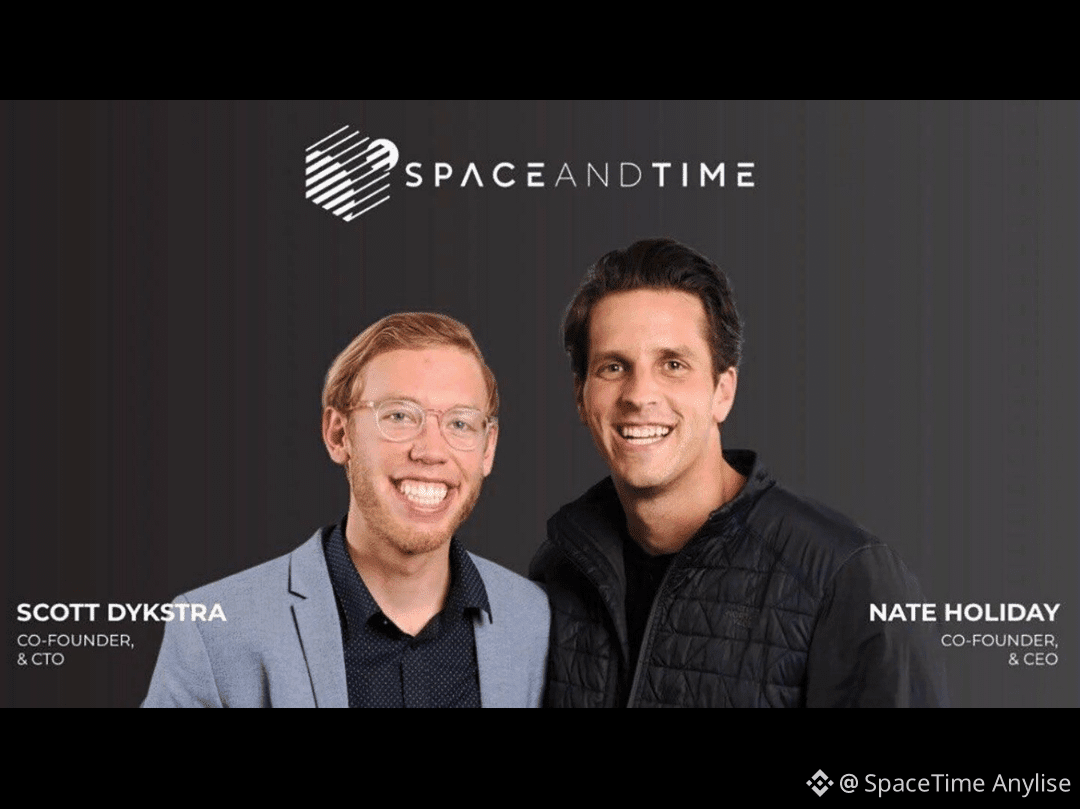

#sxt Why Did Nate Holiday and Scott Dykstra Create Space and Time?
When Space and Time began in 2022, its founders were addressing a major Web3 limitation: smart contracts could verify blockchain transactions, but accessing large amounts of external and historical data without trusting centralized databases remained difficult.
Their vision was to build a verifiable data infrastructure where developers could access blockchain and offchain information with cryptographic proof of correctness.
This ambition became Proof of SQL, a zero-knowledge technology that allows smart contracts to verify database query results without blindly trusting the database operator.
In May 2025, SXT launched as the network's native token, designed to support staking, network security, data services, and ecosystem participation.
The project also attracted $50 million in funding, with backing from investors including Microsoft's M12, Framework Ventures, and Lightspeed Faction.
But the bigger question is whether its original vision can become reality.
SXT has a maximum supply of 5 billion tokens, and team and investor allocations together represent 48.3%. This makes transparent distribution, independent validators, and genuine governance important long-term tests.
The founders wanted to reduce dependence on trusted intermediaries.
Now the real test: Can Space and Time deliver that independence without creating new points of centralized control?
#ProofOfSQL @SpaceandTime $SXT