#英伟达一个半月市值减少2.7万亿美元
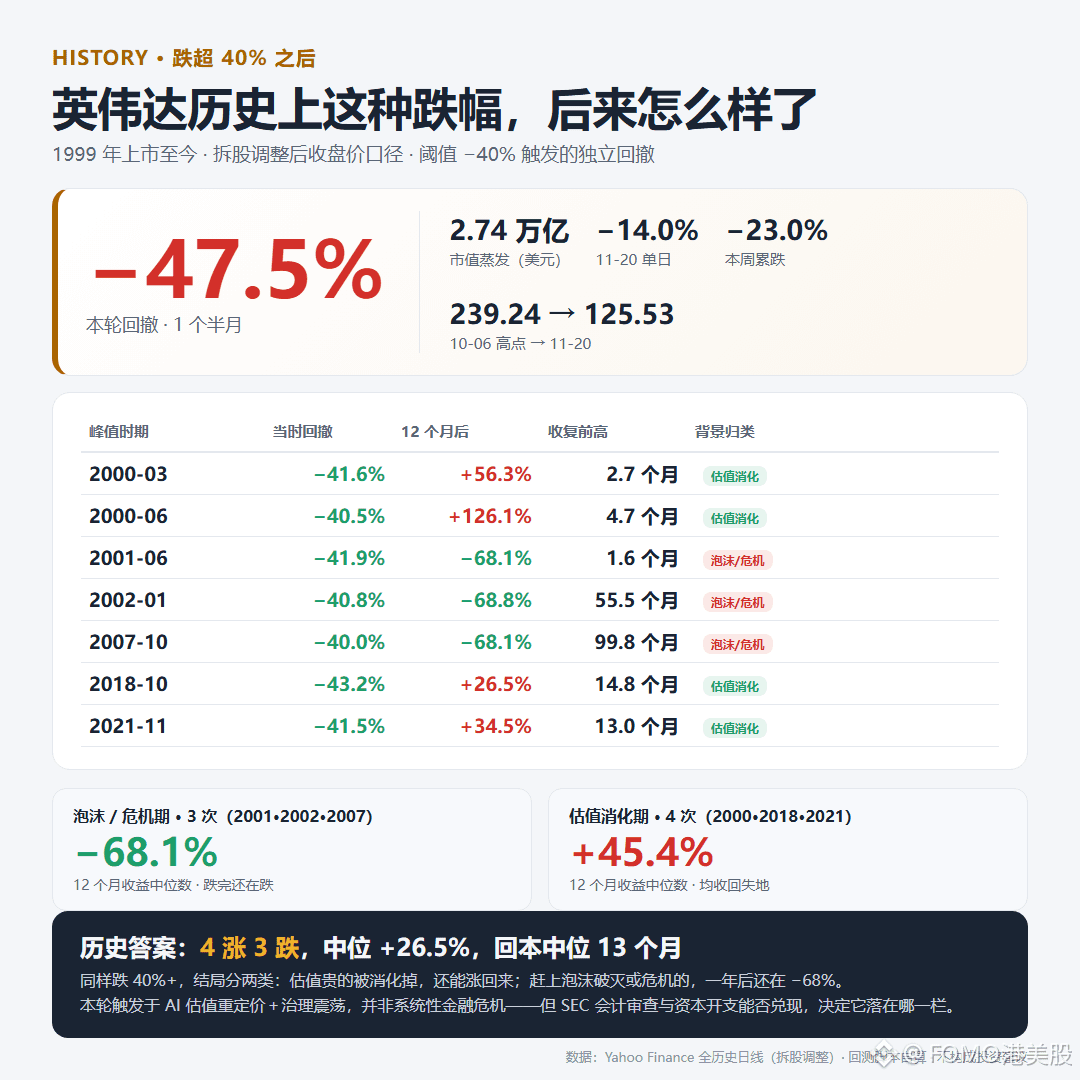
NVIDIA $NVDAB has fallen 47.5% in a month and a half, wiping $2.74 trillion off its market value. On November 20, it fell 14% in a single day, bringing its weekly loss to 23%.
This isn’t the first time it has taken such a hard hit. Historically, it has suffered seven drawdowns of more than 40%. In the following 12 months, it rose four times and fell three, with a median gain of 26.5%. It took a median of 13 months to regain its previous high.
The key is to look at two different categories. The three drawdowns in 2001, 2002, and 2007 coincided with the bursting of the dot-com bubble and the financial crisis. A year later, the stock was still down around 68%; the 2007 drawdown took nearly eight years to recover from. The other four drawdowns, in 2000, 2018, and 2021, were valuation resets. A year later, the median gain was 45%, and all the losses had been recovered. The drops were similarly steep—over 40%—but the outcomes went in opposite directions.
This time, the triggers are an AI valuation reset and governance turmoil, not a systemic financial crisis. There are only two things to watch: whether the SEC’s accounting review substantiates its concerns, and whether AI capital spending can translate into profits. Until those questions are answered, 13 months is a historical reference point, not a promise.
#英伟达 #Aİ