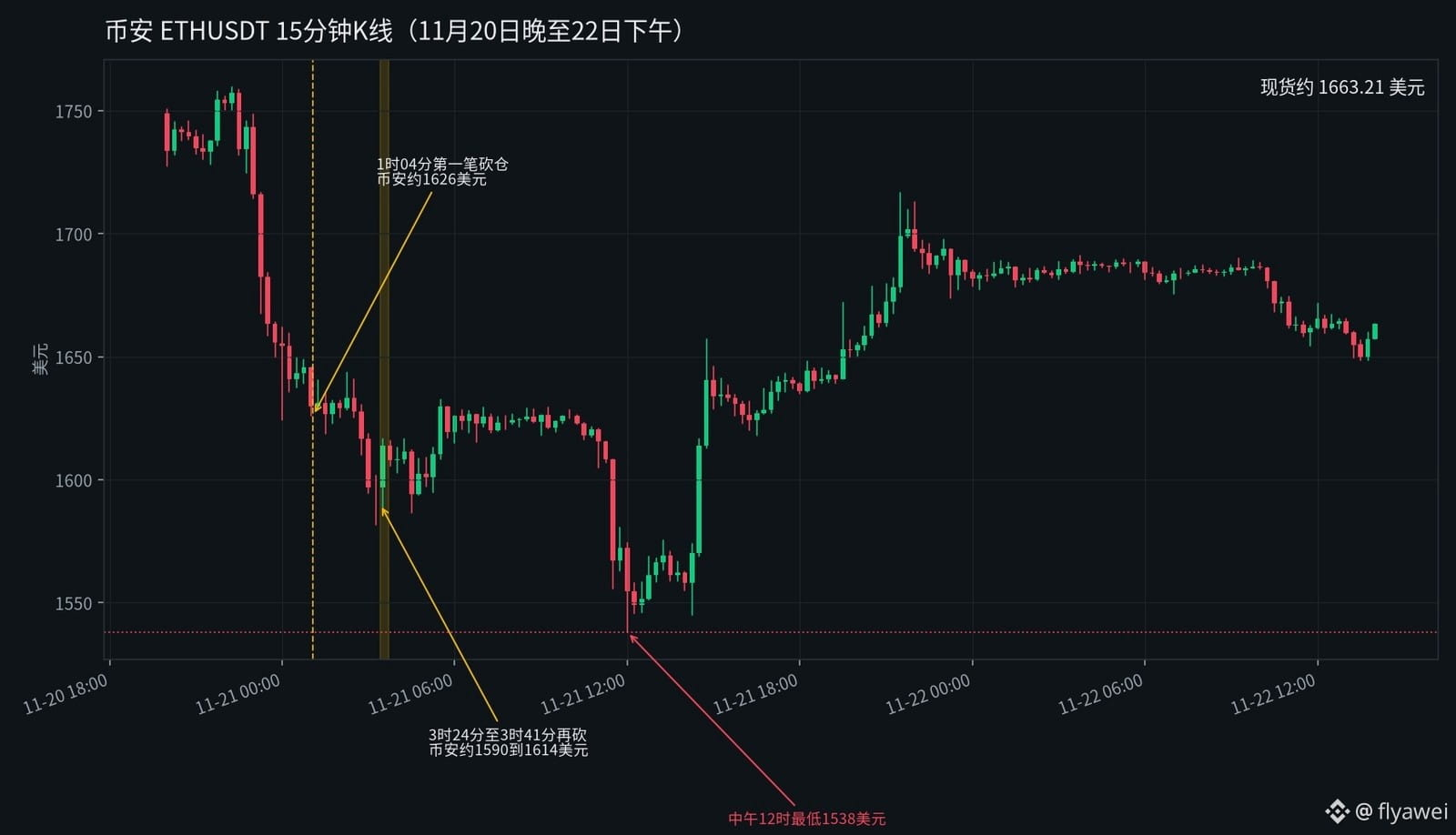

He sold 27,728 ETH in the middle of the night to repay debt—the low of $1,538 came only after he was done selling
An address (0xdc3a…) had deposited ETH as collateral on Aave to borrow stablecoins. In the early hours of November 21, the holder started reducing the position themselves.
At 1:04 a.m., they first withdrew 6,238 ETH from collateral and repaid 9.97 million USDT. Then, between 3:24 and 3:41 a.m., they made six more withdrawals totaling 21,490 ETH and repaid another 33.86 million USDT. In total, they reduced their collateral by 27,728 ETH and repaid 43.84 million in stablecoin debt.
I checked Binance’s one-minute candlestick chart: spot ETH was around $1,626 at 1:04 a.m., and around $1,590 to $1,614 during the moves between 3:24 and 3:41. Based on the USDT repaid and collateral withdrawn, the rough average price was about $1,581.
After the sales, the address still had around 18,969 ETH deposited as collateral. Its USDT debt had been fully repaid, though it still had about 10.53 million GHO borrowed. Later, during the hour at noon, ETH on Binance plunged to a low of $1,538—below the price at which the holder had sold in the middle of the night. Spot ETH is now around $1,662, up about 6.5% over the past 24 hours.
The protocol did not liquidate the position outright at the time. As the price fell, the address repaid most of its USDT debt on its own. By the time ETH hit $1,538, the holder had already finished selling. Had they waited any longer, the buffer would have been even thinner. When a leveraged long position is hit by a sharp overnight drop like this, cutting the position often comes before trying to ride it out.
Beginners are advised to watch more and trade less. If you buy crypto, buy only $BTC