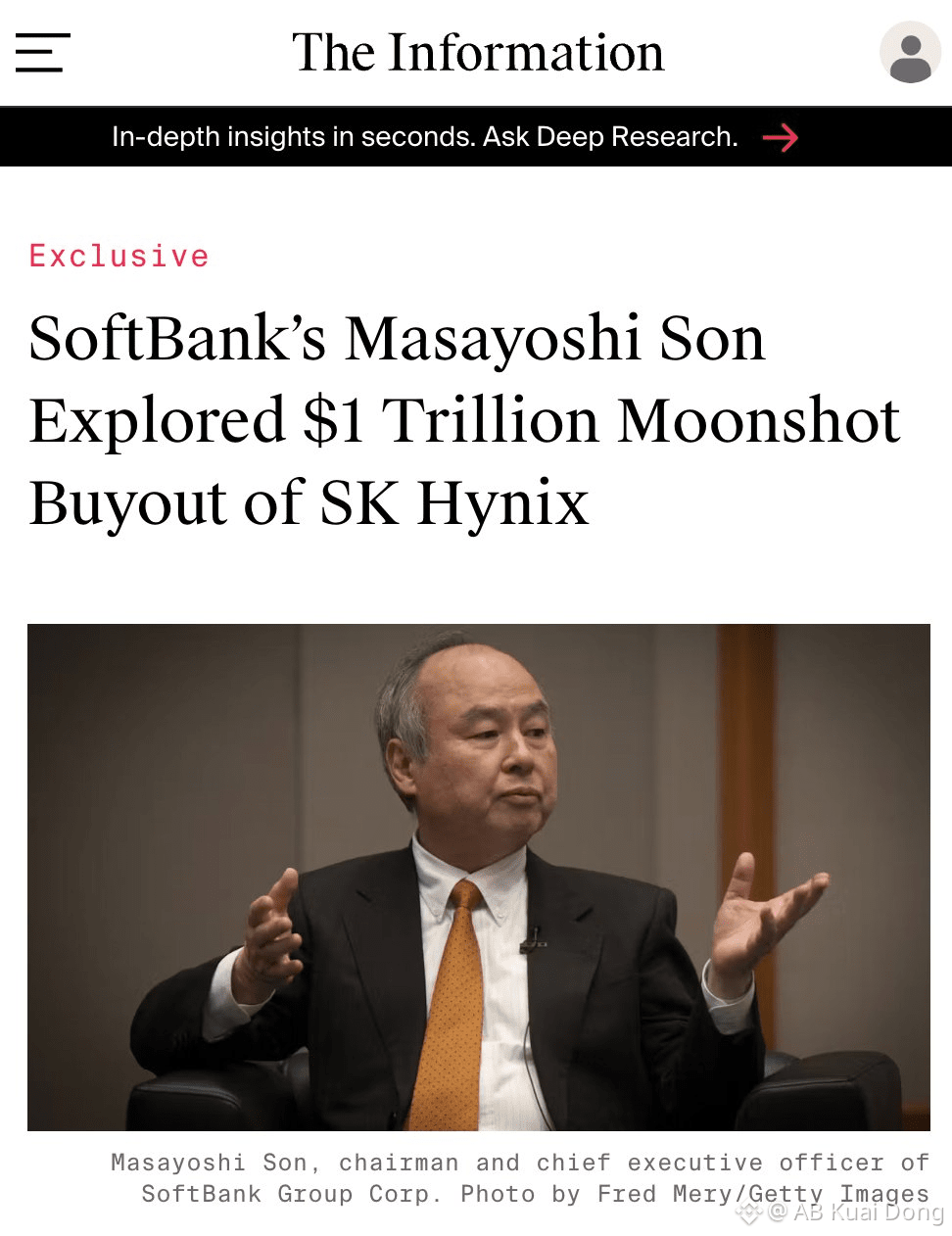
Next week, much of the focus will also be on SoftBank and Masayoshi Son. Over the weekend, reports emerged that Son had discussed acquiring SK Hynix for $1 trillion. SoftBank responded that it was no longer actively pursuing the deal. The market is concerned that more of the mogul’s plans are being put on hold or scrapped.
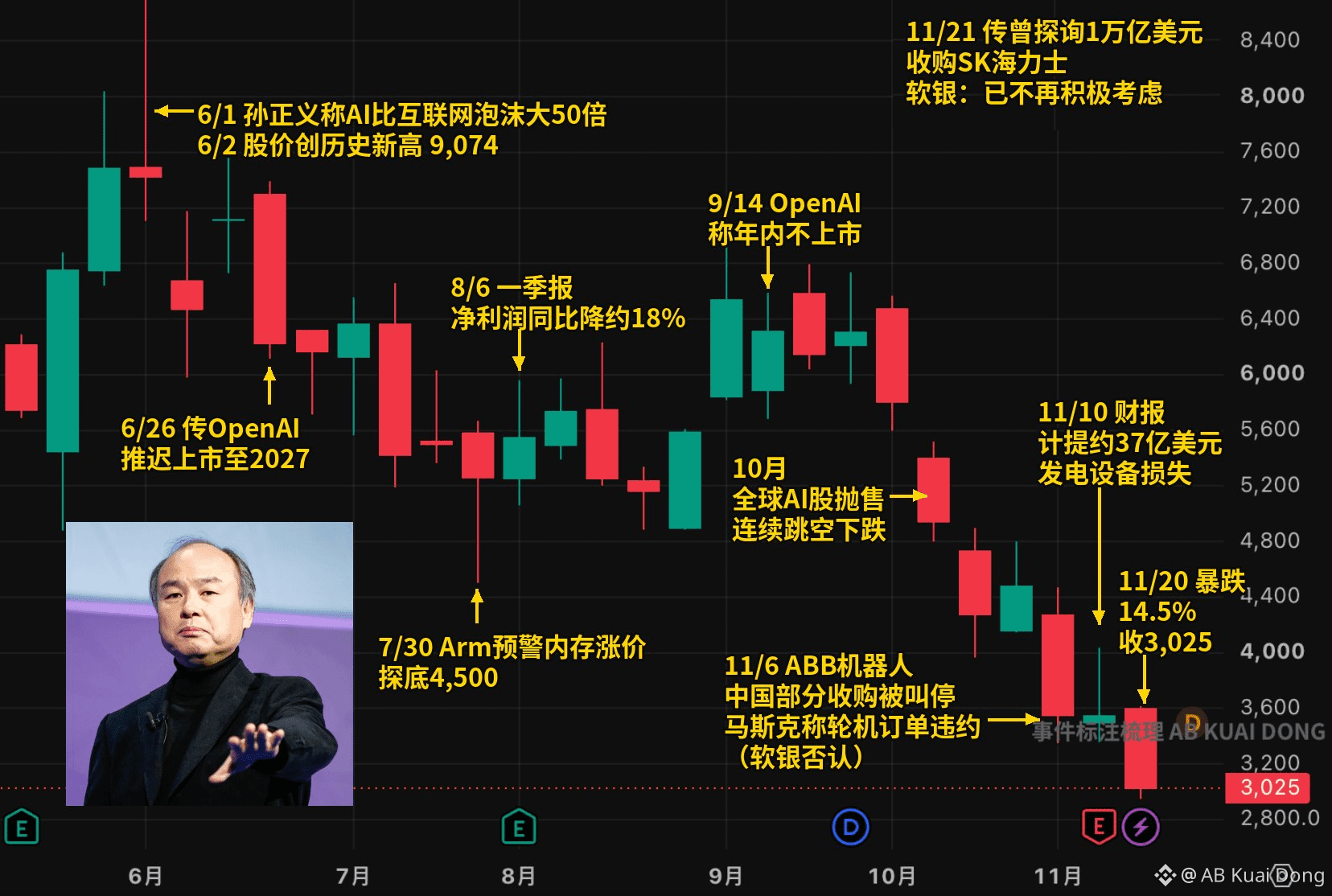
In June this year, Son made headlines by saying that the AI boom could be 50 times bigger than the internet bubble. SoftBank’s share price subsequently hit a record high.
But by the end of June, reports emerged that OpenAI, on which he had placed a major bet, might delay its IPO until 2027, potentially going public after Anthropic. Investors who had been betting on the anticipated deal began pulling out.
In July, an earnings warning from Arm, which SoftBank owns, said that rising memory prices were weighing on mobile chip royalties. SoftBank shares continued to slide.
In August, the company’s net profit plunged. Then, in September, it was confirmed that OpenAI would not go public this year, dealing SoftBank another blow.
The sustained decline began in October and November, driven both by a global sell-off in AI stocks and by SoftBank’s own problems. In early November, the Chinese portion of SoftBank’s planned acquisition of ABB’s robotics business was blocked. On the same day, Elon Musk suddenly claimed that SoftBank was defaulting on orders for gas turbines intended to power data centers.
Earnings reports in the following days showed that SoftBank had indeed booked about $3.7 billion in losses on power-generation equipment for data centers. The Wall Street Journal reported that SoftBank had reserved far more gas turbines than it actually needed, and had even canceled some of the surplus.
Taken together with this weekend’s reports that SoftBank is no longer actively considering the acquisition of SK Hynix, it seems that more of Masayoshi Son’s plans may be getting put on hold or scrapped—plans the market knows nothing about.