Space and Time: Can Blockchain Data Finally Become Something We Can Trust?
I've seen plenty of crypto projects talk about data, but one question keeps coming back to me: how do we know the information a blockchain application receives is actually correct? A smart contract can execute perfectly and still produce the wrong outcome if the data feeding it cannot be trusted. That's the problem I find interesting about Space and Time.
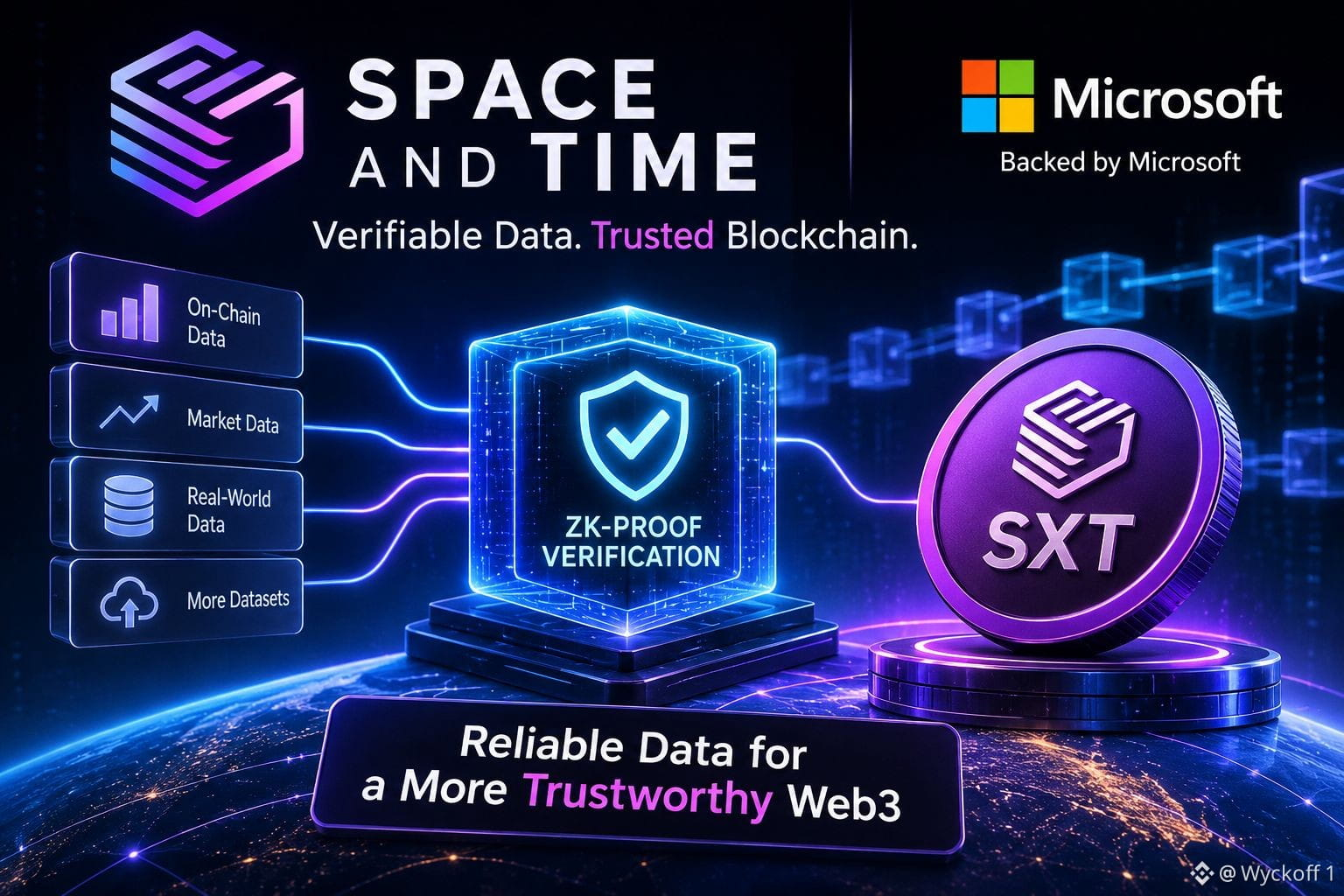
Space and Time is a blockchain data infrastructure project focused on making data verifiable through zero-knowledge proofs. Its goal is to let applications query large datasets while providing cryptographic proof that the results are accurate.
What caught my attention is the practical side of this idea. DeFi platforms, financial applications and on-chain analytics all depend on reliable information. Trusting a dashboard is one thing; independently verifying its calculations is another.
The project is also backed by Microsoft, which adds an interesting layer of credibility, although backing alone doesn't guarantee adoption or long-term success.
SXT is the native token of the Space and Time ecosystem. I'm interested in how its actual utility develops as more applications begin using the network.
But I still have questions. How much real demand will developers create? Will verification costs remain practical at scale? And can Space and Time attract sustained usage beyond initial interest?
For me, the interesting part isn't another token narrative. It's whether verifiable data becomes something developers genuinely need. That's what I'll be watching.#sxt $SXT @SpaceandTime