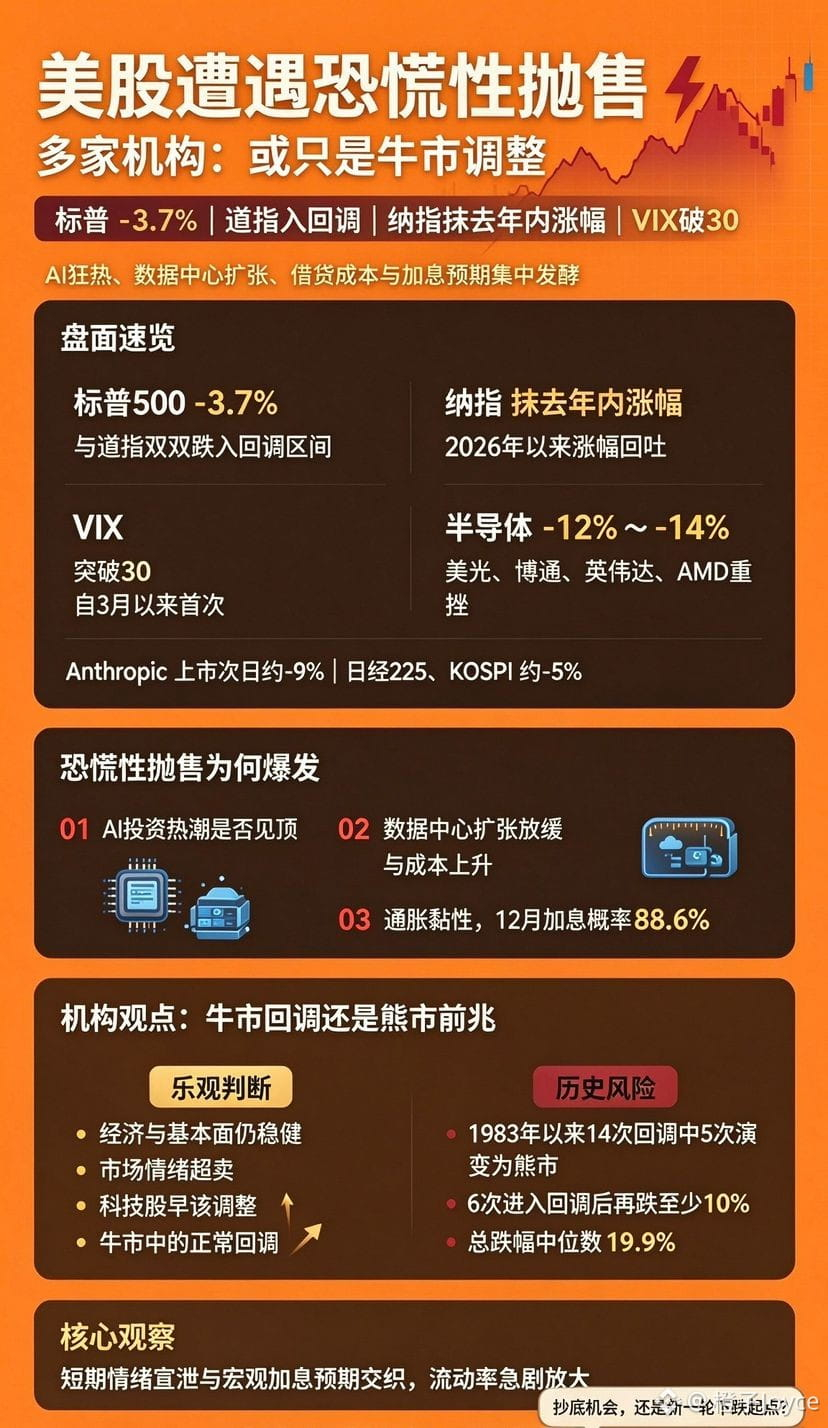

📉 U.S. stocks hit by panic selling: AI frenzy fading or a bull-market pullback?
U.S. markets were rocked by a sudden, sharp selloff on Friday, with panic quickly spreading around the globe. Here are the key takeaways and points of contention between bulls and bears:
1️⃣ Market snapshot: Chips plunge, VIX surges above 30
* All three major indexes fell: The S&P 500 plunged about 3.7% in a single day, officially entering correction territory along with the Dow. The Nasdaq wiped out all its gains for 2026.
* AI and semiconductors were hit hardest: Micron, Broadcom, Nvidia, and AMD all fell 12%–14%; Anthropic, on its second day of trading, also plunged about 9%.
* Global ripple effects: Wall Street's “fear gauge,” the VIX, topped 30 for the first time since March. Asia-Pacific markets also came under pressure, with the Nikkei 225 and South Korea's KOSPI both plunging about 5%.
2️⃣ Key catalysts: Three pressures erupt at once
* Fears AI has peaked and leadership changes: Markets are reassessing the risks of slowing data-center expansion and high borrowing costs. These concerns, compounded by news that Jensen Huang is stepping down as Nvidia CEO, triggered a concentrated wave of selling.
* Policy blow: Trump threatened to impose “massive taxes” on U.S. companies building data centers overseas, further intensifying concerns about tech giants expanding abroad and infrastructure costs.
* Rate-hike jitters return: With inflation proving sticky, the president of the Philadelphia Fed sent a hawkish signal. CME data shows that the market-implied probability of a 25-basis-point rate hike in December has surged to 88.6%.
3️⃣ Wall Street's view: Healthy bull-market pullback or a warning sign of a bear market?
* Optimists (sentiment oversold, fundamentals intact): Morgan Stanley, Deutsche Bank, and J.P. Morgan Asset Management all believe that economic growth and corporate earnings remain robust. Tech stocks had been overvalued, and this sharp selloff is largely a sentiment-driven case of “extreme oversold” conditions and a normal bull-market correction.
* Historical data offers a warning (beware of a second leg down): Of the 14 U.S. stock market corrections since 1983, only 5 ultimately turned into bear markets. However, in 6 cases, stocks fell at least another 10% after entering correction territory (the median total decline across historical corrections was 19.9%).
#全球股市创三年来最长连跌,投资者避险情绪升温