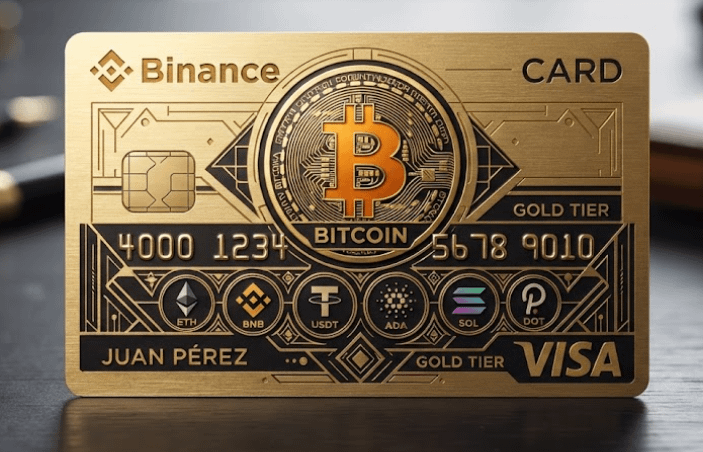

In mid-November 2026, Venezuela’s crypto ecosystem saw a significant new development: the launch and activation of the Pay Later feature, linked to payments with Binance Card and QR codes in the Binance app, days after its official announcement for markets such as Argentina and Mexico. This option lets users cover purchases with financing backed by crypto assets as collateral, without selling their underlying holdings at the time of purchase.
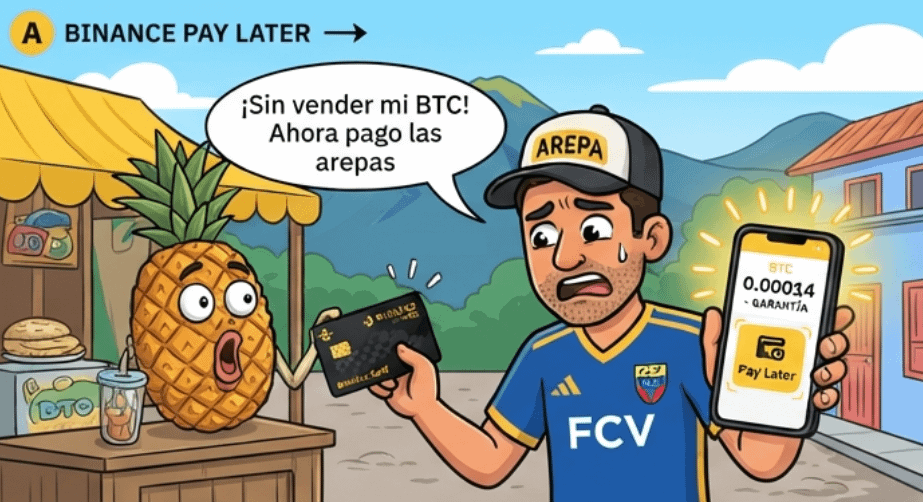
What is Binance Pay Later, and how does it work with the card?
Binance Pay Later is a cryptocurrency-backed line of credit that is activated when you make eligible payments using Binance Card or compatible QR codes, rather than requiring you to sell your assets beforehand.
* Limit and collateral: Provides access to spending power of up to 1,000 USDC (subject to account eligibility, KYC identity verification, and a cap of up to 50% of the value of eligible collateral), backed by assets such as BTC, ETH, or BNB.
* Instant financing: Only the exact transaction amount is borrowed at the time of payment, and the corresponding portion of collateral is locked.
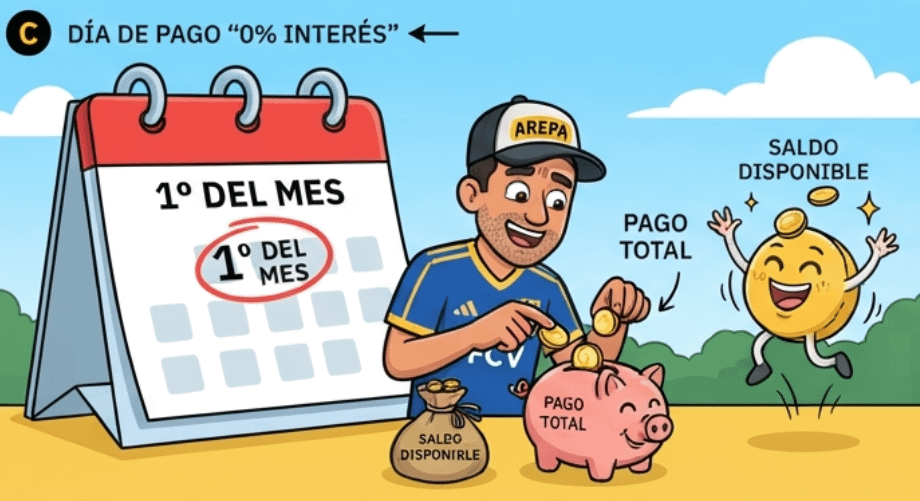
* Term and interest: Offers 0% interest if the balance is paid off before the 1st of the following calendar month; overdue balances incur interest charges, while late payment or cash advance fees are listed as 0% under the terms reported at launch (subject to change by the platform).
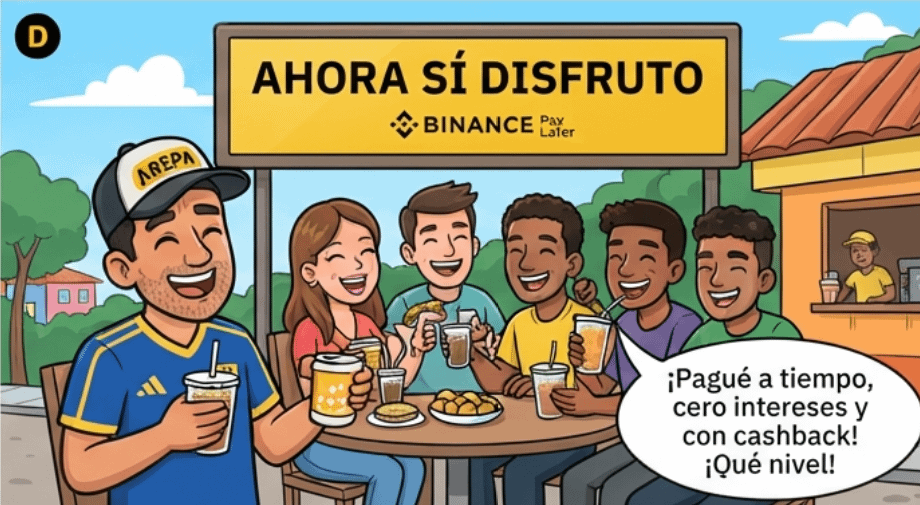
* Rewards: Eligible Binance Card purchases offer cashback benefits (reported in promotions and product terms of up to 3%, subject to regional availability and current terms).
Key points and considerations for users in Venezuela
Although Binance's initial official announcement targeted markets such as Argentina and Mexico, with a gradual expansion, users and specialized media reported that the feature became available on accounts in Venezuela in mid-November 2026. To use it wisely in the Venezuelan context, it is worth keeping several practical points in mind:
| Aspect | What to look out for in Venezuela
| Availability and eligibility | Access in the app depends on each account's eligibility and KYC compliance; since it was not included in the first formal regional announcement, access may vary by account and update. |
| Exchange rate and settlement | When paying at international merchants or networks, always check the conversion and settlement rate applied by the card and processor to avoid surprises due to exchange rate differences. |
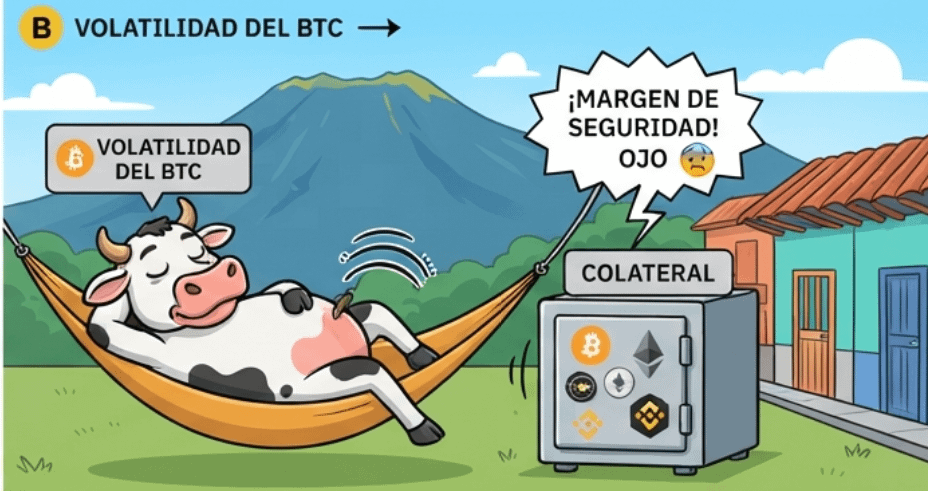
| Volatility and liquidation risk | If you use BTC, ETH, or BNB as collateral and the market drops sharply, your locked collateral may face liquidation risk. |
| Payments and release of collateral | You can make partial payments at any time (including from your collateral, depending on the available options), and once the debt is paid off, the locked collateral is released. |
Best practices before activating it
If you decide to try Pay Later with your card or for eligible payments, it is best to treat it as a short-term liquidity tool, not as indefinite leverage:
1. Check your safety margin: Avoid committing all your collateral close to the maximum limit if the underlying asset has high intraday volatility.
2. Schedule your payment before the 1st: Taking advantage of the 0% interest period depends on paying on time before the first day of the following month.
3. Review local terms and fees: Always confirm the USDC amount to be financed, the locked collateral, and the terms currently applicable to your account on the transaction screen.