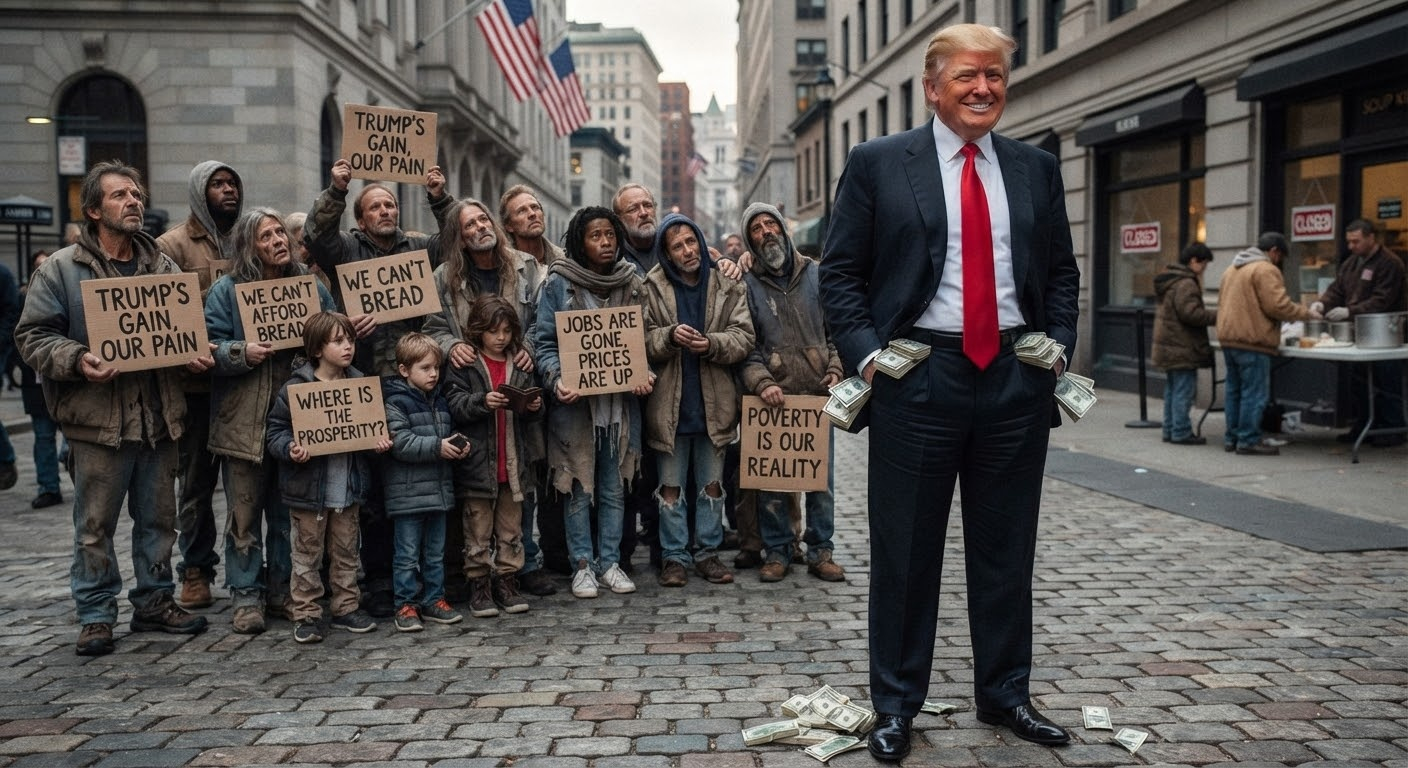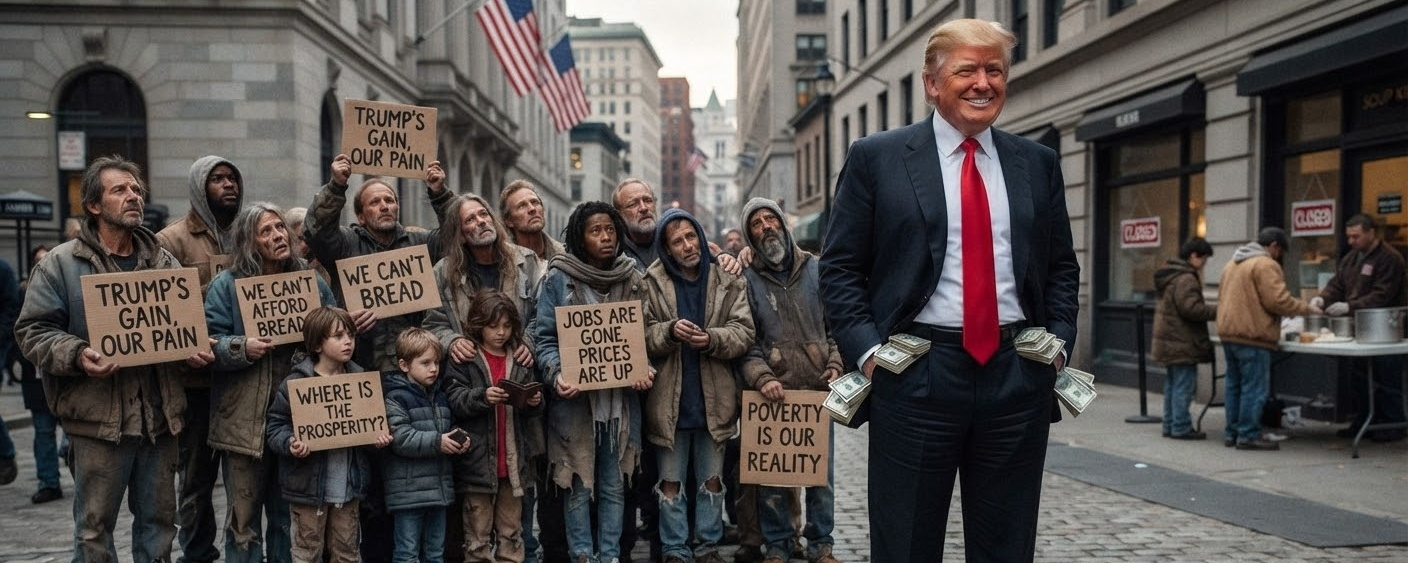

The measures adopted by Donald Trump upon his return to the White House, marked by aggressive protectionism, sweeping trade tariffs, and diplomatic ruptures, have sparked intense debate about their effects on the American economy, income distribution, and the geopolitical role of the United States. While supporters of the administration argue that its policies protect domestic industry, critics, economists, and international observers point to a scenario of concentrated wealth, a rising cost of living, and damage to the country's image abroad.
1. The economic impact within the United States and inequality
The foundation of the Trump administration’s economic policy was imposing high import tariffs on products from dozens of countries, with the promise of reindustrializing the country and making foreigners pay the bill. In practice, economic analysts point to severe side effects for the population:
A burden on ordinary citizens’ wallets: Several economists and research centers emphasize that tariffs act as an indirect tax paid by the importer and passed on to the end consumer, making basic goods such as food, electronics, cars, and building materials more expensive, which erodes the purchasing power of low- and middle-income families.
Concentration of wealth and favoritism toward allies: Critics and opponents point out that while the public faces higher prices and cuts to social programs, major business owners, campaign donors, and allies close to the administration benefit from deregulation, tax exemptions, and the appreciation of assets linked to the president’s political circle, widening the gap between those at the top of the pyramid and ordinary workers.
Uncertainty and retaliation: With trade rules frequently changed by executive order and legal disputes over the tariffs’ legality, companies postponed investments, and American agribusiness suffered direct retaliation from partners such as China and Canada.
2. The erosion of the United States’ international image
For decades, the United States sought to project an image as a guarantor of global stability, a defender of multilateral agreements, and a strategic partner of Western democracies. Under the "America First" doctrine, applied unilaterally, this perception underwent a profound transformation:
From reliable ally to unpredictable actor: By imposing tariffs and making trade and diplomatic threats against longstanding partners such as the European Union, Canada, and Mexico, Washington generated international mistrust. To many foreign observers, American foreign policy began to seem erratic and focused solely on immediate, transactional interests.
A domino effect on world trade: The tariff war disrupted global production chains, pushed up inflation across several continents, and accelerated other countries’ search for alternative trade and financial agreements, reducing the centrality of American leadership.
3. The reaction of American society and the limits of discontent
As the cost of living rises, political polarization intensifies, and people perceive that institutions are under strain, debate is growing over the limits of the American public’s tolerance. The country has a history marked by civil rights movements, social protests, and a strong culture of political mobilization.
Discontent in the streets and at the ballot box: While a loyal segment of the electorate continues to support Trump’s combative stance, social movements, labor unions, and sectors of civil society have organized protests and legal actions against rising prices and the concentration of power.
The weight of institutions and the vote: In the United States, popular discontent is often channeled both through social pressure and through the electoral system, including midterm elections and state-level contests, which serve as a barometer and institutional check on the government’s direction.