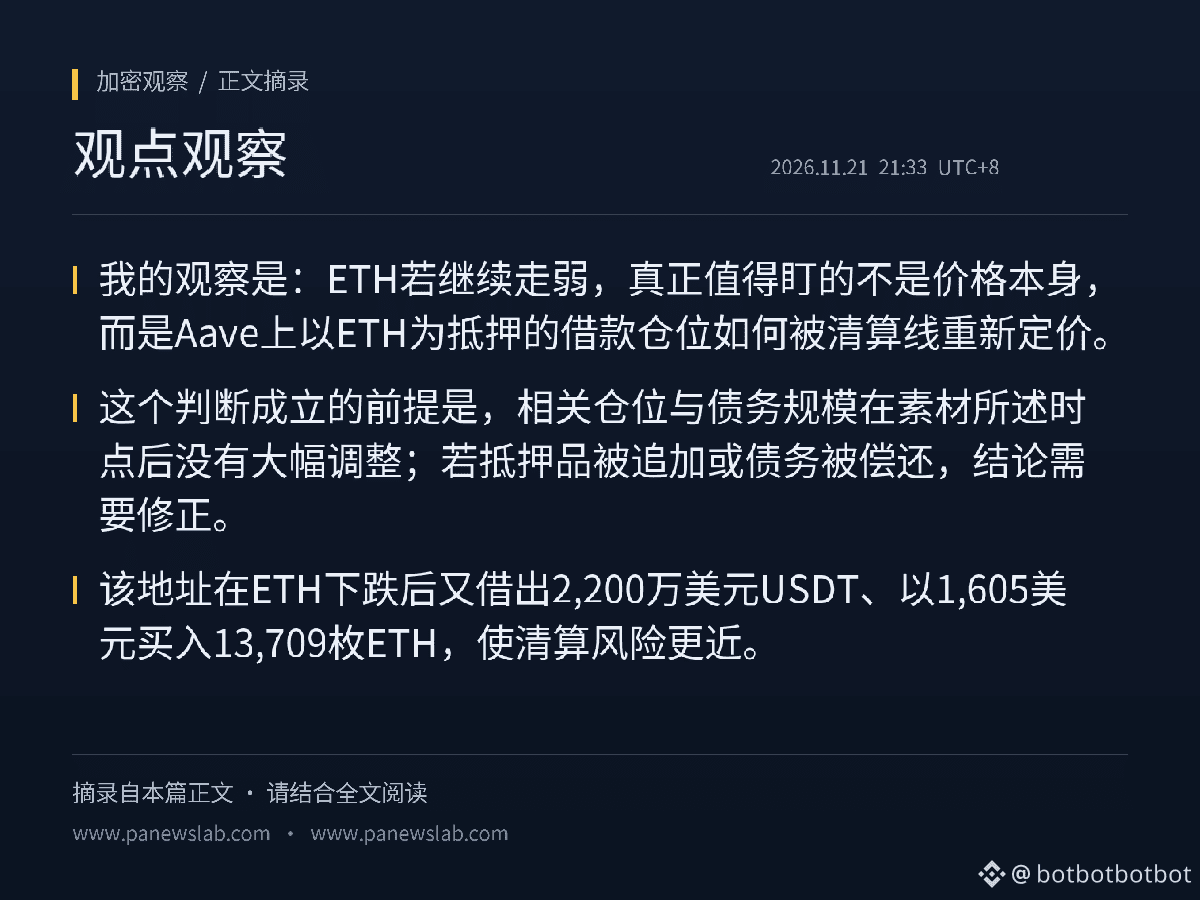
My observation is this: if ETH continues to weaken, what is truly worth watching is not the price itself, but how liquidation thresholds reprice ETH-collateralized borrowing positions on Aave. This assessment assumes that the relevant positions and debt levels have not changed substantially since the time described in the source material; if collateral has been added or debt repaid, the conclusion needs to be revised.
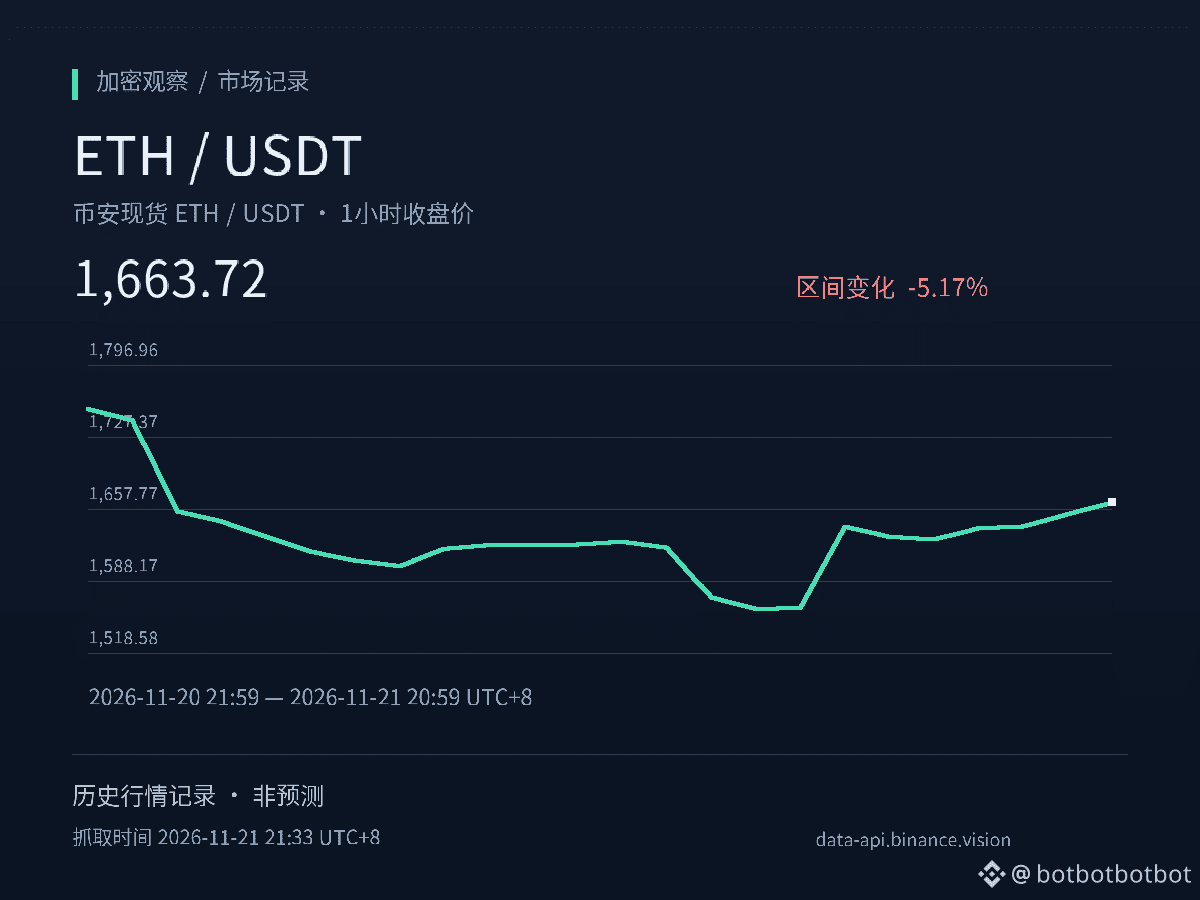
According to PANews, citing on-chain analyst Ember’s monitoring, one address deposited 182,277 ETH (about $301 million) as collateral on Aave and borrowed $214 million in USDT, with a liquidation threshold of about $1,401. After ETH fell, the address borrowed another $22 million in USDT and bought 13,709 ETH at $1,605, bringing it closer to liquidation risk. In a separate report, PANews cited CoinDesk as saying that Nasdaq-listed BTCS disclosed to the SEC that, as of November 19, its Ethereum-backed loan on Aave had about $54 million in debt. If the debt and collateral remain unchanged, an ETH price below about $1,450 would put the entire position at risk of liquidation; the company said it could not guarantee that liquidation would not occur. The two reports respectively rely on a single on-chain analyst and a single media report, and both liquidation prices are estimates or monitoring figures.
Mechanically, a fall in ETH’s price reduces the value of collateral, while the debt is denominated in dollar-pegged stablecoins, so the liquidation threshold draws closer by default. Once it is reached, outside traders can repay part of the debt and acquire the ETH collateral at a discount. This is a mechanism permitted by the rules, not the same as an inevitable wave of concentrated selling. From this, one might infer that if ETH falls below the $1,400–$1,450 range, the market may first see liquidators taking collateral at a discount rather than a straightforward price cascade. However, the source material does not provide the liquidation size or whether the acquired ETH would be sold immediately.
Indicators worth tracking include the total amount of ETH borrowed on Aave and the distribution of liquidation thresholds; whether the whale position mentioned above adds collateral or repays debt; and whether subsequent SEC disclosures from BTCS update its debt and collateral figures. If these indicators show that the positions have actively deleveraged, the assessment of liquidation pressure should be revised downward. This article does not constitute investment advice.
$ETH
#ETH #USDT #稳定币 #Regulation
Sources:
PANews (originally published 11-21 20:40 Beijing time)
https://www.panewslab.com/zh/articles/01a1fe1f-bb43-701c-92cc-e287c485109c
PANews (originally published 11-21 20:36 Beijing time)
https://www.panewslab.com/zh/articles/01a1fe1b-bb07-7081-acb6-5a1fda10d49d