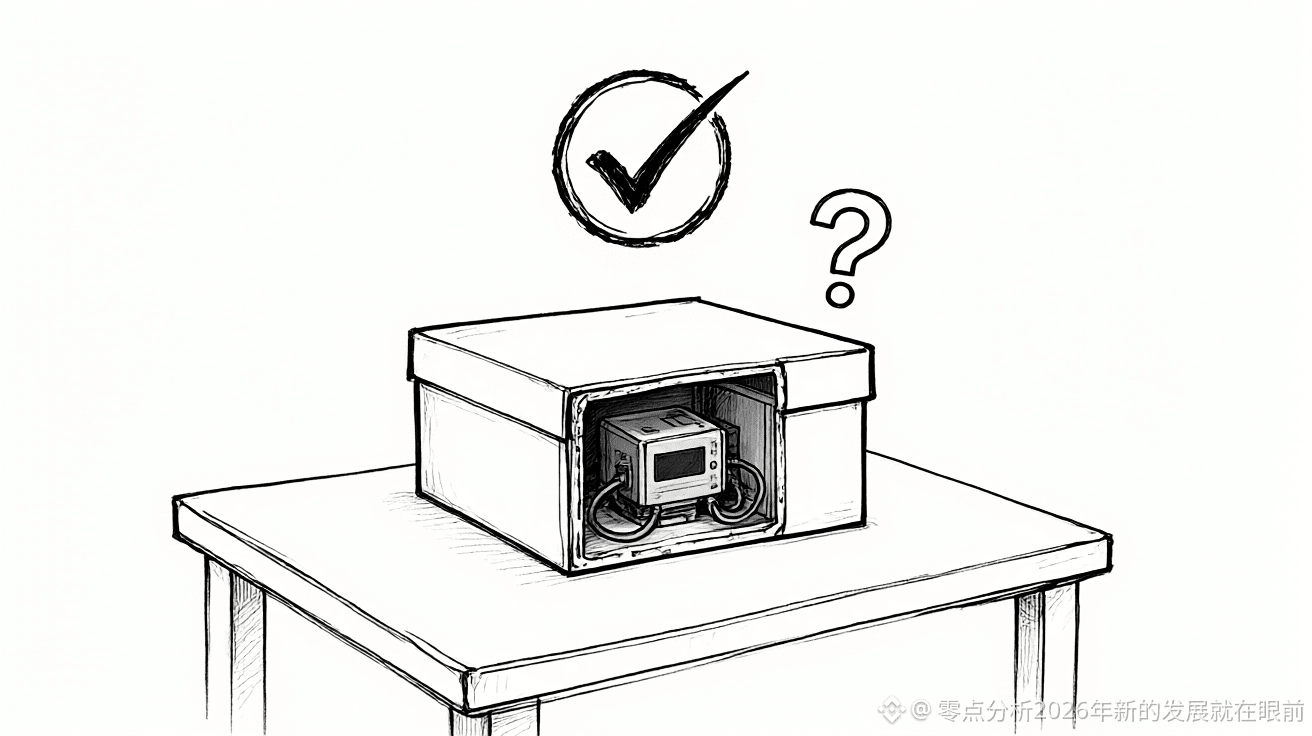
Someone at the dinner table tossed out a question: “The authenticity check clearly passed, so how did the money still disappear?” It’s a sharp question—it lands right on the gap nobody thought to look at. $XAU
The official authenticity check works as a challenge and response. A certificate burned into the device at the factory is stored inside it. The server sends over a string of random numbers, the device signs it and sends it back, and if the signatures match, the light turns green. The signing chip hasn’t been touched from start to finish, so the response is genuine. $BNB
Genuine, yes—but what it verifies is the chip’s identity, not whether someone opened the device along the way. You might think you’re getting a factory-sealed product, but someone could have lifted the cover and connected a wire in the meantime. The check can’t detect that. $ZEC
What makes it trickier is that old saying: private keys never go online. That’s still true today. The private keys really didn’t go online—but someone added a small module to the screen that displays the 24 words. The words stayed offline; the screen went online.
So some people say this time, self-custody itself wasn’t what failed. The wallet’s cryptography wasn’t broken; what was compromised was the route by which it was delivered to you. At every stop—the warehouse, the shelf, the returns box, the seller’s counter—someone could have opened it.
A problem on your phone can be fixed with a patch. A modified device sitting in a drawer won’t update itself. It just lies there quietly, waiting for the day you plug it in.
The official guidance is firm: stop using anything suspicious, don’t take it apart yourself, and start over with a completely new set of words on a device bought directly from the official website. Don’t reuse the old words—or the passphrase layered on top of them.
If you want to know for sure, send the device to the factory in France for an X-ray. They can see anything extra inside without opening the casing. Appointments are limited to specific time slots.
Put plainly, “keeping the keys in your own hands” used to be a principle. Increasingly, it feels like a job you have to do yourself.
Personal opinion only; not investment advice. You are responsible for any gains or losses.
#Ledger调查柏林遭篡改硬件钱包