Most people think on-chain liquidation is simple, but this is what really matters:
When collateral prices plunge and liquidation can't be completed in time, the remaining collateral may not be enough to repay the debt, leaving the protocol with bad debt.
Being liquidated usually doesn't mean all your collateral is wiped out: borrowers still keep the assets they borrowed; what's taken is the portion of their collateral used to repay the debt, plus a liquidation penalty.
The more volatile the collateral, the higher you need to keep your health factor so you have time to react when prices suddenly spike or crash.
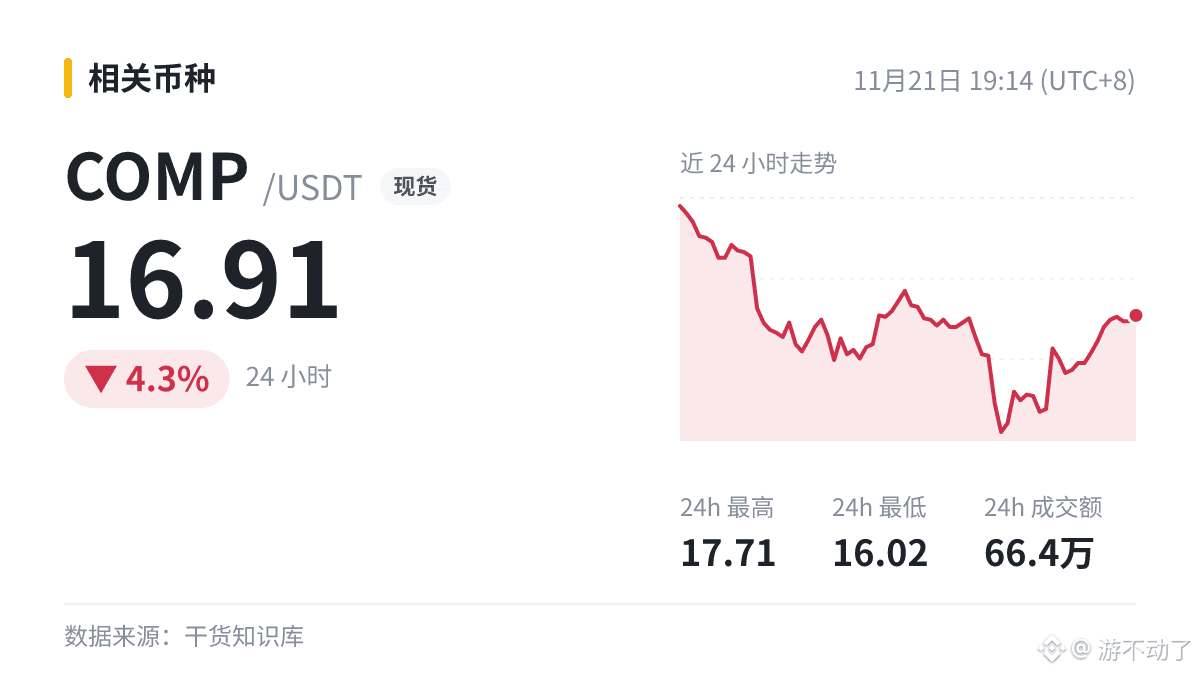
$COMP is the governance token of the lending protocol Compound.
#COMP