
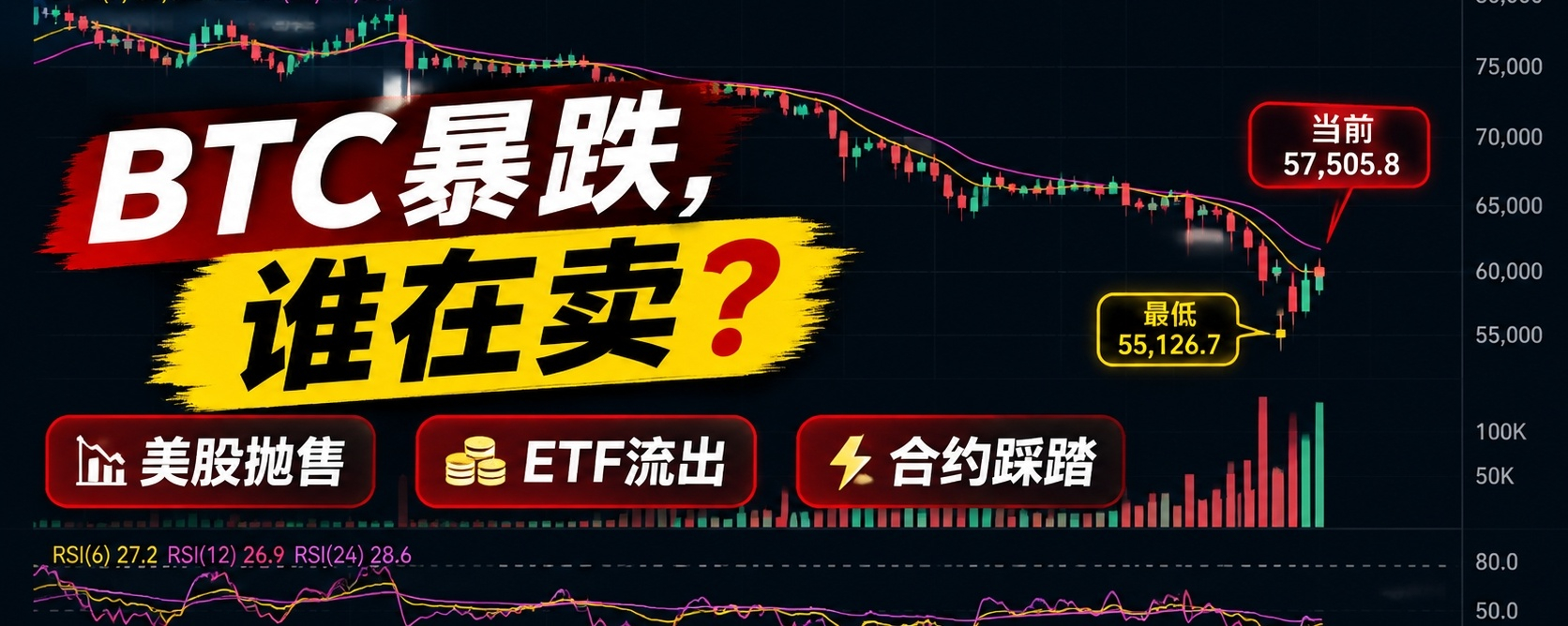

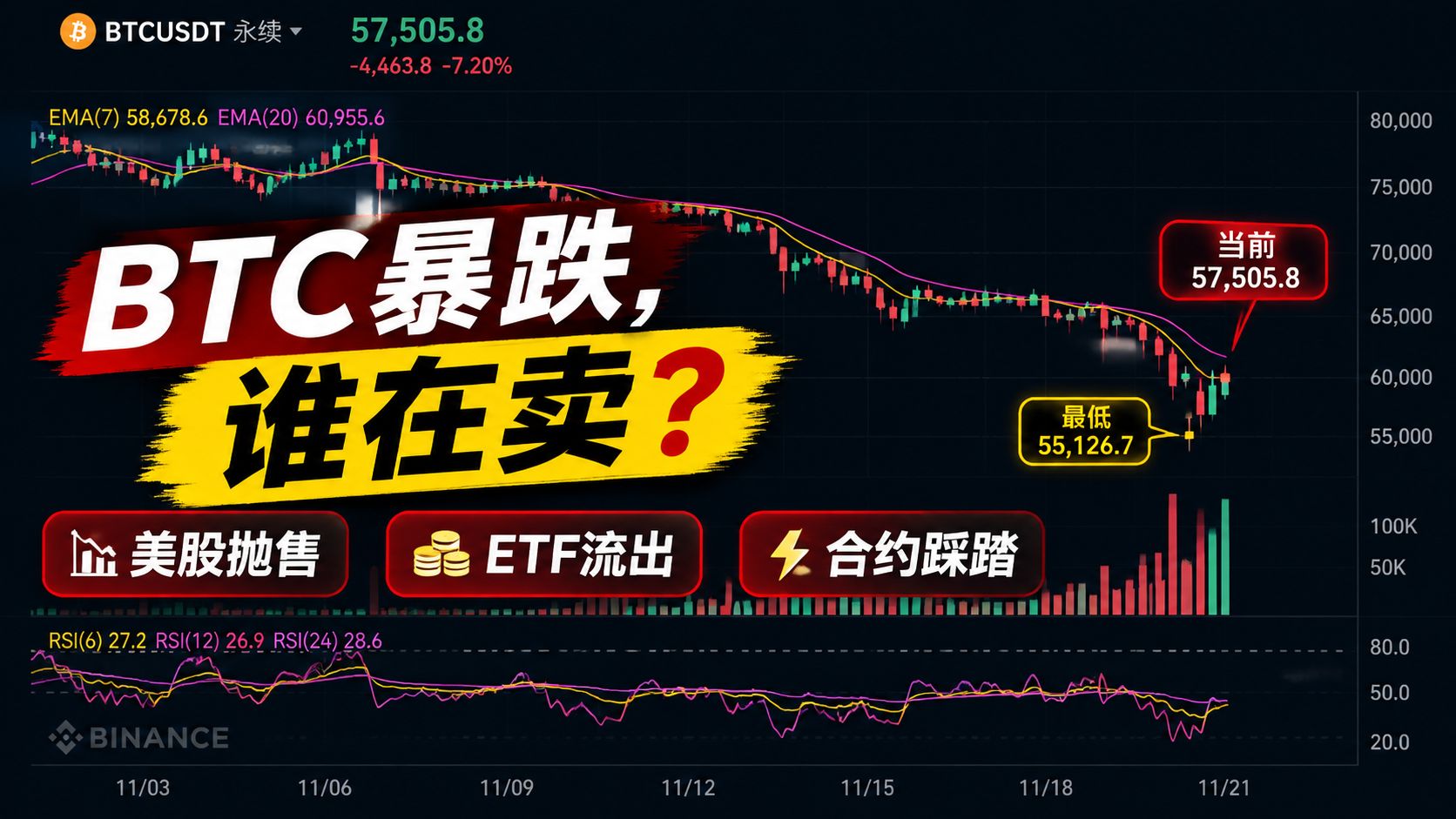
U.S. stocks plunged yesterday, and BTC briefly hit $55,126 today.
Looking at the market, I think the most important thing now isn't how far prices have fallen, but how several sources of selling pressure converged.
Data from CoinGlass shows that around $1.15 billion worth of BTC futures positions were liquidated over the past 24 hours, with long positions accounting for 89%. Meanwhile, BTC futures open interest, measured in dollars, fell nearly 10%, while trading volume surged.
This looks a lot like a typical leveraged liquidation cascade: falling prices trigger forced liquidations of long positions, and the resulting sell orders push prices down even further.
But liquidations only amplify the decline. The real question is: where did the initial selling pressure come from?
External markets have already offered some clues.
On November 20, the Nasdaq fell about 5.3%, while Nvidia dropped about 14% in a single day.
The funding picture in the crypto market itself is also looking bleak.
From November 17 to 19, U.S. spot BTC ETFs saw net outflows for three consecutive trading days, totaling about $1.13 billion. On November 19 alone, outflows were about $582 million.
Risk appetite in U.S. stocks fell sharply, ETFs continued to see net outflows, and leveraged longs faced a wave of liquidations.
Several pressures converged at the same time, ultimately triggering this sharp downturn.
After such a steep drop, could we see a rebound right away?
I wouldn’t be so quick to make that call.
In the short term, there was already a sharp rebound around noon. The liquidation heatmap also shows a dense cluster of short liquidations above.
But the presence of a short liquidation zone doesn’t mean the price will necessarily rise to it. And a rebound doesn’t mean the trend has reversed.
What I’d rather see now is whether BTC can reclaim its short-term moving averages, whether ETF flows improve next week, and whether selling pressure in U.S. stocks eases.
If these conditions don’t change, I won’t rush to declare a bottom just because the price has already fallen so much.
Markets don’t automatically attract buyers just because prices have fallen a lot.
You can miss the bottom, but you can’t pretend the risk isn’t there.