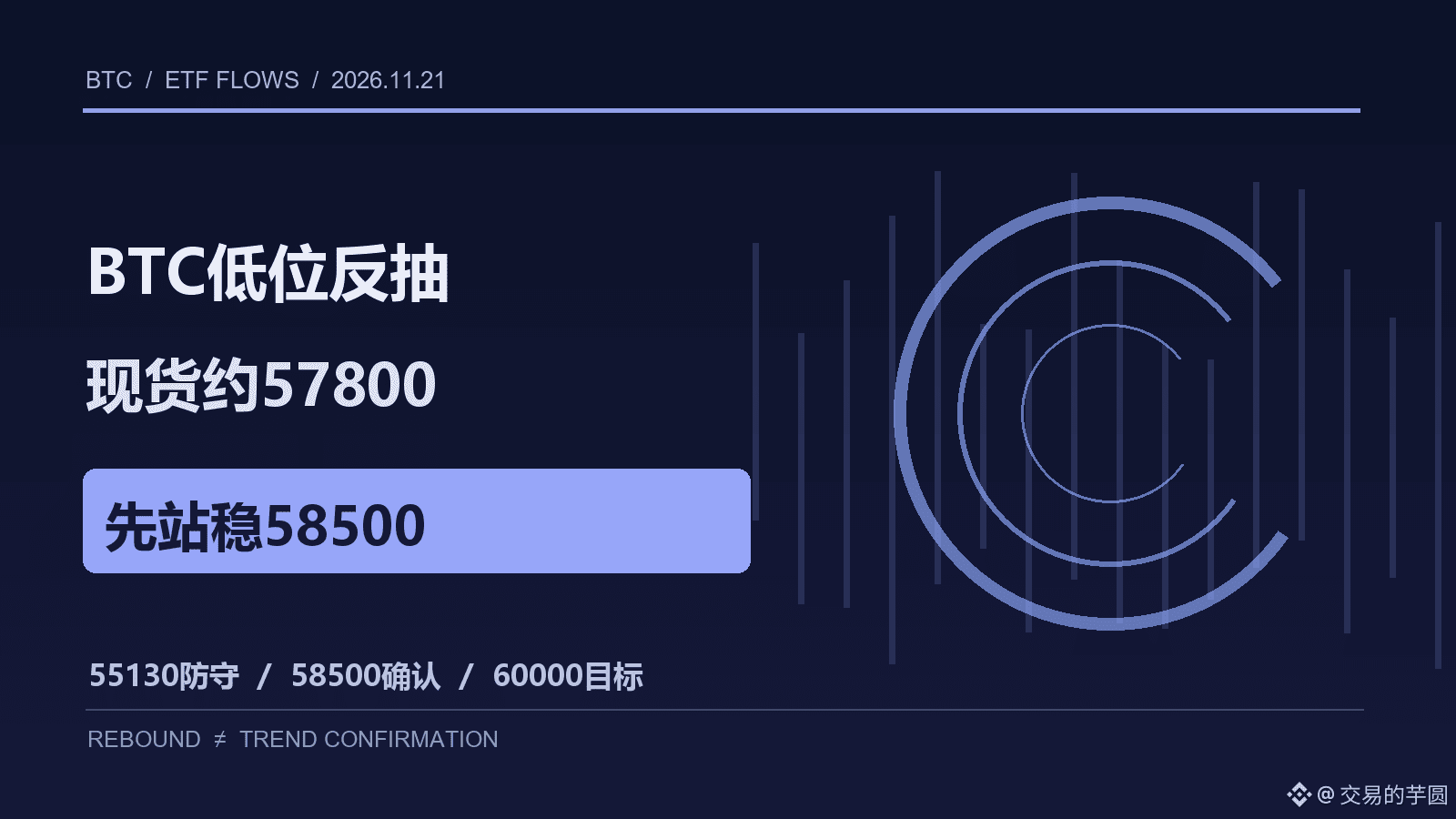
BTC rebounds from 55,130 | Hot topic asks whether it can bounce back | My answer: watch the flows first, then 60,000
My stance is that I acknowledge the short-term rebound, but it is still too early to declare the trend repaired. The trending topic on Binance Square, #CanBTCReboundAfterFallingBelow60K?, has reached 1,269 discussions, continuing to rise from the previous round. At 16:13, Binance BTC spot was around $57,803.57, with a 24-hour low of $55,130 and a decline still at about 6.56%. The move from the low back to around $57,800 is a real price reaction; there is still a gap before the price can regain and hold above $60,000, and a popular question does not mean we can change “can it?” to “it has.”
First, check whether the fund-flow data is complete. According to Farside, U.S. spot BTC funds saw combined net outflows of about $582.3 million on November 19, including about $541.1 million from IBIT alone. The November 20 table provisionally lists combined net outflows of about $124.5 million from the other funds, but the IBIT column is still a dash, meaning data has not yet appeared. It cannot be treated as zero, nor can the provisional total be passed off as the final net outflow for the entire market. IBIT’s large Thursday outflow has already occurred; Friday’s data gap is still awaiting an update. If new data comes in later, the conclusion may change.
On the corporate side, there is a disclosed fact pointing in the opposite direction: an announcement dated November 20, posted on the Twenty One Capital website, confirms a cash purchase of 172.25 BTC, worth about $10 million, bringing the company’s holdings to around 43,841 BTC. This is a confirmed corporate purchase, but its scale and timing differ from overall fund subscriptions and redemptions, so you cannot simply subtract one from the other and conclude that “institutions have turned into net buyers.” Strategy’s current news list on its official website has no new formal announcement of additional holdings for the same period. If a social media chart sparks market expectations, it can only be described as a suggestion; it cannot be counted as a completed purchase before formal disclosure. The Fed’s latest public materials also contain no new policy-rate decision, so this rebound cannot be described as a confirmed shift toward monetary easing.
My independent assessment is that short covering after the decline, spot buying on dips, and steady institutional allocation can all drive a rebound at the same time. But the rebound will be more convincing only if subsequent fund-flow data and price action confirm it together. 55,130 is the risk low for this move; 57,000 is the first level to watch on a pullback; and 58,000–58,500 is the range that needs to be reclaimed. Above 59,200, 60,000 is both a psychological and technical hurdle. If the price falls below 55,130 again and stays there, the rebound thesis is invalidated. If it breaks above 58,500 but quickly falls back below 58,000, that would show insufficient buying support from momentum traders. I won’t substitute a single bullish candle for sustained confirmation.
If I were trading this myself, I would stay out for now and would not use high leverage to bet against the trend at the bottom. I would only consider a spot long: wait for the price to hold steadily above 58,500, pull back to 58,000 without breaking below it, and for the missing fund data to be filled in without showing significant deterioration. Then I would test the trade with no more than 5% of total capital. I would trim one-third at 59,200, then halve the remaining position at 60,000, and use a trailing stop on what remains. After entry, I would cut losses if the price falls below 57,000; if it loses 55,130 again or outflows continue to expand, I would close the entire position. If the conditions are not met, I stay in cash; an untriggered plan does not count as a trade.
Sources: Binance Square trending topic, Farside U.S. BTC fund table, Twenty One Capital corporate announcement, Strategy official website, Fed public releases, and Binance spot market data. #CanBTCReboundAfterFallingBelow60K? #BTC
The above is for personal market observation only and does not constitute investment advice.