Blockchain Industry | How does a cross-chain bridge move coins to another chain?
Cross-chain protocols need a way to prove that a transaction has indeed taken place on the source chain. Common methods include multisignature schemes or validator committees, light-client verification, and zero-knowledge proofs.
The value of wrapped assets depends on the bridge itself: if something goes wrong with the assets locked on the source chain, the wrapped tokens on the target chain will lose their backing.
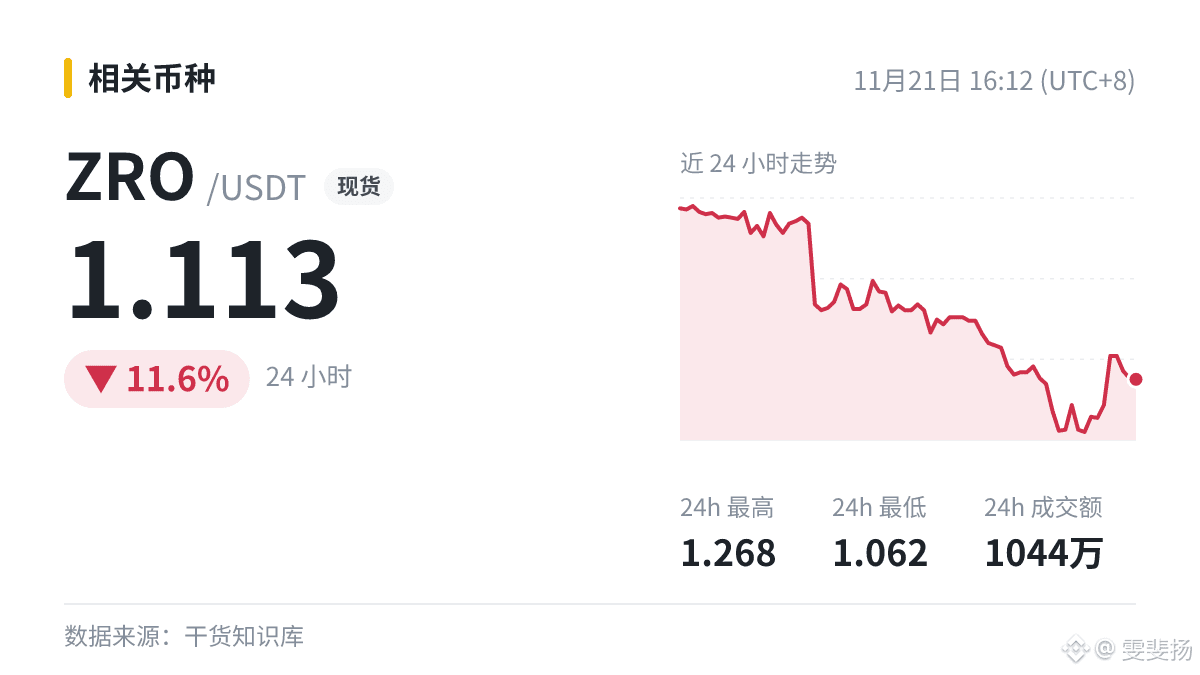
$ZRO is the token of LayerZero, an omnichain interoperability protocol.
It’s okay to go slowly—staying in the market matters more than how much you make in a single trade.
Markets involve risks; trade with caution.