Don't rush to memorize the definitions: What position size is appropriate for a trade?
Many trading resources recommend keeping the risk on each trade to around 1%–2% of your total capital, though the actual percentage varies from person to person.
The position size calculated by working backward from your stop-loss has no direct relationship to leverage. Leverage only determines how much margin is required, provided the liquidation price is beyond the stop-loss.
After consecutive stop-losses, you can reduce your position size or take a break. Don't increase your position size in an attempt to win it all back in one trade.
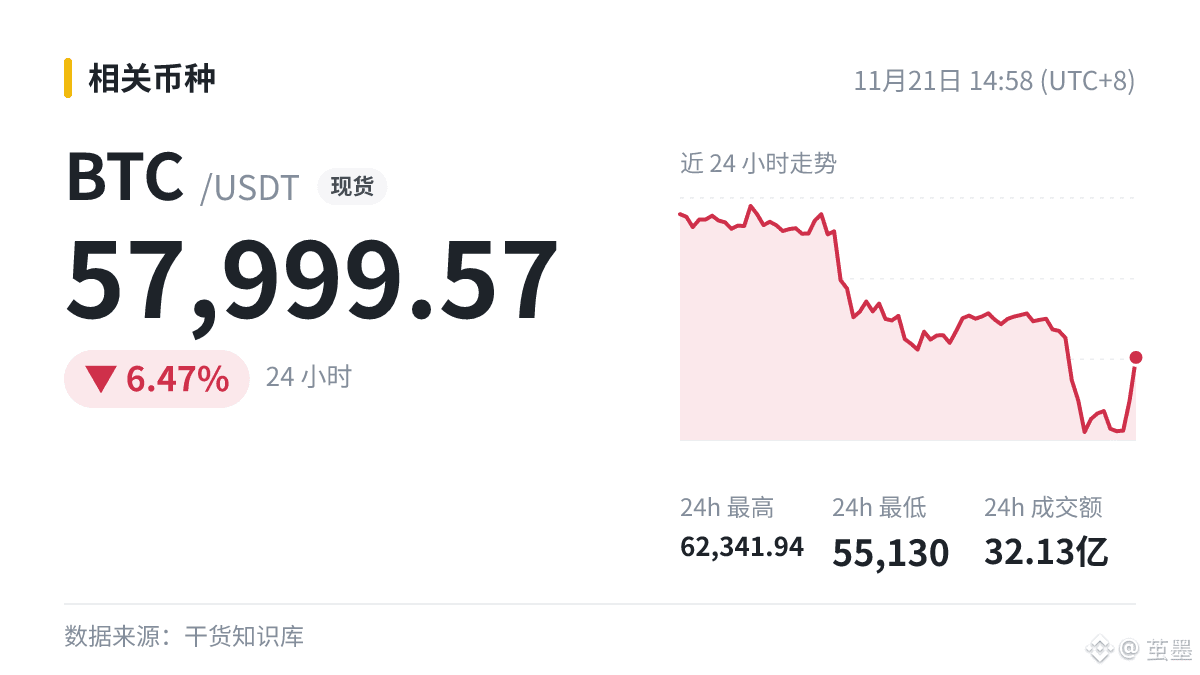
Coin mentioned in the article: $BTC , quoted at 57999.57 (24h -6.47%).
#btc #BTC
These views are for discussion only. Trade at your own risk.